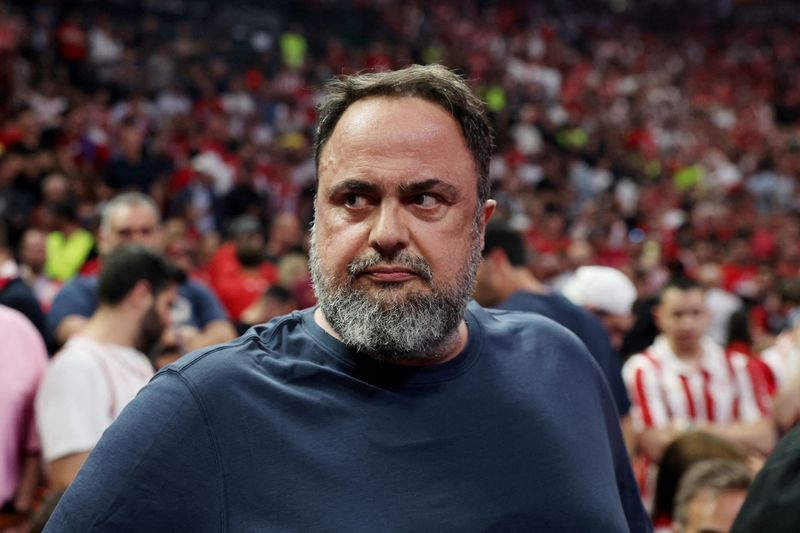
Greek shipping magnate Evangelos Marinakis, the owner of Nottingham Forest, has launched a libel lawsuit against Premier League club Crystal Palace at London's High Court, targeting the club and unknown individuals connected to a provocative banner that appeared during a match last season. The legal action marks an escalation in tensions between the two clubs stemming from circumstances surrounding European competition eligibility and ownership controversies.
The dispute centres on a banner displayed by Crystal Palace supporters during their home fixture against Forest in August of the previous season. According to The Lawyer, the inflammatory sign featured an image of Marinakis alongside midfielder Morgan Gibbs-White, with the accompanying text sarcastically reading: "Mr Marinakis is not involved in blackmail, match-fixing, drug trafficking or corruption." The banner's sarcastic phrasing was designed to insinuate wrongdoing, with accompanying imagery suggesting violence—depicting Marinakis in a threatening manner towards the player.
The underlying grievance between the two clubs relates to European competition redistribution following UEFA regulatory action. Crystal Palace faced demotion from that season's Europa League qualification to the Conference League after breaching UEFA's multi-club ownership regulations. This administrative penalty meant the London club was displaced in the European hierarchy, with Nottingham Forest subsequently benefiting by securing a spot in the second-tier continental competition instead. Palace supporters evidently viewed this outcome as unfair or inappropriate, particularly given Marinakis's ownership interests.
Marinakis, a prominent Greek shipping executive, acquired control of Nottingham Forest in 2017 and simultaneously owns Olympiacos, the dominant Greek Super League club. His multi-club ownership structure has been a source of regulatory scrutiny from European football authorities. The businessman has consistently and emphatically rejected accusations related to match-fixing, corruption, and illegal activities of any description, repeatedly issuing public denials whenever such allegations surface.
The legal filing represents Marinakis's formal response to the reputational damage he contends resulted from the banner's display and circulation. By naming both CPFC Limited—the corporate entity controlling Crystal Palace—and "Persons Unknown," the lawsuit attempts to establish corporate liability while also pursuing any individuals who may have commissioned or distributed the inflammatory material. Such multi-defendant structures are common in defamation cases where responsibility chains are unclear.
For Malaysian and Southeast Asian observers, this dispute exemplifies broader tensions within professional football regarding ownership transparency and regulatory compliance. The incident underscores how European football's attempts to regulate multi-club ownership arrangements can create friction between competing teams and their supporters. Marinakis's aggressive legal response reflects a growing willingness among wealthy football club owners to pursue litigation against supporter groups and clubs, a trend that raises questions about power dynamics between financial capital and fan culture in modern football.
The case also highlights the intersection between free speech, fair comment, and defamation law in the sports context. Supporter banners occupy a complex legal territory—while supporters traditionally enjoy considerable freedom to express criticism and satire at matches, such expression becomes legally vulnerable when it crosses into allegations of serious criminal conduct presented in ways that suggest factual accuracy rather than opinion or hyperbole. The sarcastic framing here creates ambiguity about whether the statement functions as opinion or implicit factual assertion.
Crystal Palace and their legal representatives did not immediately respond to inquiries regarding the lawsuit filed on Monday, suggesting the club may be considering its strategic response. Whether the club accepts corporate responsibility for supporter actions or contests the claim remains unclear. The outcome could establish important precedent regarding whether football clubs bear legal liability for supporter-created content displayed at matches, a question with significant implications across European football and potentially beyond.
The dispute occurs within a broader context of increasing regulatory attention to football ownership structures. UEFA's financial fair play and ownership regulations aim to prevent exactly the kinds of multi-club arrangements that Marinakis operates, though enforcement remains inconsistent. In regions like Southeast Asia, where football governance varies considerably and wealthy owner involvement continues expanding, the Marinakis-Palace case provides a cautionary tale about potential consequences when ownership arrangements attract regulatory or competitive suspicion.
The legal battle also reflects deepening divisions between professional football's corporate structures and grassroots supporter communities. As clubs become increasingly corporate entities under wealthy ownership, tensions emerge over who controls the narrative and messaging surrounding the sport. Marinakis's willingness to pursue litigation against supporters and clubs signals a harder line on reputation management among football's financial elite, potentially chilling more critical or provocative supporter expression going forward.
The resolution of this case could influence how Premier League clubs and their owners respond to controversial supporter behaviour in future seasons, potentially establishing clearer boundaries around acceptable protest and criticism within football stadiums and supporter communities.

