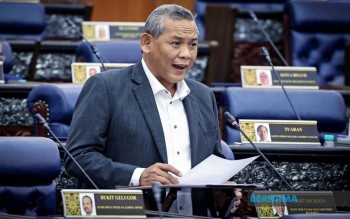
Port Dickson Member of Parliament Datuk Seri Aminuddin Harun has drawn a critical distinction between legitimate investment losses and those resulting from poor governance, cautioning against sweeping accusations regarding Lembaga Tabung Haji's troubled financial record. Speaking during parliament's special sitting on the Royal Commission of Inquiry report into the pilgrimage fund, the former Negeri Sembilan menteri besar stressed that public discourse surrounding TH's investment performance must adopt a more nuanced framework that recognises the inherent uncertainties of market-based returns alongside deliberate mismanagement.
The challenge facing Malaysia's most significant Islamic financial institution lies in separating unavoidable market downturns from systemic failures in decision-making processes. Aminuddin's intervention reflects growing concern that blanket condemnation of Tabung Haji obscures the fundamental reforms required to restore public confidence. He argued that stakeholders must develop sophisticated analytical tools to identify whether specific investment losses resulted from external economic pressures, inadequate risk assessment methodologies, conflicts of interest among decision-makers, or procedural breakdowns within governance structures.
The RCI, which examined the institution's operations between 2014 and 2020, recommended subjecting fourteen declining investments to forensic audits. These audits represent a crucial mechanism for establishing precisely where accountability lies and distinguishing between poor judgment operating within acceptable professional bounds and conduct that warrants disciplinary action. This granular approach addresses a gap in public understanding, where generalised narratives of mismanagement have dominated without sufficient attention to the specific circumstances surrounding individual investment decisions.
Aminuddin has centred his reform agenda on the composition and selection processes governing Tabung Haji's board of directors and senior management ranks. He contends that the institution requires personnel selected primarily for their professional qualifications and investment acumen rather than political affiliation or personal connections. This reflects a broader governance concern across Malaysian public institutions, where appointments frequently serve as rewards for political loyalty or mechanisms for consolidating influence rather than vehicles for attracting genuine expertise.
The parliamentary debate has crystallised around abandoning what Aminuddin describes as a flawed culture of institutional appointments. He emphasised that positions within Tabung Haji constitute professional trusts demanding specific competencies, not sinecures for the politically connected. The significance of this argument extends beyond Tabung Haji itself, addressing systemic vulnerabilities afflicting numerous Malaysian government agencies and statutory bodies where meritocratic principles remain subordinated to political considerations.
Among the RCI's recommendations stands a proposal to amend the Tabung Haji Act, explicitly prohibiting sitting politicians from assuming chairmanship or board membership roles. Aminuddin endorsed this position while proposing substantially more comprehensive vetting frameworks. His proposed screening mechanism would assess candidates across multiple dimensions including personal integrity, investment portfolio experience, Islamic finance expertise, risk management proficiency, accounting and auditing competency, legal knowledge, corporate governance understanding, and familiarity with hajj operations management. Additionally, all prospective board members would face mandatory disclosure and assessment of potential conflicts of interest.
This multi-layered approach represents a departure from Malaysia's traditional appointment methodologies, which have historically relied on generalist credentials and political approval ratings. The depth and specificity of Aminuddin's proposed criteria would create substantially higher barriers to entry for unsuitable candidates while signalling institutional commitment to professionalisation. For Malaysian investors in Tabung Haji—predominantly middle and working-class Muslims saving for pilgrimage—such reforms carry profound significance, as they directly affect the institutional competence determining their financial security.
Parlimentarian Datuk Mohd Isam Mohd Isa from Tampin has simultaneously advanced a complementary critique, arguing that the RCI's temporal scope proved insufficient for comprehensive assessment. The inquiry's focus on the 2014 to 2020 period, he contends, excludes critical developments unfolding thereafter, particularly the post-pandemic period when Tabung Haji undertook substantial restructuring initiatives. Mohd Isam advocates establishing a successor RCI specifically investigating 2021 through 2025 operations, enabling authorities to trace continuities and discontinuities in institutional performance across leadership transitions and policy adjustments.
Mohd Isam's intervention as a Public Accounts Committee member highlights parliamentary mechanisms for ongoing institutional scrutiny beyond formal inquiries. He has proposed that PAC undertake dedicated examination of Tabung Haji governance for the 2022 to 2026 period, providing sustained parliamentary oversight rather than relying on sporadic inquiry commissions. This recommendation reflects recognition that Malaysian institutions require continuous monitoring rather than episodic investigations, preventing the emergence of new vulnerabilities between formal review cycles.
The publicly released RCI report, spanning 211 pages and presented to parliament on August 11 following its submission to the Yang di-Pertuan Agong in August 2022, identified extensive management and operational weaknesses spanning the seven-year investigation period. Significantly, Tabung Haji reported implementing approximately 75 percent of the RCI's 25 recommendations by late July, suggesting institutional responsiveness to identified deficiencies. However, the discrepancy between RCI findings and implementation completion rates indicates that meaningful reform requires sustained pressure and resource allocation beyond formal report presentation.
For Malaysian policymakers and the broader investing public, these parliamentary interventions underscore that Tabung Haji's rehabilitation requires neither defensive posturing nor indiscriminate accusations, but rather systematic institutional strengthening through professional governance, robust oversight mechanisms, and transparent accountability frameworks. The institution's role as custodian of millions of pilgrims' savings demands nothing less than comprehensive structural reform addressing how decisions get made, who makes them, and how conflicts of interest are prevented. Aminuddin's emphasis on distinguishing between market realities and governance failures provides essential intellectual scaffolding for achieving these objectives without scapegoating individuals or abandoning necessary institutional functions.
The parliament's continued engagement with Tabung Haji reform demonstrates legislative commitment to institutional accountability. However, sustained attention remains essential to ensure that recommendations translate into permanent cultural and structural transformations rather than temporary corrective gestures.

