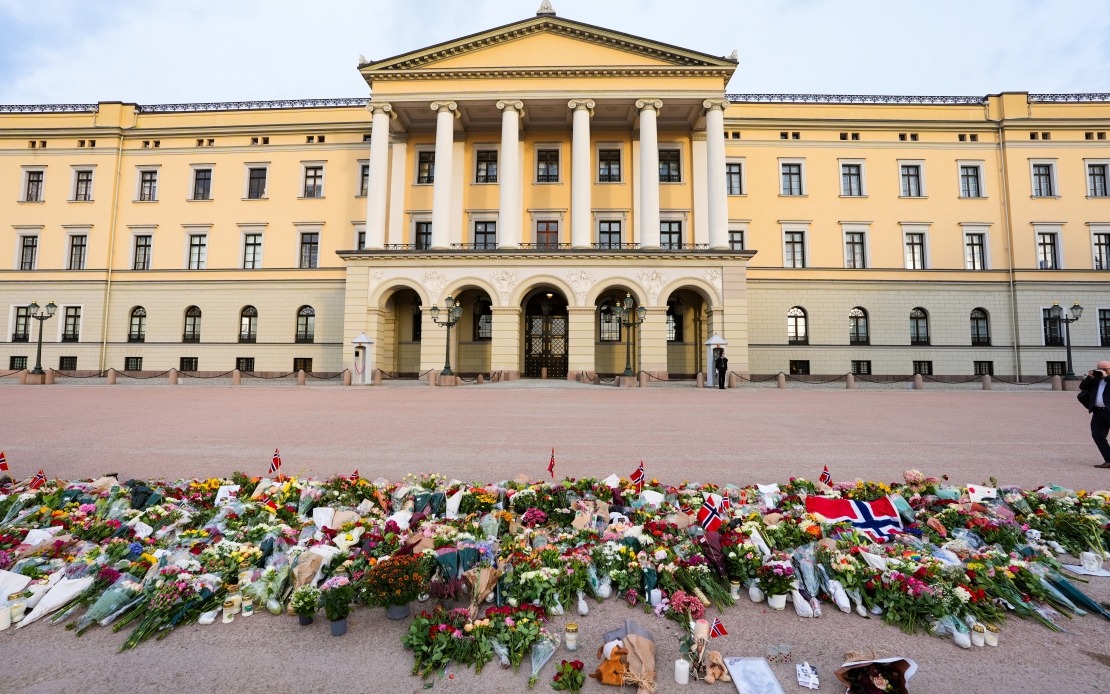
King Harald V of Norway, who had presided over one of Europe's most stable monarchies for more than three decades, died Friday at the age of 89 in a Oslo hospital. The Norwegian Royal Palace announced the peaceful death at 6.35 am local time, marking the end of an era for Scandinavia's longest-serving contemporary monarch and drawing to a close one of Europe's most enduring reigns during a period of considerable geopolitical change.
The king passed away at the National Hospital in Oslo following a period of declining health that had necessitated his admission on August 17. Palace officials subsequently revealed that Harald had been undergoing treatment for hemolytic anemia, a potentially serious blood disorder affecting red blood cells, which had triggered fluid retention throughout his body. While initially managed through cortisone therapy, his condition deteriorated sharply when he contracted a bacterial infection in his bloodstream, according to reports from Norwegian public broadcaster NRK.
The immediate succession proceeded according to constitutional protocols established centuries ago. Crown Prince Haakon automatically ascended to the Norwegian throne upon his father's death, becoming the country's new reigning monarch without any interregnum. Unlike many European nations, Norway's constitutional framework ensures seamless transitions through clear succession laws, avoiding the ceremonial complexity and extended periods of uncertainty that characterise monarchies elsewhere.
The Norwegian government will convene an extraordinary Council of State meeting at the Royal Palace, during which formal acknowledgement of the new king will occur. This administrative gathering represents one of the few remaining ceremonial duties associated with the accession in Norway, which notably eschews the elaborate coronation ceremonies observed in neighbouring Sweden and the United Kingdom. Following this council session, the new monarch's regnal name will be officially announced, though Crown Prince Haakon is widely expected to retain his given name as King Haakon VII.
Under Norway's constitutional requirements, the newly crowned monarch must subsequently appear before parliament to take the oath of allegiance required of all Norwegian sovereigns. This parliamentary oath underscores the constitutional nature of Norwegian monarchy, wherein the king functions as a ceremonial head of state within a parliamentary democracy rather than wielding executive authority. The emphasis on parliamentary oversight and constitutional limitation reflects the political values embedded within Scandinavian governance structures.
Harald's accession to the throne occurred on January 17, 1991, when he succeeded his father King Olav V following the latter's death after many years of service. His reign spanned nearly 35 years marked by Norway's continued prosperity as an oil-producing nation, its consolidation of international standing through NATO membership and European integration, and the modernisation of Norwegian society during a period of rapid technological and social change. Throughout his tenure, Harald cultivated an image as an accessible and engaged monarch, frequently appearing in public and maintaining close connections with Norwegian citizens.
At the time of his death, King Harald held the distinction of being Europe's oldest reigning monarch, a position reflecting both the longevity of contemporary European royalty and the relative youth of succession dates among other major European crown holders. His advanced age and extended reign meant that multiple generations of Norwegians had known no other sovereign, making the transition a genuinely historic moment for the nation despite the seamless constitutional procedures governing succession.
The lowering of the royal flag to half-staff at the palace grounds signalled the official entry into a period of national mourning. For Malaysia and other Commonwealth realms with ties to European monarchical traditions, Harald's death and his son's succession demonstrate the contrasting constitutional models that govern different European democracies. While Malaysia maintains its own unique system of hereditary monarchy rotating among nine sultans, Norway's centralised succession illustrates how different nations balance tradition with modern constitutional governance.
Crown Prince Haakon's assumption of the throne marks a generational shift in Norwegian leadership and potentially signals changes in how the monarchy engages with contemporary issues including climate change, digital transformation, and evolving social values. The new king, born in 1973, represents a different cohort from his father and brings his own priorities and perspectives to the institution, though the fundamental constitutional role of the Norwegian monarchy is unlikely to undergo substantial transformation.

