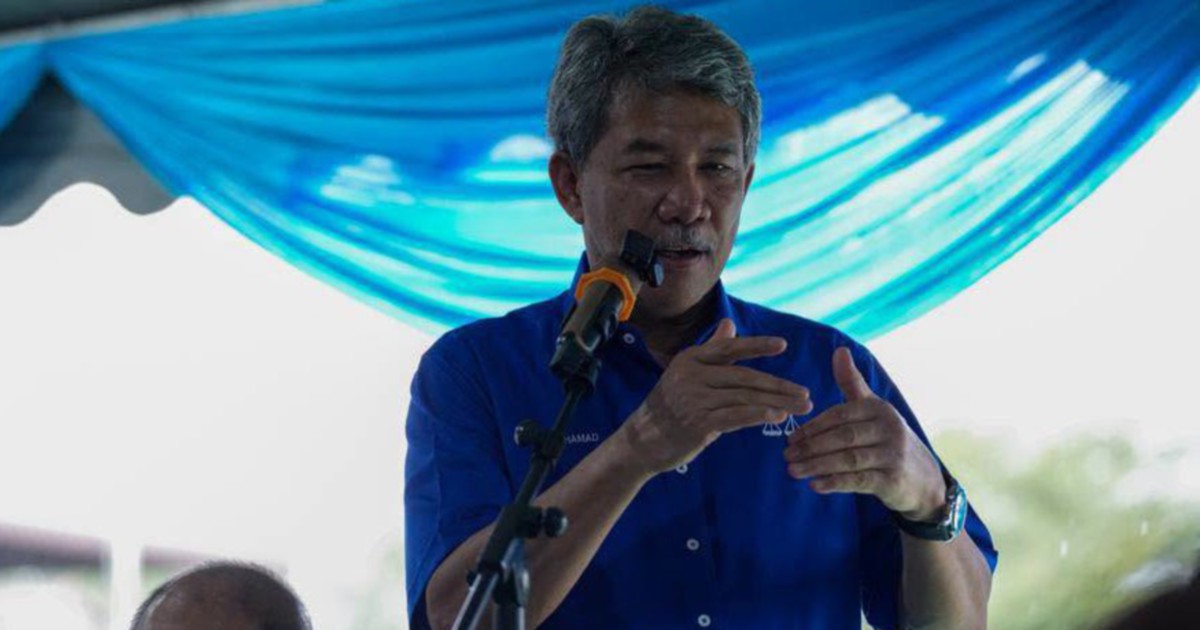
A senior Barisan Nasional figure has pushed back forcefully against Pakatan Harapan leaders who continue promoting the idea that control of Johor's state government could somehow facilitate the release of imprisoned former prime minister Datuk Seri Najib Razak, framing such arguments as unfounded political narratives that obscure the real issues at stake in the upcoming election.
Speaking at Tebrau, the coalition leader underscored that no menteri besar, regardless of their party affiliation or influence, possesses the constitutional authority or legal mechanisms to overturn Najib's conviction and secure his freedom. This represents a fundamental misunderstanding or deliberate distortion of Malaysia's separation of powers, he suggested, where judicial decisions and criminal sentences fall squarely under federal jurisdiction and cannot be unilaterally reversed by a state-level executive officer.
The remarks come as both major political coalitions intensify their campaigns ahead of the Johor state election, with campaign messaging increasingly touching on the fate of Najib, whose conviction on multiple corruption and money laundering charges has remained a flashpoint in Malaysian politics. For Pakatan Harapan, drawing connections between electoral outcomes and Najib's imprisonment appears designed to mobilize voters concerned about judicial independence and the rule of law, while simultaneously casting aspersions on Barisan Nasional's commitment to accountability.
The Barisan Nasional leader's intervention suggests his coalition is concerned that such messaging, however constitutionally inaccurate, resonates with portions of the electorate and may influence voting behaviour. By directly addressing and dismissing the claim, he seeks to redirect voter attention toward state-level governance issues—economic development, infrastructure, public services—that fall squarely within the menteri besar's actual purview.
The tactic of linking national-level personalities and crises to state elections is not uncommon in Malaysian politics, where federal and state governance remain intricately connected through both funding mechanisms and political patronage networks. However, conflating a state menteri besar's electoral victory with the ability to pardon or release a federally convicted former premier represents a particularly stark example of such conflation, one that oversimplifies Malaysia's constitutional architecture.
Najib's imprisonment following his 1Malaysia Development Berhad scandal remains deeply polarizing within Barisan Nasional itself. Some party members view his conviction as necessary accountability, while others argue it represents political persecution by a rival administration. This internal division has complicated Barisan Nasional's messaging and may explain why the coalition leader felt compelled to address the matter head-on rather than allowing such claims to circulate unchallenged.
For Malaysian voters, particularly those in Johor, the election presents genuine choices about competence, vision, and priorities for the state's future. These substantive issues—whether focused on diversifying Johor's economy beyond traditional sectors, improving educational infrastructure, or managing the state's relationship with the federal government—ought to dominate campaign discourse. Yet the repeated intrusion of Najib's legal predicament into electoral narratives suggests that personality-driven politics and historical grievances continue to overshadow policy-focused competition.
Packatan Harapan's persistence in raising this issue may also reflect internal calculations about which voter segments they can persuade through moral arguments about institutional integrity and the judiciary's independence. If the coalition believes that emphasizing continuity between Barisan Nasional rule and corruption helps consolidate its support base, the strategy has inherent logic, even if its constitutional premises are flawed.
The Barisan Nasional leader's comments underscore a broader Malaysian political reality: while national personalities and controversies inevitably filter into state elections, clarity about what state governments can and cannot do remains vital for informed electoral decision-making. A menteri besar wields significant power over resources allocation, local administration, and state development priorities, but criminal justice and presidential clemencies lie entirely outside their remit.
As campaigns intensify across Johor's constituencies, how effectively both coalitions can channel voter attention toward issues within their actual control—and away from constitutional impossibilities—may prove decisive. The electorate's appetite for substantive governance discourse versus personality-driven politicking will ultimately determine whether campaign messaging evolves or continues cycling through familiar controversies rooted in the previous administration's troubled legacy.

