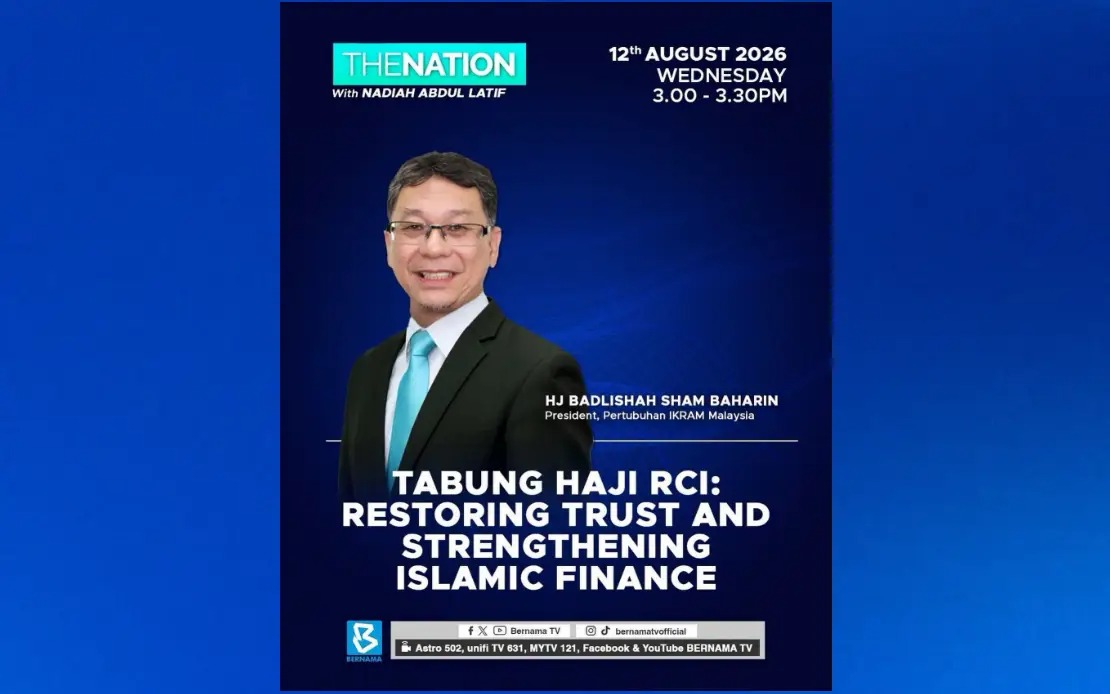
The president of Pertubuhan IKRAM Malaysia has pushed back against mounting calls for a new Royal Commission of Inquiry into Lembaga Tabung Haji, arguing that the authorities' existing investigation provides adequate oversight of the troubled fund. Badlishah Sham Baharin made the position clear following parliamentary debate on the TH RCI report, stating that multiple inquiries risk diminishing the institution's effectiveness and should be reserved for truly significant matters affecting the nation's interests.
The debate centres on a temporal gap in investigative coverage. The existing RCI examined the 2014 to 2020 period, but lawmakers from both the ruling Barisan Nasional coalition and opposition Pakatan Harapan have urged the government to commission a separate inquiry into the 2021 to 2025 span. Their concern reflects broader anxiety about the fund's trajectory and whether recent management changes have genuinely addressed the systemic failures documented in the completed inquiry.
Badlishah Sham's intervention introduces a measured institutional perspective into heated political discussions. He argued that establishing royal commissions indiscriminately weakens their constitutional standing and public perception. Instead, he endorsed relying on established anti-corruption agencies like the Malaysian Anti-Corruption Commission to conduct the necessary investigations. The approach prioritises swift, specialised action over the lengthy formal machinery of a royal commission, potentially enabling faster remedial measures.
The scope of TH's problems justifies the intensity of scrutiny, however. Finance Minister II Datuk Seri Amir Hamzah Azizan disclosed that the fund sustained nearly RM13 billion in losses through fourteen flawed investments, with seven resulting in total write-downs. The Al-Rawda investment epitomised the catastrophic misjudgements: TH remitted approximately RM1.5 billion to intermediaries between 2015 and 2017 for leasing arrangements covering hotels in Makkah and Madinah. When Al-Rawda ceased rental payments in early 2019, the fund eventually absorbed a complete impairment loss of RM1 billion in 2024.
The financial burden extends across multiple stakeholders. The government absorbed RM10.2 billion through a 2018 bailout channelled via Urusharta Jamaah Sdn Bhd, while additional impairment losses of RM2.6 billion accumulated between 2018 and 2025 as problematic investments continued their troubled trajectory. These figures underscore the systemic nature of governance failures that permitted such dramatic capital destruction. The scale demands reassurance that corrective measures address root causes rather than superficial remediation.
Badlishah Sham nonetheless offered constructive middle ground by endorsing a multi-agency task force dedicated to identifying investments at risk and preventing recurrence. He emphasised the necessity of rigorous due diligence before capital deployment, requiring examination of ethical dimensions and procedural compliance at operational levels. This reflects recognition that institutional safeguards require reinforcement across decision-making chains, from board-level approvals through to transaction execution and monitoring frameworks.
The existing RCI report, released on July 29, documented extensive organisational weaknesses spanning the 2014-2020 investigation period and proposed twenty-five improvement measures. TH management had implemented approximately seventy-five per cent of recommendations by month-end, suggesting responsiveness to findings. Yet the timeline gap remains problematic: subsequent years experienced management transitions that could reflect either genuine reform or merely surface changes without substantive cultural shift.
Parliamentary proceedings surrounding the RCI debate also triggered controversy over opposition conduct. Several lawmakers from opposition benches staged a walkout during the special Dewan Rakyat sitting, prompting criticism from IKRAM's leadership. Badlishah Sham characterised the action as shirking parliamentary responsibility, noting that elected representatives carry obligations to provide legislative checks, balance executive power, and champion the interests of approximately ten million TH depositors. His criticism highlighted broader concerns about parliamentary decorum and engagement with serious national matters affecting ordinary Malaysians' savings and retirement provisions.
The political dynamics merit analysis through a Malaysian governance lens. Both ruling and opposition figures requested a new RCI, suggesting cross-party anxiety about oversight adequacy. Such bipartisan concern, whether strategically motivated or substantively grounded, signals that stakeholders fear investigative discontinuity could enable further misconduct. However, IKRAM's position reflects pragmatism about bureaucratic efficiency: multiple inquiries consume resources, extend resolution timelines, and potentially duplicate investigative effort unnecessarily.
For Malaysian depositors and the broader Islamic finance sector, the dispute over investigative mechanisms masks deeper questions about institutional accountability and transparency. TH represents the world's largest hajj fund by participants, managing savings for Muslim pilgrims across the region. Its management failures carry implications beyond individual financial loss, affecting confidence in Islamic financial institutions broadly and raising questions about governance standards in sector-specific entities operating under religious mandates.
The resolution of this debate will likely influence how Malaysia addresses future governance crises within significant public or quasi-public institutions. Choosing between formal royal commission processes and specialist agency investigations reflects differing philosophies about transparency, expertise deployment, and institutional legitimacy. Both approaches carry trade-offs between comprehensive public inquiry and operational efficiency, between perceived independence and specialised competence. The outcome may establish precedent for addressing subsequent corporate or governmental failures within the Islamic finance ecosystem.
Moving forward, the multi-agency task force proposal offers potential synthesis, combining investigative specialisation with coordinated institutional response. Such mechanisms could provide ongoing monitoring of investment portfolios, early warning systems for troubled assets, and integrated enforcement action. However, their effectiveness depends on genuine interagency cooperation, adequate resourcing, and political commitment to hold senior management accountable regardless of their standing or connections. Without such foundations, even well-intentioned oversight structures risk becoming symbolic rather than substantive.

