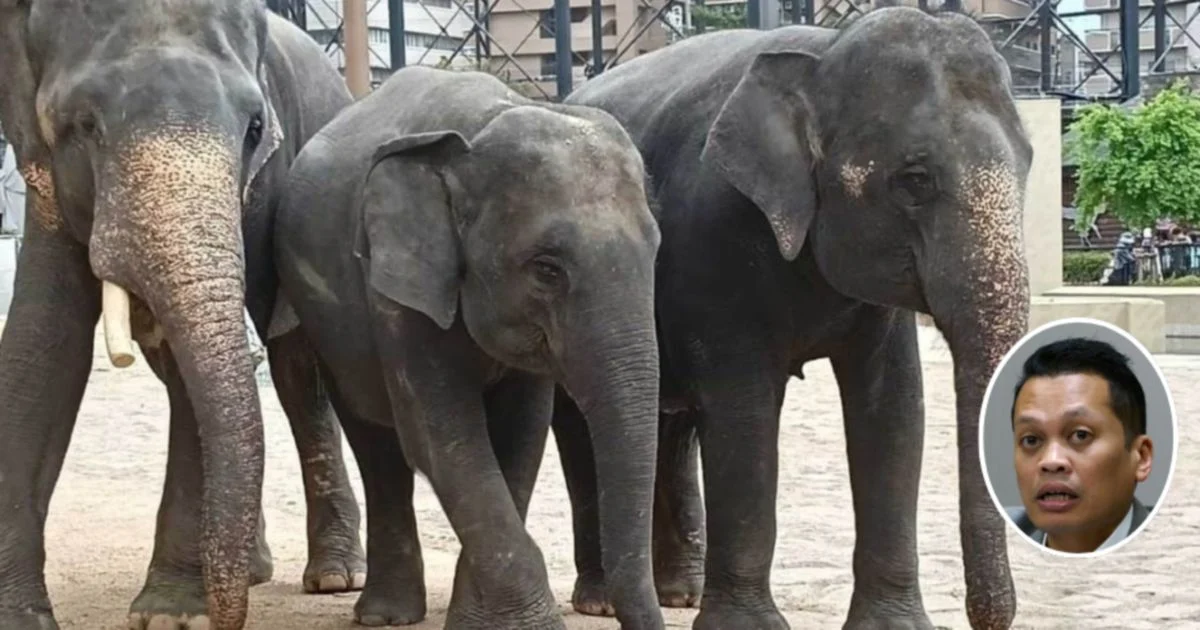
Former Natural Resources and Environmental Sustainability minister Nik Nazmi Nik Ahmad has strenuously rejected suggestions that he played any role in alleged improper conduct surrounding the transfer of three elephants from Malaysian soil to a Japanese zoo, a transaction accompanied by substantial financial movements exceeding RM53 million. The denial emerged as scrutiny intensifies around the wildlife relocation project and the circumstances under which significant government resources were allocated for the elephant transfer.
The elephant shipment represents a rare instance of Malaysian wildlife being exported to a foreign facility rather than being retained in local conservation programmes or sanctuaries. The decision to facilitate such a transfer, coupled with the substantial funding involved, has prompted questions about whether proper protocols were followed and whether environmental stewardship principles were adequately prioritised in the arrangement. Such transactions normally require extensive justification given Malaysia's status as a biodiversity-rich nation with its own wildlife management priorities.
Nik Nazmi's tenure as the minister responsible for natural resources and environmental matters would have placed him in a position of significant influence over decisions concerning the fate of protected species and international wildlife agreements. His explicit dismissal of any involvement suggests that the controversy may involve other officials or institutions within the governmental and quasi-governmental frameworks that manage Malaysia's wildlife resources and international animal welfare commitments.
The timing of these allegations carries political implications, occurring within Malaysia's volatile parliamentary landscape where opposition parties and civil society organisations frequently scrutinise government spending and decision-making processes. Former ministers often find themselves subject to renewed investigation or public questioning when circumstances suggest that resources may have been misused or that procedures were circumvented. The wildlife transfer affair may reflect broader concerns about transparency and accountability in how Malaysia manages its natural heritage and international obligations.
Conservation groups and environmental advocates have long expressed concern about Malaysia's capacity to properly maintain its elephant populations, which have faced declining numbers due to habitat loss, human-wildlife conflict, and poaching pressures. The decision to export three elephants rather than invest in domestic conservation initiatives raises questions about the strategic vision guiding the nation's approach to its iconic megafauna. These concerns extend beyond simple bureaucratic procedure to fundamental questions about whether Malaysia is adequately protecting its natural legacy.
The RM53 million figure attached to the transfer signals a transaction of considerable magnitude, prompting scrutiny about whether such an expenditure represented value for money and whether competitive bidding processes or independent expert evaluation informed the decision. International wildlife transfers typically involve logistical, veterinary, and administrative expenses, but the quantum of funds involved appears substantial relative to the scale of the operation, inviting questions about hidden costs or additional payments beyond the publicly disclosed transfer arrangement.
Japan's zoo system, whilst maintaining professional standards, has occasionally attracted criticism regarding acquisition practices and animal welfare protocols. The relocation of Malaysian elephants to such a facility requires confidence that destination institutions meet international welfare benchmarks and that the animals' long-term interests are genuinely served. Malaysia's responsibility extends beyond executing the physical transfer to ensuring that the receiving facility can appropriately accommodate and care for the species throughout their lifespans.
Nik Nazmi's categorical denial does not necessarily provide closure to the broader investigation, particularly if other officials or institutional actors played determining roles in the decision-making process. Malaysian civil society and parliamentary oversight bodies may pursue parallel inquiries to establish precisely which decision-makers authorized the transfer and whether all required approvals and justifications were properly documented. Such scrutiny reflects heightened expectations regarding transparency in government procurement and resource allocation.
The episode underscores the vulnerability of Malaysia's wildlife and environmental portfolios to political controversy and allegations of mismanagement. When substantial public resources are involved in decisions affecting irreplaceable species, the margin for error narrows considerably, and public confidence demands that all procedures be demonstrably rigorous and properly justified. The elephant transfer affair therefore extends beyond the specific controversy to encompass broader questions about environmental governance frameworks and institutional safeguards.
For Malaysia's standing in international wildlife conservation circles, the controversy represents a complication in an otherwise strengthened global reputation for biodiversity protection. Other nations monitoring how Malaysia manages its heritage species and transnational wildlife arrangements will assess whether domestic governance mechanisms successfully prevent misallocation of resources or deviation from conservation priorities. The resolution of this matter will therefore carry implications extending well beyond domestic politics into Malaysia's international environmental credentials and standing among conservation partners.

