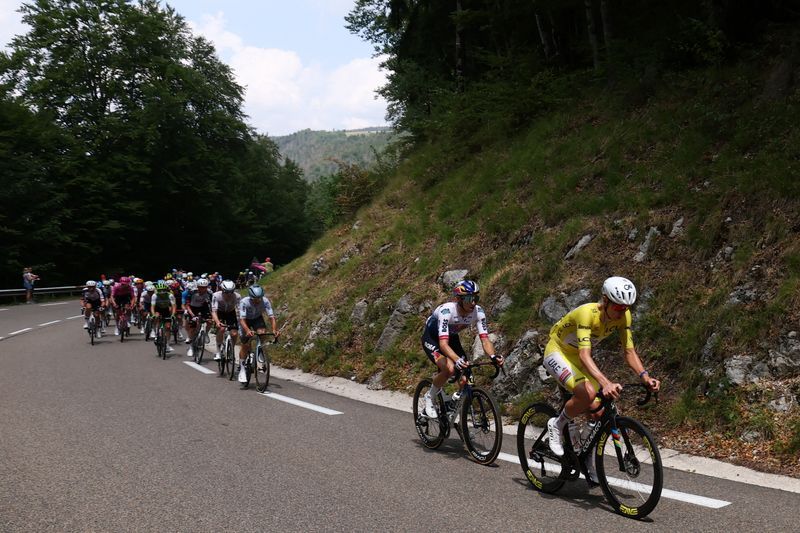
Jonathan Vaughters, the former professional cyclist who now leads the Cannondale-EF team, has entered the heated debate surrounding pre-dawn doping controls at the Tour de France, contending that rigorous night-time testing protocols represent a critical safeguard against performance-enhancing drug use. His intervention comes amid widespread complaints from riders who were subjected to surprise doping checks in the early hours of Sunday morning, disrupting their sleep before a crucial mountain stage of cycling's most prestigious race.
Vaughters made his position clear through social media commentary, specifically highlighting the effectiveness of testing conducted at 2 a.m. as a deterrent against peptide-based and testosterone micro-dosing schemes. His remarks carry substantial credibility because of his own transparency regarding past involvement with performance-enhancing substances. During his professional career in the late 1990s and early 2000s, Vaughters used EPO and other banned drugs while riding for the U.S. Postal Service team alongside Lance Armstrong. Rather than concealing this chapter of his life, Vaughters has become an advocate for anti-doping measures in modern cycling, establishing his current team with clean racing as a foundational principle.
The timing of Vaughters' comments reflects broader concerns within anti-doping authorities about how athletes can circumvent testing regimes. Micro-dosing—the practice of administering small, calculated amounts of substances such as EPO and human growth hormone that metabolise quickly—represents one of the most insidious challenges for testing programmes. Because these substances can disappear from an athlete's system within hours, predictable daytime-only testing windows create opportunities for strategic dosing timed to avoid detection. The International Testing Agency, which oversees doping controls for cycling's governing body the UCI, acknowledges this fundamental vulnerability in their testing framework, which is why they authorise testing outside conventional hours despite recognising the disruption to athletes' rest and recovery.
Vaughters drew a sharp historical parallel to underscore his argument. He suggested that had rigorous 2 a.m. testing existed during the early 2000s—the nadir of cycling's systematic doping problem—the consequences would have been immediate and severe. Under such protocols, Vaughters reasoned, he and his contemporaries would have faced suspension, preventing what he characterised as 25 years of sporting drama and reputational damage. This assessment reflects cycling's well-documented struggles with organised doping, most notoriously exemplified by Lance Armstrong's case. Armstrong, stripped of his seven Tour de France titles in 2012 following a U.S. Anti-Doping Agency investigation, had overseen what officials described as the most sophisticated doping programme in sport's history. Vaughters' subsequent testimony in that investigation lent credibility to his current stance on anti-doping measures.
The Sunday morning testing at the Tour generated immediate pushback from competing riders. Jonas Vingegaard, who was woken at 2 a.m. for his doping control, lost approximately 40 minutes of sleep before facing the mountain stage where he later suffered a significant crash resulting in a broken collarbone. Tadej Pogacar, the race leader who underwent testing at 5 a.m., reported managing only four hours of sleep before competition. Stage winner Remco Evenepoel characterised the practice as "inhuman," reflecting broader athlete frustration with protocols that many view as incompatible with fair competition and athlete welfare. These complaints highlight a genuine tension in anti-doping enforcement: the necessity of surprise, unpredictable testing to catch sophisticated cheaters against the legitimate health and performance concerns of clean athletes.
The International Testing Agency's response to these complaints reveals the difficult balancing act that modern sports governance must perform. While acknowledging that night-time testing creates genuine disruption to athletes' rest and recovery, the agency maintains that effective anti-doping programmes must occasionally operate outside standard business hours. This position reflects a recognition that testing predictability itself becomes a vulnerability that doping programmes can exploit. The agency frames such incursions as "limited and justified circumstances," suggesting that not every test session requires night-time execution, only a strategic portion sufficient to maintain uncertainty in athletes' minds about when testing might occur.
Vaughters' advocacy for night-time testing resonates particularly within discussions about cycling's ongoing rehabilitation following the Armstrong era and related scandals. The sport has invested substantially in its anti-doping infrastructure and credibility over the past decade, seeking to convince sponsors, broadcasters, and fans that modern cycling operates under genuine competitive integrity. From this perspective, abandoning night-time testing could signal weakness in anti-doping resolve precisely when the sport continues rebuilding public trust. The presence of former dopers like Vaughters now championing stricter enforcement measures paradoxically strengthens cycling's credibility narrative, demonstrating that even those who benefited from lax controls in the past now recognise the necessity of comprehensive testing protocols.
The broader scientific context supports the International Testing Agency's stance on unpredictable testing. Micro-dosing protocols developed over decades represent an arms race between athletes and testing authorities, with the sophistication of evasion techniques requiring equally sophisticated counter-measures. Substances like EPO and human growth hormone, which enhance endurance and recovery in ways particularly valuable for cycling, clear athlete systems with remarkable speed when dosed strategically. Standard daytime testing windows would theoretically allow athletes to time their dosing in the evening, allowing clearance before morning checks. Night-time testing disrupts such scheduling, forcing athletes to either accept detection risks or abandon the practice entirely. This pharmacological reality underpins why anti-doping experts continue advocating for testing unpredictability despite athlete complaints.
For Southeast Asian readers following international cycling, Vaughters' intervention illuminates ongoing debates within the sport regarding enforcement rigour versus athlete welfare. Many nations within the region are developing their own professional cycling programmes and domestic talent pipelines, and these discussions about testing standards will eventually influence how regional competitions and training environments operate. The Tour de France's visibility makes it a template that aspiring cycling nations observe carefully. Furthermore, as Southeast Asian athletes increasingly compete at elite international levels, understanding these testing protocols becomes relevant for understanding the competitive environment they will encounter. Vaughters' position, rooted in personal experience with doping's damage to individuals and sport, suggests that effective anti-doping measures, while inconvenient, ultimately protect the integrity of competition and the long-term credibility of cycling as a sport worthy of investment and participation.

