Transportation providers across the country are stepping up services this weekend to accommodate a surge in voter movements ahead of Johor's state election on Saturday, with both grassroots and corporate initiatives working to ease the logistics burden on citizens returning home to vote.
Stesen Pemantauan Rakyat, a civil society group focused on election monitoring, is offering a free shuttle service comprising six buses capable of transporting 240 voters who live outside Johor but are registered to cast ballots in the state. The organisation's representative Yong Shui Wen explained that the initiative reflects a longstanding commitment to facilitating electoral participation among displaced voters—a challenge that grows more acute during state-level contests when voters must travel significant distances.
The bus arrangement divides its resources between two major source locations. Four vehicles will depart from Kuala Lumpur at 9 pm on Friday evening, while two dedicated buses will serve voters crossing back from Singapore, collecting passengers at the Sultan Iskandar Building Customs, Immigration and Quarantine (CIQ) Complex in Johor Bahru. The routes encompassed by this service span a broad swath of Johor's geography, with destinations including Tangkak, Muar, Batu Pahat, Pekan Nanas, Segamat, Labis, Kluang, Ayer Hitam and Kulai, ensuring that voters across multiple constituencies benefit from the scheme.
Yong noted that Stesen Pemantauan Rakyat has been operating this transport initiative since 2018, and the consistent full booking of available seats demonstrates sustained demand from Johor's diaspora communities. The fact that all seats have been claimed underscores the genuine difficulty that working Malaysians in urban centres face when attempting to fulfil their electoral obligations across state boundaries—a structural challenge that persists despite Malaysia's relatively compact geography.
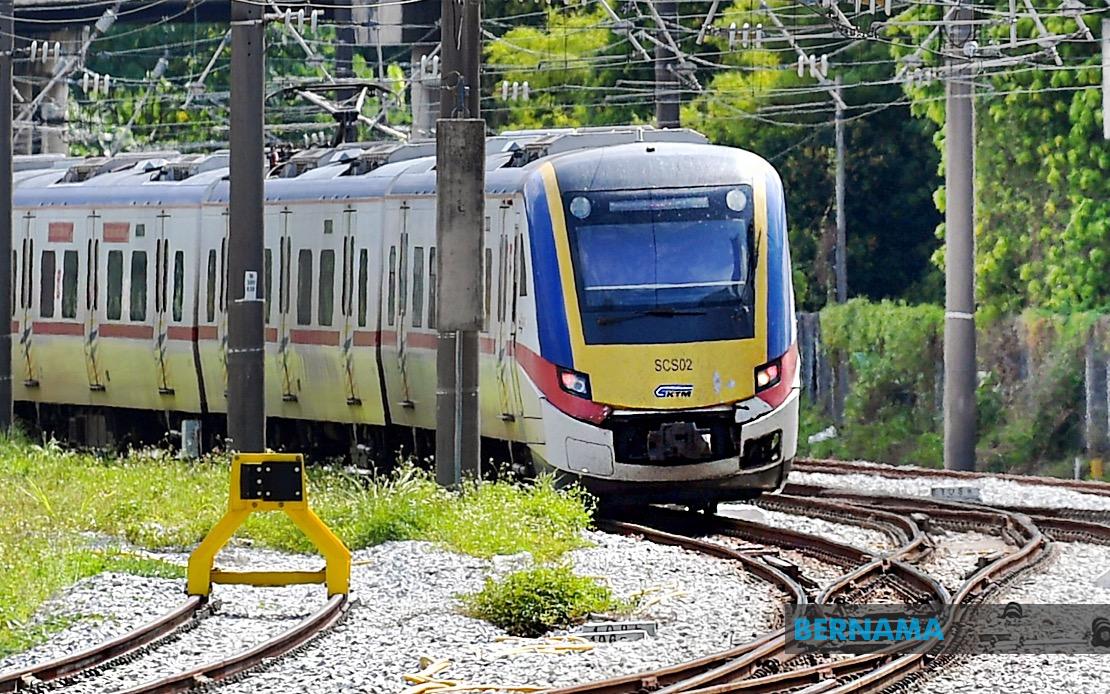
Parallel to these grassroots efforts, Keretapi Tanah Melayu Bhd (KTMB), the national railway operator, has responded to projected surges in train travel by substantially augmenting its seating capacity on the Electric Train Service (ETS) network. The corporation has determined that routes serving Johor would face exceptional pressure during the election window of July 10 to 12, prompting the deployment of additional rolling stock and scheduling adjustments.
For the high-volume KL Sentral-JB Sentral corridor, KTMB has effectively doubled capacity by adding 7,560 extra seats, lifting total availability from approximately 7,560 to 15,120 seats on this critical route. According to Datuk Azlan Shah Al Bakri, the group's chief executive officer, demand for this service has been remarkably brisk, with 12,769 seats—or 84 per cent of the expanded total—already reserved as of mid-morning on the day this announcement was made. This leaves only 2,351 seats remaining on the route, suggesting that late bookers may face availability constraints.
The rail operator has also reconfigured the secondary Gemas-JB Sentral-Gemas route, which serves voters in districts closer to Pahang and rural Johor constituencies. Seating on this route has been expanded from 630 to 4,410 seats during the same election-related travel window. While this expansion represents a far more dramatic percentage increase than the KL Sentral route, actual booking levels remain lower at 47 per cent of capacity, translating to 2,064 reserved seats with 2,346 remaining available. This differential demand pattern suggests that the KL Sentral corridor remains the dominant travel artery for out-of-state voters concentrated in the Klang Valley.
Querying the KTMB Mobile application revealed that premium time slots—particularly Friday evening and Saturday morning services—are approaching full occupancy across both enhanced routes, indicating that voters are clustering their travel around the most convenient departure windows. The railway company has advised the public to monitor the booking system continuously, as cancellations may periodically release seats and as operational adjustments might alter availability. This fluid situation reflects the challenges of forecasting demand when millions of citizens attempt to synchronise their movements around a specific electoral event.
The broader context underscores why such logistical mobilisation becomes necessary. The 16th Johor state election encompasses 172 candidates competing for 56 seats across the state, and 2,727,926 registered voters are entitled to participate on polling day. The sheer voter population base means that even modest participation rates from out-of-state residents translate into tens of thousands of journeys that must be accommodated within a compressed timeframe. This voting migration phenomenon has become a regular feature of Malaysian electoral contests as economic mobility drives working populations away from their home constituencies.
The coordination between private civil society actors like Stesen Pemantauan Rakyat and major state-linked enterprises like KTMB illustrates how electoral logistics operate in Malaysia's quasi-federal system, where both grassroots organisations and commercial entities acknowledge their stake in enabling voters to exercise their rights. For Malaysian expatriates and interstate migrant workers, these services represent crucial enablers of political participation—mechanisms that help bridge the geographic distance between employment and home, between urban opportunity and electoral obligation. Without such initiatives, the structural barriers to voting for displaced citizens would likely suppress turnout among precisely those demographics most economically engaged with the nation.

