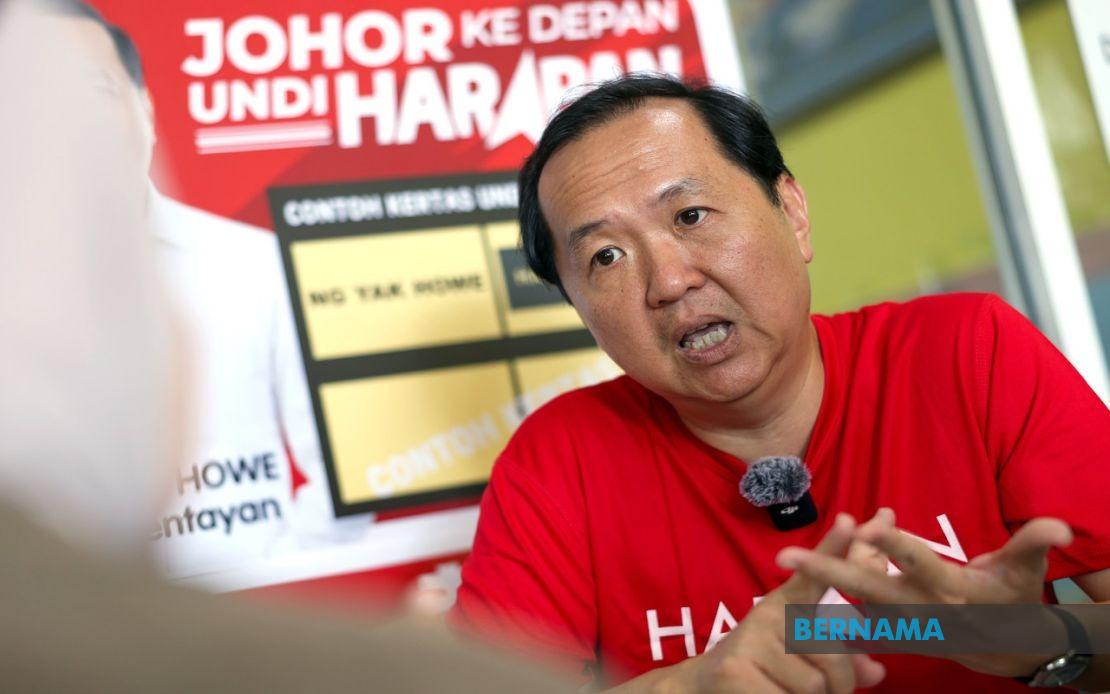
Ng Yak Howe, the Pakatan Harapan candidate contesting the Bentayan state seat in Johor's upcoming election, has thrown his political weight behind an ambitious plan to arrest the decline of Muar's historic town centre. The incumbent assemblyman identified urban decay and depopulation as the defining challenge facing the constituency, which encompasses more than half of the municipal area. His strategy reflects a broader concern across Malaysian towns, where centralised commercial districts have struggled to compete with modern shopping malls and suburban residential developments that pull both businesses and residents away from traditional urban cores.
The fundamental problem troubling Muar's commercial heart is the familiar pattern of daytime vitality followed by evening emptiness. While office hours bring a flurry of economic activity, the town centre transforms into a ghost quarter once workers depart and shops close their shutters. This rhythmic desertion has left nearly one-fifth of commercial premises vacant, representing lost tax revenue, diminished foot traffic, and reduced vibrancy that once characterised the area. Ng's diagnosis of this malaise stems from direct observation during community engagement, including recent walkarounds where he engaged traders and members of the public to understand their concerns firsthand.
Ng's proposed remedies centre on attracting younger demographics back into the town centre through a combination of commercial incentives and cultural programming. Working in tandem with Bakri Member of Parliament Tan Hong Pin, the assemblyman has championed initiatives including cash voucher schemes and lucky draw campaigns designed to stimulate consumer spending at local merchants. These targeted interventions aim to increase the foot traffic necessary to justify retail operations in an era of online commerce and suburban hypermarkets. The partnership between state and federal representatives underscores how urban regeneration increasingly requires coordination across multiple political levels, a lesson that could apply to struggling town centres across Southeast Asia.
Ng's background as a quality assurance engineer with over a decade of industry experience suggests a methodical, results-oriented approach to governance. His quarter-century involvement in politics has provided him with the networks and institutional knowledge necessary to implement complex urban development schemes. These credentials may explain his confidence in proposing concrete solutions rather than vague promises, though the actual effectiveness of voucher schemes in reversing long-term urban decay remains contested among development specialists.
The Bentayan seat contest unfolds within the broader context of the 16th Johor state election, wherein 172 candidates are pursuing 36 positions across the state legislature. Bentayan itself represents a medium-sized constituency with 34,205 registered voters, making it neither a marginal nor a safe seat. Ng faces a direct challenge from Barisan Nasional's Chua Lee Huat, presenting voters with a straightforward binary choice between the two main political coalitions. This two-cornered fight eliminates the complication of fragmented opposition votes that sometimes determines outcomes in multi-candidate contests.
The election calendar concentrates activity into a compressed timeframe, with early voting scheduled for July 7 and general polling on July 11. This compressed schedule limits candidates' ability to conduct extensive ground campaigns, placing a premium on prior grassroots connections and voter familiarity. For an incumbent like Ng seeking his third consecutive term, this advantage proves substantial—he benefits from existing name recognition and an established network of community relationships built over years of constituency service.
Muar's economic trajectory exemplifies challenges facing second-tier Malaysian towns that lack Kuala Lumpur's magnetic pull for investment or Penang's established tourist economy. The town's historical significance as a riverside trading post has given way to relative obscurity in an era of highway-accessible megamalls and e-commerce distribution centres. Successfully reversing this decline requires not merely short-term stimulus measures but fundamental repositioning of the town's economic identity, whether through heritage tourism, creative industries clustering, or leveraging proximity to Singapore's economic sphere.
The residents' outward migration reflects rational economic decision-making by families seeking newer housing, better schools, and modern amenities—precisely the factors that attracted them to suburban developments. Any urban revival strategy must therefore address these underlying drivers rather than simply hoping shoppers will return for nostalgic consumption. This requires potentially contentious decisions about infrastructure investment, heritage preservation versus modernisation, and density-increasing development that suburban migrants may resist.
For Malaysian voters watching Johor's political contests, Bentayan illustrates how local elections function as forums for addressing concrete community problems rather than abstract ideological debates. Ng's focus on town centre vacancy rates and resident retention reflects constituent concerns about livelihood, property values, and quality of life. Whether voters prioritise his incremental urban management approach or seek alternatives will depend on their assessment of his track record and the credibility of competing visions presented by Barisan Nasional.

