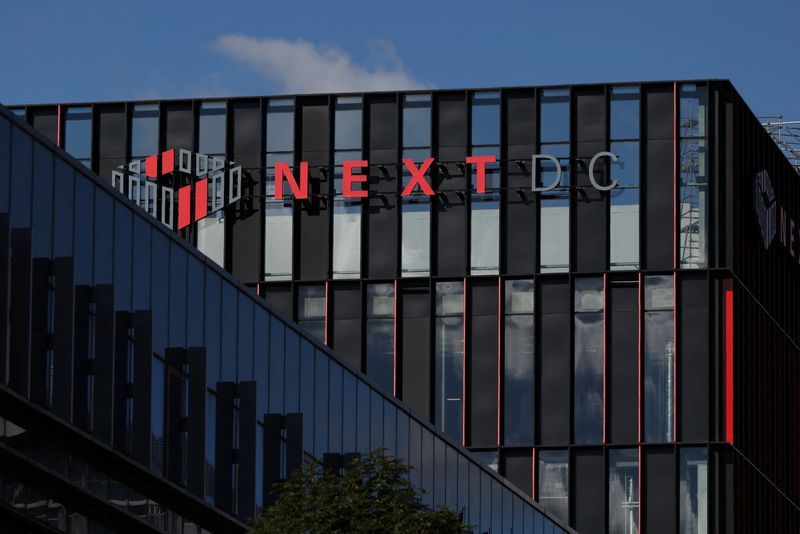
Australian data centre operator NextDC has delivered financial results that underscore a growing tension between booming artificial intelligence infrastructure demand and mounting environmental concerns. The company reported that both its water and energy efficiency metrics worsened during the financial year to June, even as profitability surged ahead of analyst expectations. This pattern—now repeated for three years running—has thrown into sharp relief the trade-offs inherent in the rapid expansion of computing capacity across the region, and comes at a moment when governments from Canberra to Singapore are reassessing the true cost of the digital infrastructure race.
The specific figures paint a picture of intensifying resource strain. NextDC's water usage effectiveness ratio, which measures litres of water consumed per kilowatt-hour of computing output, climbed to 2.40 from 2.25 in the prior year. Similarly, the company's power usage effectiveness ratio—a key indicator of how much electricity is required for cooling systems and supporting infrastructure—rose to 1.49 from 1.44. For a sector that markets itself as the backbone of digital transformation, these deteriorating efficiency numbers carry uncomfortable implications for water-stressed regions already grappling with competing demands from agriculture, manufacturing, and residential users.
NextDC attributed the worsening metrics to several operational factors. The company explained that newly commissioned data centre capacity was being run with cooling systems in full operation before servers were deployed to handle computing loads, creating temporary inefficiencies during the ramp-up phase. Additionally, internal reconciliation work identified previously undocumented water losses through leaks and meter anomalies across its portfolio. While these explanations are plausible, they also highlight operational challenges that the industry has yet to fully resolve, particularly as expansion accelerates across Southeast Asia where climate variability and water scarcity present additional constraints.
Despite the efficiency headwinds, NextDC delivered strong financial performance that rewarded investors. Revenue climbed 16 percent while the company swung to a statutory profit of A$82.1 million from a A$60.5 million loss a year earlier. The turnaround was partly assisted by an accounting gain on property valuations, but underlying earnings before interest, tax, depreciation and amortisation rose 15 percent to A$248.8 million, comfortably exceeding average analyst forecasts. This disconnect between financial success and environmental efficiency metrics creates a troubling narrative: the data centre business is thriving precisely because demand is explosive, yet that same demand is creating resource pressures that existing infrastructure cannot sustainably handle.
The deteriorating efficiency ratios matter beyond NextDC's balance sheet because they have become crucial policy barometers for governments wrestling with data centre expansion. Lawmakers and regulators increasingly monitor these metrics as proxies for the genuine strain that computing infrastructure places on electricity grids and water systems. In Australia's case, the federal government has begun developing mandatory national standards that would govern data centre operations across energy consumption, water usage, and geographic location. More radically, Canberra has proposed requiring new data centre operators to construct their own renewable energy capacity rather than drawing power from the existing grid—a move that would fundamentally reshape project economics across the region.
Globally, the pushback against data centre proliferation is intensifying. An expanding coalition of governments, municipal authorities, and regulatory agencies are implementing freezes, restrictions, or outright bans on new data centre construction. The drivers are multifaceted: concerns about surging electricity costs as data centres consume ever more power; depletion of water supplies in regions already facing scarcity; competition for land in densely populated areas; and the burden imposed on local communities through noise, heat discharge, and infrastructure strain. Ireland has seen its energy regulator curb new data centre connections. Several European cities have blocked expansion plans. Even in the United States, some jurisdictions are reconsidering their welcoming stance toward the sector.
For Southeast Asian policymakers observing these developments, the implications are profound. The region is simultaneously pursuing aggressive digital transformation agendas while confronting serious water and energy constraints. Countries like Thailand, Vietnam, and Malaysia have attracted data centre investment by offering relatively low operating costs and strategic geographic positioning. Yet the worsening efficiency metrics at established operators like NextDC suggest that as utilisation increases and infrastructure matures, the resource intensity of data centre operations may prove higher than initial assessments suggested. This creates a policy dilemma: attract investment that drives economic growth and technological advancement, or protect water and energy resources increasingly strained by climate variability and population growth.
NextDC's experience also reveals that efficiency improvements cannot simply be engineered away. The company is not a laggard in environmental performance; it competes directly with major players like Blackstone-owned AirTrunk and Infratil-owned CDC, which are all racing to capture market share in the Asia-Pacific data centre boom. If a professionally managed, well-capitalized operator continues to see efficiency metrics deteriorate despite ongoing investment and operational focus, this suggests that the problem may be structural rather than managerial. As artificial intelligence and machine learning workloads become more computationally intensive, data centres may inherently require more cooling and support infrastructure per unit of computing output.
The market's response has been notably subdued despite the environmental red flags. NextDC shares rose 3.3 percent following the results announcement, suggesting investors remain confident in the company's growth trajectory. This reflects the reality that capital markets are primarily valuing data centre operators on growth and profitability metrics rather than sustainability performance. Until efficiency improvements become a materiality issue for earnings or a constraint on expansion plans, financial incentives will remain misaligned with environmental imperatives. The company's rising water and energy consumption has not prevented it from delivering record profits, which paradoxically reinforces the investment case for data centre expansion even as resource constraints tighten.
The sustainability implications extend beyond individual companies to the entire digital economy's trajectory. The AI boom that NextDC is capitalising upon is projected to drive exponential growth in data centre demand over the next decade. If efficiency metrics continue deteriorating at existing facilities, and if new entrants prove similarly unable to reverse the trend, the aggregate resource footprint of computing infrastructure could become genuinely constraining in water-stressed regions. This might ultimately force either a technological breakthrough in data centre cooling and efficiency—potentially through alternative designs or materials science innovations—or a deliberate policy decision to prioritise resource conservation over computing capacity expansion.
Looking ahead, the Australian regulatory push toward mandatory standards and renewable energy self-sufficiency may establish a template that other regional governments consider adopting. Such requirements would increase development costs and potentially slow data centre expansion, but they would align operator incentives with genuine environmental sustainability. For NextDC and its peers, the challenge is not merely optimising existing facilities but fundamentally rethinking infrastructure design to decouple computing power from resource consumption. The company's latest results demonstrate that current business models are financially viable despite resource inefficiency—but whether they remain politically and socially tenable as public scrutiny intensifies remains an open question that will shape the sector's trajectory across Asia-Pacific.

