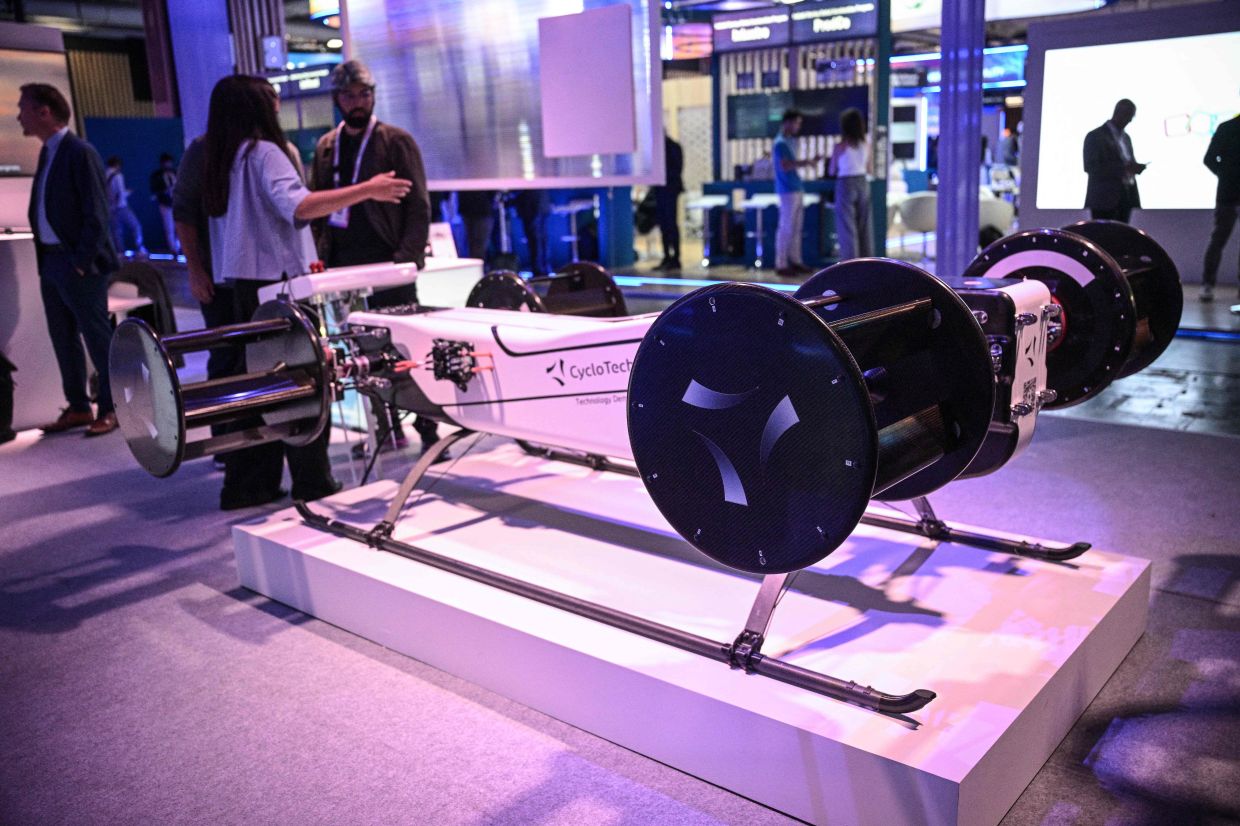
At Paris Vivatech, one of Europe's largest technology festivals, a diverse array of emerging companies are showcasing innovations that could fundamentally alter multiple industries, from biomedicine to security and aerospace. The three-floor exhibition space is filled with ventures targeting some of the world's most pressing challenges, each representing billions of dollars in potential market opportunity and years of dedicated research and development.
Berlin-based Blueprint Biomed is addressing a critical problem in orthopedic surgery: the limitations of bone grafts harvested from patients' own bodies. These autologous grafts, whilst long considered the gold standard, frequently fail and necessitate repeat operations. The startup has engineered artificial bone structures using three-dimensional printing technology to create custom scaffolds from polycaprolactone, a biodegradable polyester, combined with collagen. Chief executive Aaron Herrera explained to AFP that this eliminates the need to extract bone from the patient, thereby reducing surgical complications and follow-up interventions. The two materials dissolve naturally within the body—collagen within three months and polycaprolactone within two years—leaving behind only newly formed bone tissue. As Blueprint pursues US$2.5 million in funding to advance towards human clinical trials, the company targets product launch by 2028, positioning itself to capture a market encompassing millions of bone-graft procedures performed annually across the globe.
Austrian startup CycloTech is reimagining drone design through novel rotor architecture. Traditional quadcopter drones, already integral to surveillance, delivery systems and military applications in conflict zones like Ukraine, face inherent limitations in agility and manoeuvrability. CycloTech's innovation centres on cylindrical motors featuring multiple wing-shaped blades that grant aircraft unprecedented flexibility. Marketing chief Andrea Marchsteiner described the capability to hover stationary like a helicopter, accelerate forward like a fixed-wing plane, execute mid-air braking, and reverse direction—all without mechanical reconfiguration. This versatility opens applications spanning package delivery in congested urban environments, passenger air transport, and defence operations. The 65-person company has already secured €40 million in funding and is now courting strategic partners willing to integrate its motors into existing aircraft platforms, suggesting imminent commercialisation across multiple sectors.
The rise of generative artificial intelligence has weaponised audio synthesis, enabling creation of convincing voice imitations—so-called deepfakes—that threaten to undermine voice-based identity verification systems long considered secure. French firm Whispeak pivoted from its original mission of voice authentication for banking and sensitive services to address this emerging threat. Chief executive Florent Van Calster revealed that modern deepfake technology requires less than ten seconds of genuine audio to create convincing fraudulent recordings, often freely available through commercial tools. Whispeak's machine learning systems, refined over three years, now claim supremacy in audio deepfake detection, winning multiple international competitions. The company has partnered with France's Bouygues telecommunications operator to screen incoming calls for fraudulent audio and alert subscribers when deepfakes are identified. Though Van Calster acknowledges error rates below one per cent on their training data, he candidly notes that adversarial improvement in spoofing technology will fuel perpetual escalation—a dynamic where defenders must continuously innovate to outpace increasingly sophisticated attack methods.
Athletic performance monitoring has historically relied on blood testing and wearable devices measuring heart rate and oxygen saturation, metrics that provide incomplete physiological insight. Hong Kong-based PointFit has developed a non-invasive alternative: an adhesive skin patch with embedded sensors that analyse biomarkers—glucose, cortisol, and other performance indicators—from sweat secretions. Chief executive Kenny Oktavius, who conceived the technology whilst a student in 2019, has built proprietary artificial intelligence that calculates a personalised sweat index adjusted for individual demographics and environmental conditions. This represents a significant advancement because conventional metrics often miss critical warning signs; even elite marathon runners equipped with expensive monitoring systems occasionally collapse despite normal heart-rate readings. By shifting focus to the biomarkers clinicians examine in hospital settings, PointFit offers athletes continuous, accessible insight into metabolic and hormonal states. The startup has already collaborated with Red Bull's Athlete Performance Centre and sportswear innovator Puma's Nitro Labs, validating performance among elite users before expanding toward mass-market distribution via retailers like Decathlon and accessory brands like EssilorLuxottica.
These ventures collectively illustrate how emerging companies are applying advances in materials science, artificial intelligence, sensor technology, and mechanical engineering to create solutions addressing real-world inefficiencies and hazards. For Southeast Asian markets and enterprises, these innovations carry particular significance. The region's growing medical device manufacturing ecosystem could integrate Blueprint Biomed's artificial grafts into localised production, reducing import dependence and healthcare costs. CycloTech's drone motors align with Southeast Asia's expanding logistics and infrastructure inspection sectors, where last-mile delivery and infrastructure monitoring demand nimble, responsive aircraft. The deepfake threat posed by Whispeak's technology resonates acutely in a region where telecom fraud and voice-based financial services remain prevalent and expanding. Athletic monitoring through PointFit's sweat sensors appeals to Southeast Asia's rising sports science infrastructure and growing consumer interest in personal health tracking.
These innovations also underscore broader trends reshaping global technology markets. The shift toward biocompatible, implantable medical devices reflects healthcare systems' prioritisation of durability and reduced invasiveness. Investment in audio security technologies demonstrates recognition that artificial intelligence poses not only opportunities but tangible threats requiring defensive innovation. The commercialisation of athletic biomarker monitoring reflects converging interests among sports science, consumer health, and luxury retail sectors. Each startup represents years of disciplined research, substantial capital deployment, and strategic positioning for high-growth markets, signalling that Europe's innovation ecosystem remains globally competitive despite competition from Asian and North American tech hubs.

