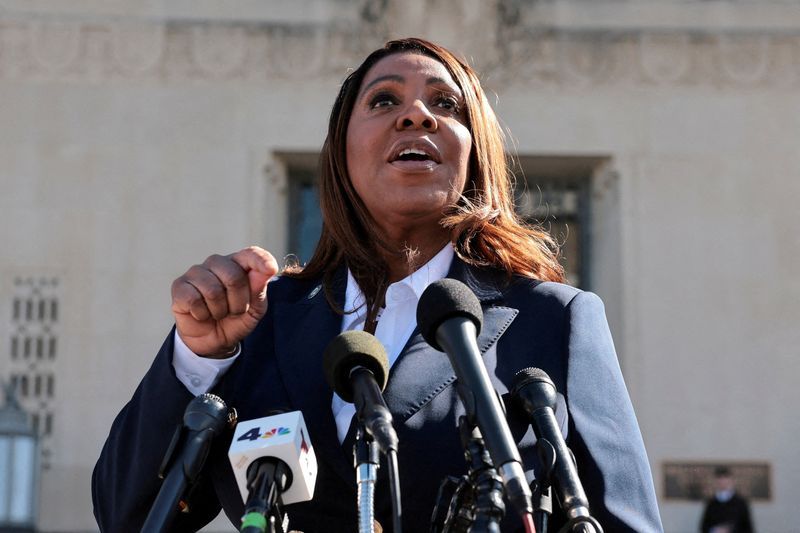
A New York state court has dealt a significant blow to Zelle, the digital payment platform backed by seven major American banks, by rejecting its effort to dismiss a lawsuit accusing it of prioritising growth and profit over consumer protection. Justice Phaedra Perry-Bond of Manhattan's state court ruled on Tuesday that New York Attorney General Letitia James had presented sufficient evidence to proceed with claims that Zelle's parent company, Early Warning Services, knowingly neglected essential security safeguards while rushing the platform to market between 2017 and the present day.
The case represents an escalating regulatory challenge to Zelle's business model at a time when digital payments remain central to financial commerce globally, including in Southeast Asia where similar platforms are expanding rapidly. Early Warning Services operates as a consortium owned by Bank of America, Capital One, JPMorgan Chase, PNC, Truist, US Bank and Wells Fargo—collectively representing trillions in assets and making this dispute highly consequential for American banking infrastructure. The judge's decision to allow the lawsuit to advance suggests courts may be increasingly sceptical of arguments that large financial technology platforms bear no responsibility for fraud occurring on their networks.
Attorney General James contends that Zelle accumulated at least $1 billion in losses attributable to fraudulent transactions, money that flowed between consumers unable to recover funds and scammers exploiting the platform's relative lack of verification mechanisms. The specific vulnerabilities James identified include account takeovers where hackers gained access to user credentials, schemes involving false promises of goods or services that never materialised, and elaborate impersonations of legitimate banks, government agencies and utility companies designed to pressure users into sending money urgently. Justice Perry-Bond found these allegations credible enough to warrant examination by a jury, rejecting Zelle's argument that merely advertising itself as safe does not constitute misleading marketing when the company operated with demonstrable knowledge of systemic vulnerabilities.
Central to the judge's reasoning was evidence that Zelle continued collecting and retaining fees from transactions later determined to be fraudulent, a fact that Perry-Bond suggested raised troubling questions about whether the company had implicitly or expressly accepted the status quo. This detail carries particular weight because it suggests financial incentives may have discouraged swift corrective action. The judge also scrutinised Zelle's marketing materials that promised "peace-of-mind" and emphasised being "backed by the banks, so you know it's secure"—claims that now face judicial examination for potential deception. Such advertising carries outsized influence on consumers in Southeast Asia and other emerging markets where trust in digital payments remains developing and bank-backed platforms are viewed as inherently safer.
The timeline of Zelle's response to security concerns strengthens James's position considerably. According to the attorney general, Zelle proposed implementing basic safeguards as early as 2019 but did not actually deploy these protections until 2023, following investigations by the federal Consumer Financial Protection Bureau and congressional pressure. This six-year delay between identifying necessary safety measures and implementing them undermines Zelle's characterisation of itself as responsive to security concerns. The gap reveals what James characterises as a deliberate calculation that maintaining current market dominance and user convenience justified accepting elevated fraud risks, particularly when affected consumers bore the financial burden of losses.
Zelle's spokesperson Eric Blankenbaker issued a statement asserting that fraud reports remain exceptionally low relative to transaction volumes and characterising the attorney general's lawsuit as politically motivated recycling of arguments that courts have repeatedly rejected elsewhere. However, this defence addresses neither the specific factual allegations nor the judge's assessment that those allegations deserve consideration. The company's position that it bears no liability for "passive nonfeasance"—essentially arguing that failing to prevent fraud differs legally from actively causing it—found no favour with Justice Perry-Bond, who determined that the distinction does not absolve responsibility when companies possess knowledge and resources to mitigate harm.
The broader context involves significant regulatory divergence following changes in federal enforcement. The CFPB initiated a comparable investigation but dropped its case in March 2025, shortly after President Donald Trump commenced his second term in office, when the agency significantly curtailed most enforcement activities. James's decision to pursue state-level action after federal regulators withdrew suggests that consumer protection from digital payment fraud may increasingly fall to individual states rather than federal authorities. For Malaysian regulators and fintech companies operating regionally, this development illustrates how payment platforms can face sustained legal and regulatory pressure despite federal agencies stepping back, particularly when state-level officials prioritise consumer protection.
Zelle's competitive position within the digital payments ecosystem, where it competes directly with PayPal's Venmo and Block's Cash App, provides useful context for assessing the lawsuit's significance. All three platforms occupy similar market spaces and face comparable fraud challenges, yet the specific vulnerabilities that Zelle allegedly ignored—and consciously delayed addressing—distinguish this case. The ruling permits examination of whether Zelle's particular approach to security reflected industry standards or deliberate neglect. For Southeast Asian consumers and policymakers monitoring how American courts address fintech accountability, the case establishes important precedent regarding corporate responsibility for fraud occurring on payment networks, particularly when companies possess both knowledge of vulnerabilities and capacity to remediate them.
The litigation will likely extend considerably, allowing months or years of discovery and testimony. However, the judge's preliminary assessment that the case possesses sufficient merit to proceed fundamentally alters Zelle's risk profile. Rather than dismissing the matter at an early stage, the court has signalled that questions about whether Zelle prioritised market expansion over security warrant jury consideration. The potential financial exposure extends beyond the $1 billion in direct fraud losses if courts determine that Zelle engaged in deceptive marketing or if additional damages and penalties apply. This ruling underscores that large financial institutions cannot indefinitely claim ignorance of security vulnerabilities or argue that consumer harm represents an acceptable cost of business convenience.

