Residents of Kampung Seberang Gajah in Tangkak can look forward to significantly improved internet connectivity as plans advance for a dedicated telecommunications tower tailored to serve their community. The infrastructure project comes after repeated complaints about inadequate broadband access, a persistent challenge affecting rural Malaysia despite the country's broader push toward digitalisation.
Deputy Communications Minister Teo Nie Ching acknowledged during a site visit that existing telecommunications infrastructure in the area has failed to meet community needs. Although two towers currently operate in proximity to the village, their signal reach and capacity prove insufficient for residents scattered across the locality. This gap between available infrastructure and actual coverage—a common problem in Malaysian rural regions—has compounded frustrations as more residents attempt to access online services for work, education, and essential services.
Responding to these deficiencies, the Malaysian Communications and Multimedia Commission (MCMC) has mandated that telecommunications service providers proceed with constructing an additional tower specifically positioned to enhance coverage in Kampung Seberang Gajah and surrounding areas. This directive reflects growing government acknowledgment that blanket solutions cannot adequately address connectivity disparities across diverse terrain and settlement patterns.
The project has moved beyond preliminary planning stages. According to Teo, the technical specifications and construction blueprint for the new facility have been finalised through coordination between MCMC and service providers. However, the initiative remains temporarily stalled at the permit application stage, awaiting approval from the local municipal authority responsible for Tangkak. This bureaucratic clearance, while routine, represents a critical bottleneck that could either accelerate or delay resolution of the connectivity problem.
Teo publicly urged both the local authority and the telecommunications company to expedite the approval and construction timeline. Her intervention underscores mounting political pressure to address rural connectivity gaps, an issue that resonates across Malaysia's electoral constituencies. Village-level internet access has become increasingly essential for economic participation, particularly as digital payments, e-commerce, and remote work become mainstream employment options.
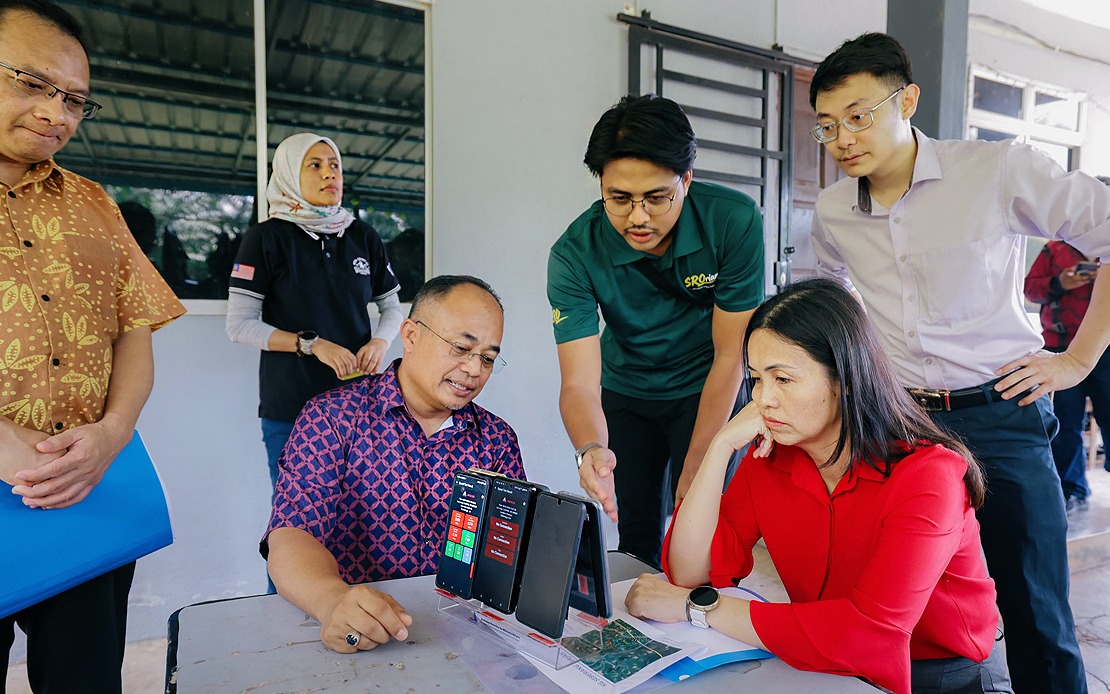
The survey conducted by Teo, accompanied by MCMC officials and telecommunications company representatives, functioned partly as a diagnostic exercise and partly as a political acknowledgment of community grievances. Such high-level visits to affected villages signal government responsiveness while generating momentum for project implementation. The presence of Bukhari Yahya, Head of the State Affairs Sector, alongside MCMC Southern Region Office director Rizal Abd Malek, reinforced the multi-agency coordination required for such infrastructure deployment.
Malaysia's digital divide remains a pressing challenge despite rapid technological advancement in urban centres. Villages like Kampung Seberang Gajah exemplify a broader pattern where rural residents face connectivity problems that hinder their participation in the digital economy. From agricultural e-marketing to accessing telemedicine services and remote education, inadequate broadband creates cascading disadvantages for rural communities attempting to compete in an increasingly online-dependent society.
The telecommunications sector in Malaysia has been gradually expanding coverage, but the expansion follows market incentives rather than uniform geographical priorities. Private service providers naturally focus resources on densely populated, profitable areas, leaving scattered rural settlements with insufficient investment. Government intervention through MCMC directives becomes necessary to correct this market failure and ensure universal service obligations are met across the nation's diverse geography.
Construction timelines for such projects typically span several months from permit approval to full operational status. For Kampung Seberang Gajah residents, the path forward hinges on the local authority's swift processing of applications and the telecommunications company's mobilisation of construction resources. Any delays in these sequential steps would further prolong the connectivity struggles that have accumulated over what appears to be an extended period of inadequate service.
Beyond the immediate infrastructure addition, this initiative reflects broader strategic priorities within Malaysia's communications sector. The government has committed to achieving nationwide broadband targets as part of digital transformation agendas. Individual projects like the Kampung Seberang Gajah tower contribute incrementally toward these national objectives while demonstrating government responsiveness to localised grievances.
The successful completion of this tower would establish a precedent for addressing similar connectivity gaps in other rural areas facing comparable infrastructure deficiencies. Documentation of timelines, costs, and implementation challenges from this project would inform future infrastructure rollouts across Malaysia's remaining unserved and underserved communities. As digitalisation accelerates nationally, ensuring equitable access becomes increasingly important for social cohesion and economic inclusion.
For residents currently struggling with sporadic connectivity, the promised tower represents more than technical infrastructure—it symbolises recognition that rural communities deserve comparable digital access to urban counterparts. The pace of permit approvals and construction will ultimately determine whether this commitment translates into tangible improvements within the year or extends the current accessibility challenges further into the future.

