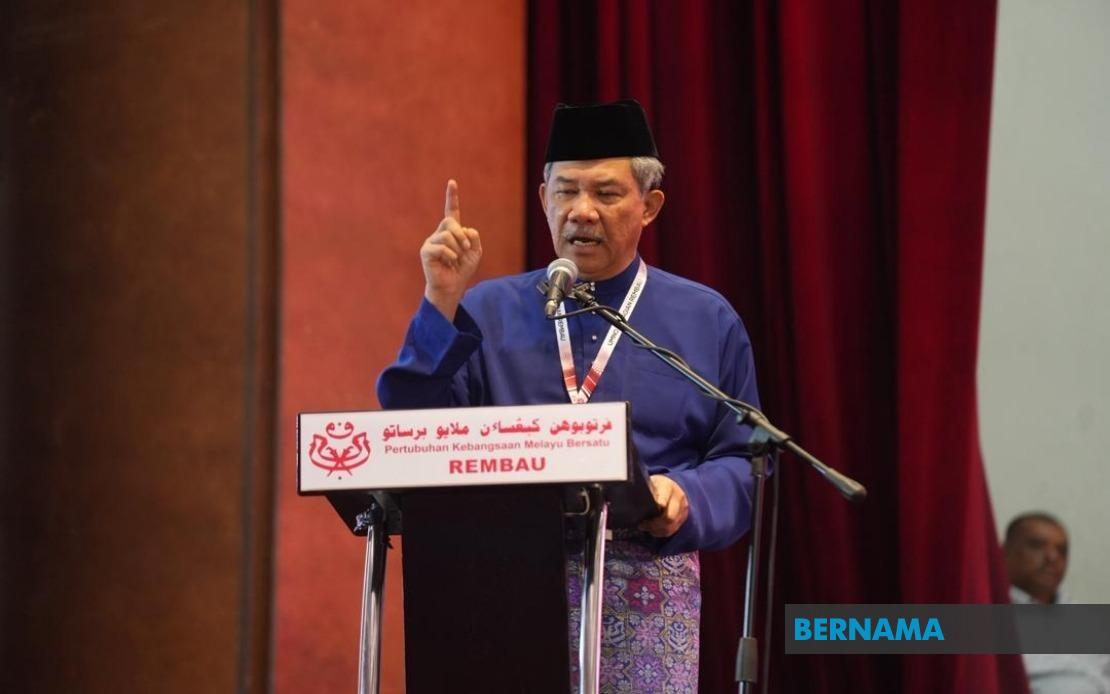
Datuk Seri Mohamad Hasan, the deputy chairman of Barisan Nasional and Rantau State Assemblyman, has thrown his weight behind the 10 recently appointed members of the Negeri Sembilan State Executive Council, asserting that they are well-equipped to work alongside the Menteri Besar and execute their respective duties to improve public welfare. The announcement comes shortly after the council members completed their swearing-in ceremony before Yang Dipertuan Besar Tuanku Muhriz Tuanku Munawir at Istana Besar Seri Menanti in Seremban on August 7.
Mohamad's endorsement reflects the governing coalition's confidence in the new administration team as it embarks on its policy implementation agenda in the state. The appointment of state executive council members represents a critical moment for any administration, as these individuals will shoulder significant responsibility for translating government directives into tangible benefits for the rakyat. For Negeri Sembilan, a state that has experienced various political transitions in recent years, the formation of a fresh exco signals a renewed commitment to stabilising governance structures and delivering consistent service quality.
According to Mohamad, the role of an executive council member extends far beyond mere administrative duties. Instead, these individuals function as crucial intermediaries between the government apparatus and ordinary citizens. This intermediary function carries substantial weight in the Malaysian political landscape, where effective communication between state institutions and the public serves as a foundation for public trust and policy acceptance. Mohamad emphasised that exco members must become conduits through which government policies are explained comprehensively to communities, ensuring that the rationale and benefits of state initiatives are clearly understood by those they affect.
Simultaneously, the exco representatives are tasked with the reverse responsibility of gathering ground-level feedback from constituents. This bidirectional communication channel proves essential in democratic governance, allowing state authorities to identify emerging challenges, receive community suggestions, and incorporate grassroots perspectives into policy refinement processes. Mohamad stressed that by systematically collecting issues, grievances, and constructive recommendations from various quarters, the government can continuously enhance its administrative performance and tailor interventions to address genuine community needs rather than operating in isolation from public sentiment.
The new exco members face an immediate responsibility to undergo comprehensive briefings from departments falling under their respective portfolio assignments. These orientation sessions serve a vital function, equipping ministers with detailed knowledge of departmental operations, existing programmes, budgetary constraints, human resources, and pending initiatives. Without thorough understanding of departmental machinery, even well-intentioned exco members risk ineffectiveness or inadvertently creating administrative bottlenecks. The quality of these briefings thus becomes a determinant of how quickly new council members can transition from novices to effective administrators.
Mohamad also highlighted the importance of maintaining robust working relationships between the exco and civil service departments. In Malaysia's federal structure, state executive councils depend heavily on professional civil servants to implement policies, conduct research, and manage day-to-day administration. Poor rapport between the political executive layer and the permanent bureaucracy can lead to implementation delays, miscommunication, and suboptimal service delivery. Conversely, constructive partnerships characterised by mutual respect and clear communication pathways tend to produce more efficient governance outcomes and quicker policy execution.
The swearing-in ceremony represents more than a ceremonial formality; it embodies the constitutional transfer of authority and responsibility. By taking their oaths before the Yang Dipertuan Besar, the exco members formally assume public duties and bind themselves to uphold constitutional obligations. This ceremony reinforces the principle that state governance operates within established constitutional frameworks and that individual ministers, regardless of their political background, are ultimately accountable to the institution of the monarchy and the people of Negeri Sembilan.
For Malaysian observers and residents of Negeri Sembilan, the composition and performance of this new exco will provide early indicators of whether the current political arrangement can deliver tangible improvements in state services. Key areas where the new administration's effectiveness will be measured include infrastructure development, education quality, healthcare accessibility, economic opportunity creation, and responsive governance. The coming months will reveal whether these exco members can translate Mohamad's confidence into concrete achievements that resonate with ordinary citizens.
Beyond Negeri Sembilan, the formation of this new executive council occurs within a broader context of Malaysian state politics characterised by ongoing political recalibration. Mohamad's remarks also touched peripherally on potential electoral developments in Melaka, noting that any state election would ultimately depend on decisions by that state's Chief Minister regarding dissolution of the State Legislative Assembly. This observation underscores how state-level politics in Malaysia remains dynamic, with various political configurations continuing to evolve across different states as coalitions adjust and personalities shift roles.
The appointment of the new exco members, therefore, represents both a culmination of recent political processes and a commencement of a new governance chapter for Negeri Sembilan. Their success or shortcomings in coming months will likely influence voter perceptions and political dynamics not only within the state but potentially across the broader peninsular political landscape. For residents of Negeri Sembilan, the true measure of this new team's worth will emerge through observable improvements in public services, infrastructure, and responsive governance rather than through ministerial pronouncements alone.

