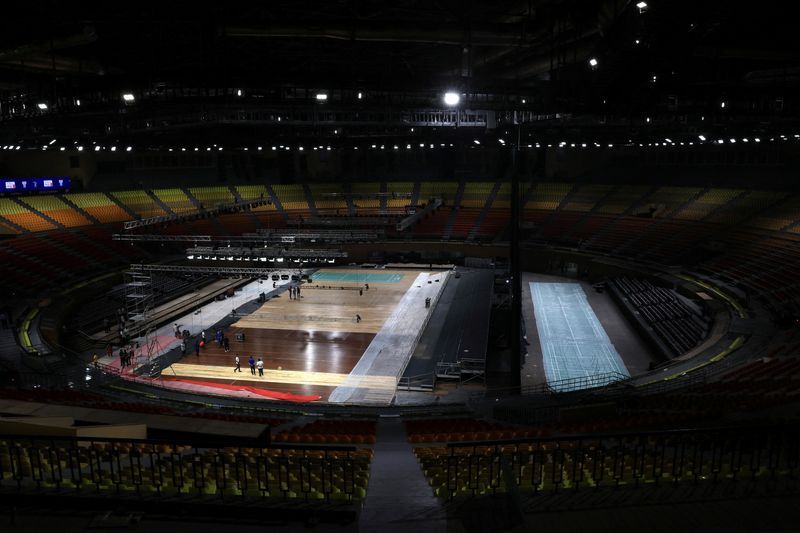
India's hosting of the Badminton World Federation championships in New Delhi beginning next week represents more than just a showcase of the nation's sporting prowess. Among the thousands of volunteers and professional staff preparing the Indira Gandhi Indoor Stadium lies an unconventional cadre of workers—monkey mimics—tasked with an equally unconventional duty: keeping one of India's most persistent urban pest populations away from the competition venue.
The decision to employ what are colloquially called monkey whisperers reflects a peculiar challenge facing major event organisers throughout India's capital. Rhesus monkeys have become an entrenched nuisance in New Delhi, regularly infiltrating office buildings, government facilities, and public spaces where they harass residents, steal food, and create safety hazards for unwary pedestrians. The monkeys' unpredictable behaviour and aggressive tendencies have forced Indian institutions to develop creative countermeasures, with langur monkeys emerging as the most effective natural deterrent. These larger primates, distinguishable by their black faces and imposing frames, naturally intimidate rhesus monkeys, which is why they are routinely deployed—sometimes even statically positioned—in government offices and commercial buildings across the city.
Zafar, one of the specialists hired for the badminton championships and a third-generation practitioner of this unusual trade, demonstrated his vocalisations to assembled journalists during a recent media tour of the stadium. His hooting repertoire, honed through years of experience, replicates the territorial calls and alarm sounds that langurs produce in the wild. The psychological impact on rhesus monkeys is immediate and visceral—the sound triggers an instinctive fear response that compels them to avoid the area entirely. Zafar emphasised that the methodology prioritises non-lethal deterrence rather than harm, reflecting broader ethical considerations in urban wildlife management across Asia's growing metropolitan centres.
The Badminton Association of India's decision to fortify security with such measures stems from a previous embarrassment during the Indian Open tournament held earlier this year at the same venue. Mid-match, a rhesus monkey was spotted roaming freely through the gallery seating area, disrupting the professional atmosphere and raising questions about the venue's preparedness to host international-standard competitions. The incident prompted intense scrutiny from the Badminton World Federation and highlighted organisational vulnerabilities that could undermine India's broader ambitions to host major global sporting events.
Those ambitions are substantial. India has been designated as host for the 2030 Commonwealth Games and is actively campaigning for the 2036 Olympic Games. The badminton championships thus function as a critical test case—a dress rehearsal that will demonstrate to international sporting bodies and the global media whether India possesses the infrastructure, organisational capability, and attention to detail necessary to manage events of Olympic scale. Any logistical failures or environmental disruptions could ripple through the bidding process for future competitions, influencing decisions by the International Olympic Committee and other major sporting federations.
Monkey management is only part of the broader environmental remediation undertaken at the stadium. An equally pressing concern has been New Delhi's pigeon overpopulation, which created hygiene and operational disruptions during the Indian Open. The incident stands out as particularly problematic: matches were halted twice when pigeons soiled the playing surface, and athletes raised formal complaints about unsanitary conditions affecting both court safety and personal health. Such incidents in professional sports venues are regarded seriously by international federations and can result in negative assessments of a host nation's execution capabilities.
To address the pigeon problem, stadium authorities have applied non-toxic adhesive gels across roofing structures and ventilation ducts. This solution mirrors techniques already deployed on railway infrastructure throughout India, where pigeons pose similar problems to operations. The gel creates an uncomfortable surface that discourages roosting without harming birds, representing a more humane approach than culling programmes. Implementation has been extensive, targeting all potential perching areas that could allow pigeons access to the indoor competition space.
Sanjay Mishra, the Badminton Association of India's secretary general, expressed confidence that the corrective measures implemented since the Indian Open will eliminate recurring problems. He noted that the sports ministry undertook substantial facility improvements driven specifically by identified vulnerabilities, suggesting a systematic approach to quality assurance. Critically, Mishra claimed that the Badminton World Federation has formally endorsed the arrangements, offering validation that organisers have met international standards for competition hosting. Such endorsements carry significant weight in the broader assessment of India's event management competency.
For Southeast Asian observers, the Indian approach to environmental challenge management offers instructive lessons. As the region's economies grow and cities expand, wildlife intrusion into urban spaces becomes an increasingly common management problem. The deployment of specialised personnel, reliance on biological deterrents, and application of non-lethal solutions reflect adaptive management strategies that preserve both professional standards and ethical commitments to animal welfare. The monkey whisperers working at New Delhi's badminton championships represent a distinctly South Asian solution to a distinctly modern urban problem—unconventional, perhaps, but pragmatically effective and worthy of consideration by other rapidly urbanising cities throughout Asia confronting similar environmental pressures.

