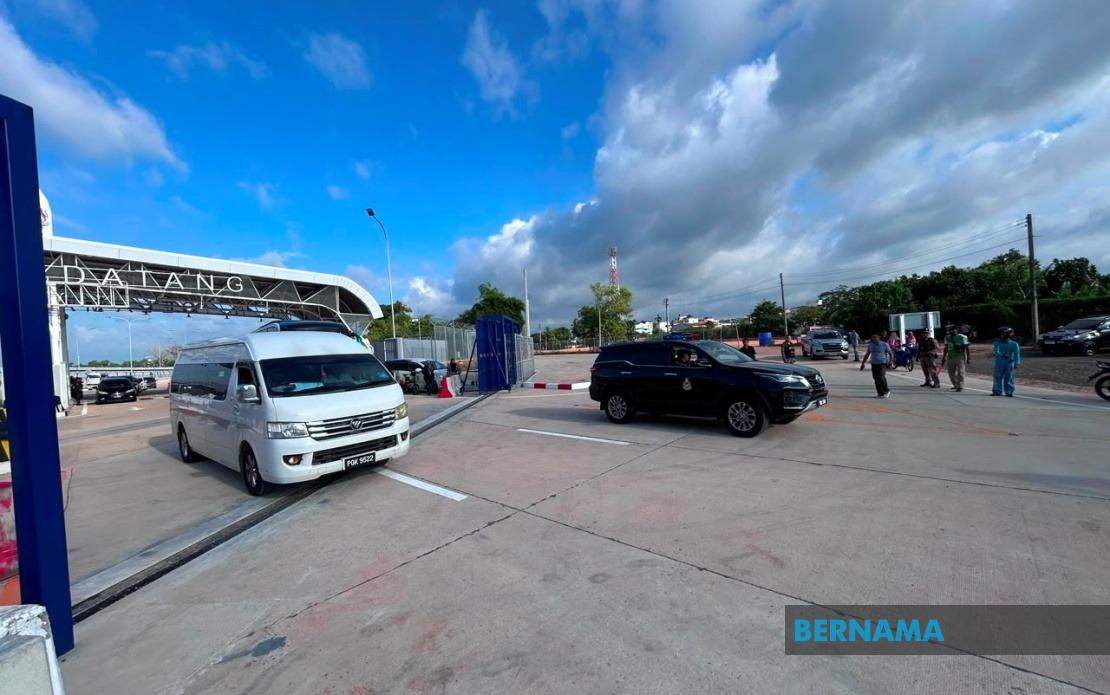
A new road link connecting the Bukit Kayu Hitam Immigration, Customs, Quarantine and Security Complex in Kedah with Thailand's Sadao Customs, Immigration and Quarantine facility became operational on July 11, marking a significant infrastructure milestone in bilateral relations between Malaysia and Thailand. The route, which commenced operations at 6 am, represents a collaborative effort to modernise cross-border infrastructure at one of Southeast Asia's most heavily trafficked land borders.
Prime Minister Datuk Seri Anwar Ibrahim and Thai counterpart Anutin Charnvirakul jointly inaugurated the facility the previous day, underscoring the political importance both governments place on deepening integration and facilitating seamless movement across their shared frontier. The project emerged from recognition that existing infrastructure had become inadequate to handle growing volumes of travellers and commercial traffic, particularly during peak periods such as school holidays and festive seasons when congestion would create bottlenecks extending hours.
The immediate practical impact became evident as early morning traffic flowed smoothly through the newly opened corridor. Motorists reported positive experiences, with many noting the logical traffic organisation and enhanced capacity compared to arrangements at the previous main crossing point. The separation of heavy and light vehicles at the Sadao facility represents a significant operational improvement, allowing transport operators to navigate checkpoint procedures without the interminable delays that characterised earlier procedures.
Mohd Faizal Ahmad, a 42-year-old motorist from Penang, highlighted how the reconfigured route addresses longstanding frustrations for Malaysian travellers. He observed that previously, holiday periods would generate severe bottlenecks as diverse vehicle categories converged on narrow passages designed for lower traffic volumes. The new infrastructure promises to redistribute traffic flows across wider, more strategically designed approaches that accommodate vehicles according to their characteristics and documentation requirements.
Wan Muhammad Shahid Wan Mohd Desa, a 28-year-old commercial driver, emphasised how the wider road surface and segregated traffic lanes transform the experience for heavy vehicles. Previously, lorries heading to Danok from the Bukit Kayu Hitam ICQS would merge indiscriminately with passenger cars, motorcycles, and smaller commercial vehicles, creating chaotic conditions that impacted border crossing efficiency. The new arrangement permits trucks to follow dedicated pathways through the Sadao facility, dramatically reducing friction points where different vehicle classes would compete for limited space.
Thailand-bound freight transport stands to benefit substantially from these improvements. The commercial sector has long flagged cross-border congestion as an impediment to regional trade integration, with delays translating into higher logistics costs that ultimately inflate prices for consumers throughout the region. By streamlining the border crossing process, the new road enables faster clearance times and more predictable delivery schedules, making cross-border commerce more economically attractive for small and medium enterprises that depend on timely merchandise movement.
Mat Li Daman, a Thai national frequently travelling to Malaysia, provided perspective from the Thai side, noting that the expanded Sadao CIQ facility itself represents a significant upgrade from cramped, outdated structures. The larger building accommodates more efficient documentation procedures and vehicle entry declaration processes, creating a more dignified experience for the tens of thousands of cross-border travellers who pass through monthly. From a practical standpoint, improved facilities reduce administrative bottlenecks that previously arose when insufficient space forced sequential rather than parallel processing of paperwork.
The infrastructure investment reflects broader strategic priorities within both governments to position their shared border as a gateway for regional commerce and tourism rather than merely a checkpoint to be endured. Enhanced capacity and modern facilities signal commitment to making cross-border movement attractive to travellers who might otherwise opt for alternative routes or delay trips entirely. Tourism flows between Malaysia and Thailand have significant economic implications for both nations, and border infrastructure quality directly influences travel decisions, particularly among families planning holidays.
Regional implications extend beyond immediate bilateral relations. The Malaysia-Thailand border serves as a critical transit point for goods moving throughout Southeast Asia, with implications for supply chains extending into Cambodia, Laos, and Vietnam. Congestion at Bukit Kayu Hitam has ripple effects across the regional economy, affecting everything from fresh produce to manufactured components. Improved efficiency here creates positive spillovers throughout the broader regional trading system that depends on rapid, reliable cross-border movement.
The new facility also carries symbolic weight in demonstrating concrete cooperation between Malaysia and Thailand at a time when regional attention often focuses on maritime disputes and competing territorial claims. Infrastructure projects that visibly improve daily life for ordinary citizens generate goodwill that can help stabilise bilateral relations during periods of political tension. When Malaysians experience shorter border crossing times and Thai visitors encounter modern, welcoming facilities, these interactions contribute to favourable public sentiment that supports cooperative frameworks.
Operational success will ultimately depend on sustained maintenance and responsive management as usage patterns emerge. The initial smooth traffic flow observed during opening week may not reflect behaviour during peak holiday periods when the facility will face genuine stress tests. Both governments must remain committed to monitoring congestion patterns and implementing adjustments to traffic flow protocols as experience reveals inefficiencies. Regular maintenance of road surfaces and checkpoint equipment is essential to preserving the facility's efficiency over decades of heavy use.
Looking forward, the new road link positions Malaysia and Thailand to explore additional cooperative infrastructure projects that could further strengthen regional connectivity. Discussions around improved rail connections and expanded multimodal transport corridors could build on this foundation, creating comprehensive networks that transcend individual crossing points. The success of the Bukit Kayu Hitam-Sadao initiative thus serves not merely as an isolated improvement but as a template and demonstration of what bilateral cooperation can accomplish when both nations prioritise practical benefits for their populations.

