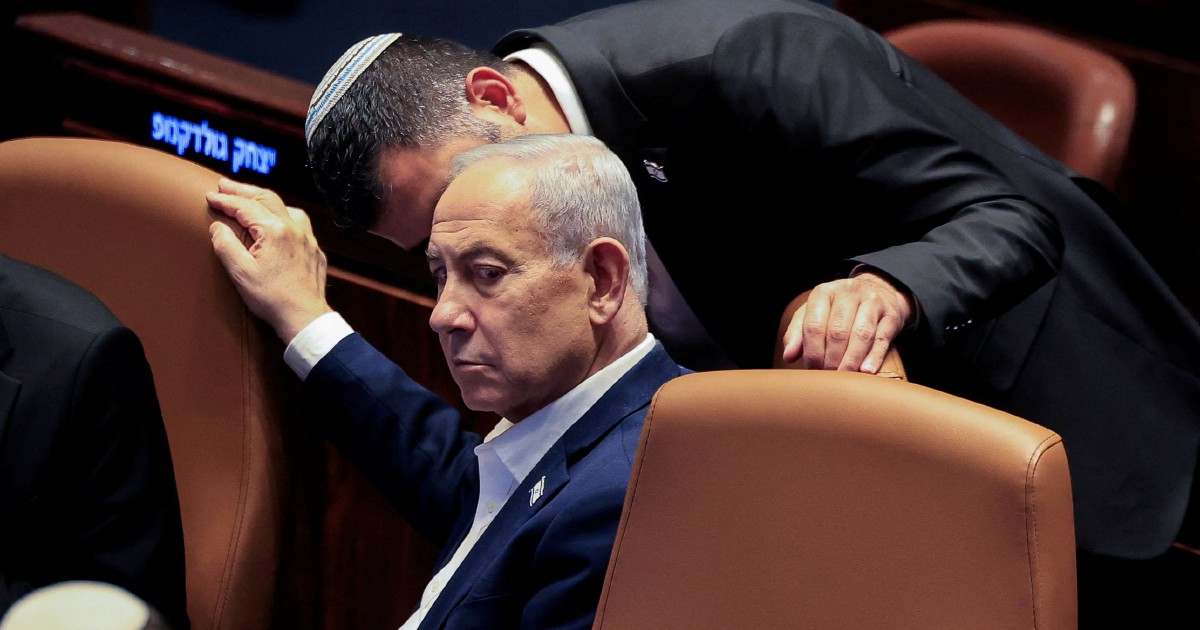
The office of Israeli Prime Minister Benjamin Netanyahu issued a sharp rebuke on Sunday directed at New York Mayor Zohran Mamdani, who had suggested he was contemplating whether to pursue the arrest of the Israeli prime minister during an impending session of the United Nations General Assembly in the city.
The diplomatic friction emerged as Netanyahu prepared for his participation in international forums scheduled in New York, a visit that has become a focal point for discussions about accountability and jurisdiction in international law. Mamdani's comments, which questioned the legal and practical possibilities of detaining Netanyahu while he conducts official business in the American metropolis, touched on longstanding tensions surrounding immunity for sitting heads of government and the enforcement of international criminal justice mechanisms.
Mamdani's remarks reflected broader concerns within New York's political and activist communities about Netanyahu's record and governance. The mayor's willingness to publicly consider arrest options, even rhetorically, underscores the polarization surrounding the Israeli prime minister's international standing, particularly in progressive American cities where sentiment regarding Middle Eastern policy runs deep and complex. His comments were framed as exploring whether existing legal frameworks might apply to Netanyahu during his New York presence.
The response from Netanyahu's office was characteristically forceful, with officials dismissing the mayor's suggestion as inappropriate and fundamentally misunderstanding the protocols governing visits by world leaders to the United Nations. The statement emphasized that sitting heads of government enjoy certain protections under international law and diplomatic convention when attending UN proceedings, protections that exist to facilitate meaningful international dialogue and the functioning of multilateral institutions.
This episode underscores the contentious nature of Netanyahu's position within international forums and reflects the deep divisions that his tenure has generated beyond Israel's borders. For Malaysian observers and regional Southeast Asian audiences, the incident illustrates how Middle Eastern geopolitics increasingly become entangled with urban politics in Western democracies, creating unexpected flashpoints in global affairs. The episode also demonstrates the challenge facing UN member states in balancing legitimate international justice concerns with diplomatic pragmatism and the functioning of multilateral systems.
The International Criminal Court's role in Middle Eastern cases has been a subject of intense scrutiny, with various Israeli and Palestinian figures facing potential or actual legal jeopardy through international mechanisms. Mamdani's suggestion, whether intended seriously or as political posturing, reflects the evolving expectations that some constituencies hold regarding accountability for state actions, particularly regarding military operations and civilian casualties.
New York, as the host city for the UN headquarters, has become increasingly a venue where international legal and political tensions converge. The city's substantial Jewish community and significant Palestinian diaspora communities create complex local dynamics that intersect with global conflicts. Mamdani's comments risked deepening these fault lines while simultaneously raising questions about the role of municipal authorities in international diplomacy and whether such comments, even preliminary in nature, represent appropriate governance conduct.
The Netanyahu government has faced international scrutiny on multiple fronts, from human rights organizations to countries advocating for various international legal mechanisms. However, Israeli officials typically approach such challenges by emphasizing Israeli sovereignty and the geopolitical context of Middle Eastern security dynamics. The prime minister's office response maintained this posture, effectively arguing that Mamdani's position, however well-intentioned from a justice perspective, misapprehended the nature of diplomatic immunity and the practical constraints surrounding international relations.
For Malaysia and other Southeast Asian nations, the incident carries implications regarding how international law and diplomatic norms interact in an increasingly fractious global environment. As regional powers navigate complex relationships with multiple global constituencies, understanding the tensions between justice mechanisms and diplomatic protocols becomes essential for effective multilateral engagement. The episode also illustrates how leaders in various jurisdictions, including American municipal government, are increasingly willing to take explicit stances on international issues, a development that complicates traditional diplomatic channels and expectations.
Moving forward, the exchange between Mamdani and Netanyahu's office will likely become another reference point in discussions about the limits of municipal activism regarding international conflicts and the boundaries of diplomatic immunity. While the mayor's office may have intended to signal solidarity with certain constituencies, the response demonstrates the serious diplomatic and legal pushback that such suggestions generate. The broader pattern reflects how Palestinian-Israeli dynamics, once primarily a regional concern, have become deeply embedded in the political consciousness of multiple global cities, creating new vectors for international tension and conflict expression.

