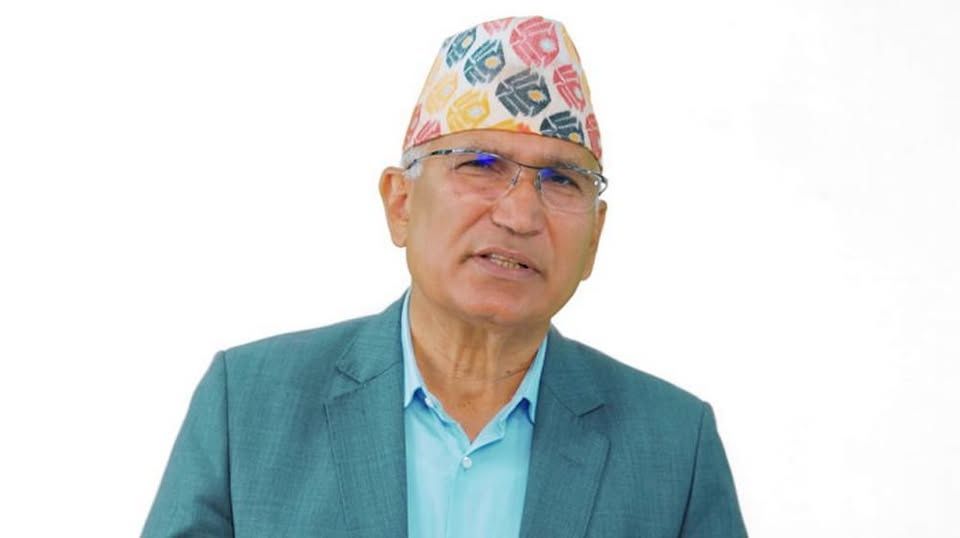
Nepal's law enforcement authorities arrested ex-finance minister Bishnu Paudel on Monday in connection with alleged money-laundering activities, police confirmed on Tuesday. The arrest represents a continuation of the stringent anti-corruption agenda that has gained momentum since popular upheaval in 2025 forced a change in government and brought Prime Minister Balendra Shah, a former rapper, to office in March with a mandate to tackle systemic graft.
Paudel, who also serves as vice-chair of the Communist CPN-UML party, held senior positions in the administration of ex-prime minister KP Sharma Oli. The Oli government collapsed following massive public protests that year, fundamentally reshaping Nepal's political landscape. According to Nepal Police spokesman Abhi Narayan Kafle, investigators will examine Paudel's involvement in money-laundering schemes, though authorities have not yet disclosed the specific sums or entities implicated in the inquiry.
The arrest underscores the Shah administration's determination to pursue accountability for alleged financial misconduct at the highest levels of government. Shah, who campaigned on fighting corruption, has signalled that his government will not spare any official regardless of political affiliation. This aggressive posture contrasts sharply with previous administrations, which critics argue tolerated or overlooked such violations, contributing to public disillusionment and triggering the 2025 uprising.
Paudel's detention has already become a flashpoint in Nepal's fractious political arena. Oli, who lost his parliamentary seat to Shah in recent electoral realignment, swiftly condemned the arrest as a "political stunt", asserting that the new government is employing authoritarian tactics to neutralise rivals. This accusation reflects deepening polarisation between the ruling coalition and opposition parties, many of whom question whether anti-corruption prosecutions target political opponents disproportionately. The CPN-UML has maintained that Paudel is prepared to submit to legal proceedings and defend himself, yet insists the government is applying justice selectively.
The timing of arrests targeting figures from Oli's previous administration has raised eyebrows among observers. In March, just one day after Shah's swearing-in, police detained both Oli and former interior minister Ramesh Lekhak for questioning regarding their alleged involvement in the deadly 2025 government crackdown on protesters. The two were released after nearly two weeks in custody; neither was formally charged, and both have denied culpability for the violence. That incident demonstrated the potential for anti-corruption enforcement to become entangled with political rivalries, a concern that Paudel's arrest has reignited.
The 2025 protests that precipitated these cascading political developments originated as a response to a temporary social media blackout but swiftly evolved into a broader civil uprising. Public anger over rampant corruption, economic stagnation, and chronic governance failures transformed scattered demonstrations into a nationwide movement that authorities struggled to contain. The government's violent response proved catastrophic: at least 76 people were killed and over 2,500 others injured during two days of unrest, shocking the nation and irreparably damaging the ruling administration's legitimacy.
Beyond Paudel's case, corruption allegations continue to plague Nepal's institutional machinery. Nepal's anti-corruption watchdog, the Commission for Investigation of Abuse of Authority, has filed charges against 16 individuals, including the chief of the passport department, for their suspected roles in an alleged USD 66 million procurement scam. The scheme, according to spokesman Suresh Neupane, involved embezzlement during the e-passport procurement process—a striking example of how graft permeates even bureaucratic functions that ordinary citizens depend upon. These large-scale theft cases illustrate why public exasperation with corruption reached a breaking point in 2025.
For Malaysia and other Southeast Asian nations monitoring Nepal's institutional trajectory, these developments offer important lessons about the fragility of anti-corruption efforts and the risks of politicisation. While Shah's government has demonstrated resolve in pursuing prominent cases, the appearance of selective prosecution threatens the legitimacy and independence of the justice process. Malaysia's own anti-graft experience—including the high-profile trials following 1MDB revelations—underscores how critical institutional impartiality becomes when administrations face accusations of weaponising investigations.
The CPN-UML's response, emphasising commitment to the rule of law while charging the government with discriminatory behaviour, reflects a common defence strategy in post-upheaval systems. However, such claims ring hollow unless opposition parties demonstrate their own commitment to accountability when in power. Nepal's path forward depends on whether institutions can operate independently and whether political rivals can accept adverse verdicts without dismissing them as partisan persecution.
As investigations advance, Nepal's government faces mounting pressure to balance retribution for past abuses with fairness that commands public confidence. The nation's international standing, investment climate, and democratic consolidation all hinge on whether stakeholders perceive the justice system as serving the rule of law or merely the interests of incumbents. The coming months will test whether Nepal's anti-corruption drive can overcome the structural vulnerabilities that have historically plagued governance in South Asia.

