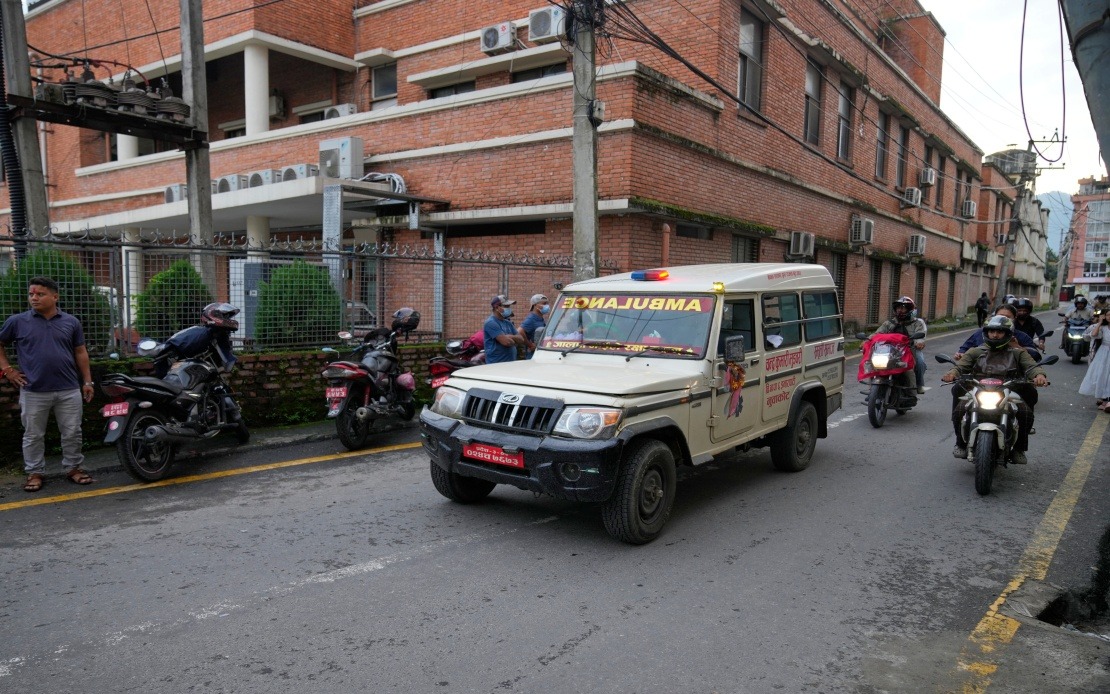
A devastating flash flood in Nepal has prompted a major international rescue effort as authorities work to locate and secure 121 foreign nationals who were caught in the disaster zone. The calamity, triggered by the collapse of a Himalayan glacier that sent torrents down the Bhote Koshi and Trishuli rivers on Wednesday, has become one of the region's most significant natural disasters in recent years, with the death toll climbing to approximately 550 people.
According to Nepal's tourism authority, those extracted from the flood-ravaged areas by Friday evening represent a cross-section of global travellers. The rescued group included 85 Indian nationals, 16 Chinese visitors, and nine South Koreans, alongside smaller contingents from the United States, Russia, Italy, Belgium, Bulgaria, Portugal, Spain, and Switzerland. The diversity of nationalities reflects both the popularity of Nepal and the Himalayan region as a tourist destination and the tragic accessibility of the disaster zone to international visitors.
The scale of the humanitarian challenge extends far beyond those successfully rescued. Indian authorities have indicated that approximately 320 Indian nationals remain unaccounted for in the aftermath of the flooding, raising concerns about the scale of potential casualties among the Indian diaspora and travellers in the region. Additionally, Indian officials have flagged roughly 100 people holding Indian-origin status but carrying passports from other nations who have not yet been confirmed safe. Many of these individuals were believed to be participating in the annual Kailash Mansarovar pilgrimage in the Xizang region of China at the time of the disaster, complicating rescue and recovery coordination across international borders.
Positive developments have emerged from the uncertainty, with Indian authorities confirming that 63 workers stationed at the Trishuli hydropower project were located safely, and a further 21 rescued individuals have already been transported back to India. Separately, around 400 Indian nationals in the Chinese portion of the affected region have been confirmed secure. These confirmations provide some relief to families anxiously awaiting news, though the broader search and rescue operation remains intensive and ongoing.
The infrastructure challenges facing Nepalese emergency services have become increasingly apparent as the disaster unfolds. Medical facilities in key urban centres such as Chitwan and Pokhara are operating at or beyond capacity, hampering both casualty treatment and the grim task of victim identification and dignified body storage. Nepalese authorities are struggling to manage the sheer volume of deceased requiring processing, forcing search and rescue teams to expand operations across multiple downstream areas where bodies and survivors continue to be discovered.
The Nepalese government has moved swiftly to mobilise resources and coordinate the response. Prime Minister Balendra Shah convened a Cabinet meeting on Friday to assess the disaster's aftermath and chart the course for recovery operations. In a gesture of personal commitment to relief efforts, Shah and his Cabinet colleagues pledged to donate one month's salary to the Prime Minister's Natural Disaster Relief Fund, signalling governmental prioritisation of humanitarian assistance over normal budgetary procedures.
Regional neighbours have recognised the scale of the crisis and stepped forward with material support. India, as the most affected neighbouring nation in terms of personnel, has dispatched two shipments of humanitarian aid totalling 47.5 tonnes to Nepal, with a third relief flight scheduled to depart on Friday carrying additional supplies. This coordinated response underscores the importance of regional cooperation in managing cross-border disasters, particularly where national citizens and workers are directly affected.
Pakistan has also signalled its solidarity with Nepal's government during this period of acute distress. Prime Minister Shehbaz Sharif telephoned his Nepalese counterpart Balendra Shah to express condolences and confirm Pakistan's intention to send emergency relief assistance. Such diplomatic gestures, while symbolic, reinforce broader regional frameworks for disaster response and demonstrate South Asian commitment to mutual aid during humanitarian emergencies.
The glacial collapse that triggered this catastrophe highlights the environmental vulnerabilities of the Himalayan region and serves as a stark reminder of climate change's potential to produce sudden, dramatic natural disasters. The event underscores why disaster preparedness infrastructure and early warning systems remain critical investments for Nepal and other mountain nations. As international rescue teams continue their operations and the full extent of casualties becomes clearer, the focus will inevitably shift toward understanding what warning signs, if any, preceded the glacial collapse and how similar future incidents might be anticipated and mitigated through improved monitoring and response protocols.

