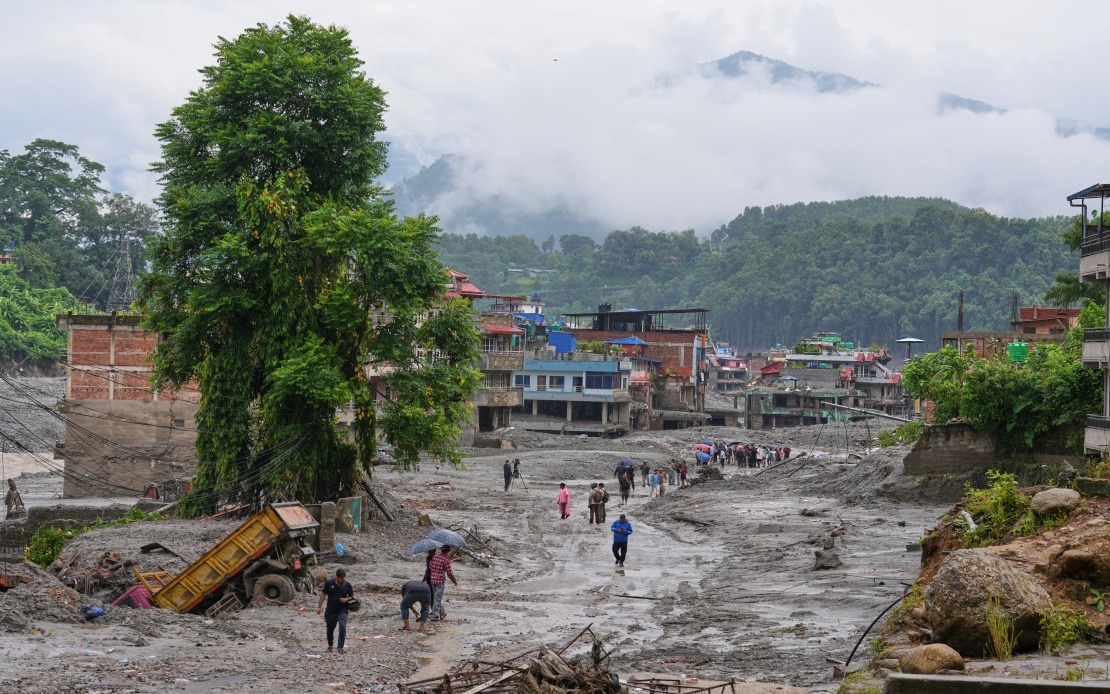
Nepal faces a catastrophic humanitarian crisis following devastating mudslides that have claimed 675 lives, according to the country's National Disaster Risk Reduction and Management Authority. The death toll continued to mount on Saturday evening as rescue operations persisted across affected mountainous terrain, with authorities reporting the staggering figure as of 6.30 pm local time. The scale of the devastation underscores the vulnerability of communities living in Nepal's steep Himalayan foothills, where heavy monsoon rainfall regularly triggers deadly landslides during the rainy season.
The missing persons count presents an equally alarming picture, with 2,498 individuals unaccounted for as rescue teams pressed through mud-clogged villages and debris fields. This substantial number suggests the true death toll may yet rise significantly as rescue workers continue excavating collapsed structures and clearing access routes through impassable terrain. The extended search window also reflects the operational challenges inherent in disaster response across remote mountain regions, where weather conditions, treacherous geography, and damaged infrastructure severely hamper rapid casualty identification and retrieval efforts.
The tourism sector has been disproportionately impacted by the calamity, reflecting Nepal's status as a major destination for trekkers and mountaineers. Nepal's Department of Tourism reported that 753 tourists had lost contact with their families and operators as of 5.30 pm Saturday, encompassing 589 foreign nationals and 164 Nepali nationals. This figure is particularly concerning given that many visitors are typically in remote trekking zones with limited communication infrastructure, making it difficult to swiftly confirm their safety or coordinate their evacuation.
Three districts bore the brunt of the mudslide devastation: Rasuwa, Nuwakot, and Dhading, all situated in the central mountainous belt north of Kathmandu. These regions are known for their rugged topography and seasonal vulnerability to slope failures, yet they remain heavily populated and serve as critical transit zones for both domestic migration and international tourism. The geographic concentration of casualties in these districts illustrates how mudslides disproportionately affect communities built on steep hillsides, where monsoon rains saturate soil and trigger catastrophic ground movements.
Kathmandu District Administrative Office initiated a comprehensive relief mobilization effort on Saturday, issuing urgent appeals to businesses, non-governmental organizations, educational institutions, and private donors to contribute supplies. The call for donations across the capital suggests that local and national warehouses are being rapidly depleted by the scale of humanitarian need. Relief operations in Nepal typically face significant bottlenecks in transportation and distribution due to damaged roads and limited logistics capacity, making pre-positioned supplies and rapid coordination between government and civil society entities critical for effective assistance delivery.
The timing of the disaster during the monsoon season highlights a recurring challenge for Nepal's disaster preparedness infrastructure. While the country has invested considerably in early warning systems and community-based risk reduction initiatives over the past decade, the intensity and unpredictability of extreme rainfall events frequently overwhelm mitigation efforts. Climate change is intensifying precipitation patterns across the Himalayas, potentially increasing both the frequency and magnitude of such disasters in years to come.
For Malaysia and other Southeast Asian nations, the Nepal mudslide serves as a sobering reminder of shared regional vulnerabilities. Both Nepal and Malaysia experience monsoon-driven landslide risks, though Malaysia's lower altitude terrain presents different geological dynamics. Malaysian authorities can draw valuable lessons from Nepal's response mechanisms, particularly regarding coordination between tourism operators, government agencies, and international rescue partners when foreign nationals are affected.
The international dimension of this disaster is notable, with nearly 600 foreign tourists stranded or missing. This will likely trigger mobilization of diplomatic channels, as various nations coordinate with Nepali authorities to locate and assist their citizens. International rescue teams from neighboring and distant countries often participate in major Himalayan disasters, bringing specialized equipment and expertise, though their arrival and deployment require careful coordination with local authorities.
Nepal's disaster management capacity has been tested repeatedly in recent years, most notably during the devastating 2015 earthquake that killed nearly 9,000 people. The subsequent institutional reforms, including establishment of the National Disaster Risk Reduction and Management Authority, reflected a commitment to improve response systems. However, this mudslide event demonstrates that challenges in real-time information gathering, rapid casualty identification, and coordinated rescue operations across multiple districts remain formidable obstacles that persist even after major institutional improvements.

