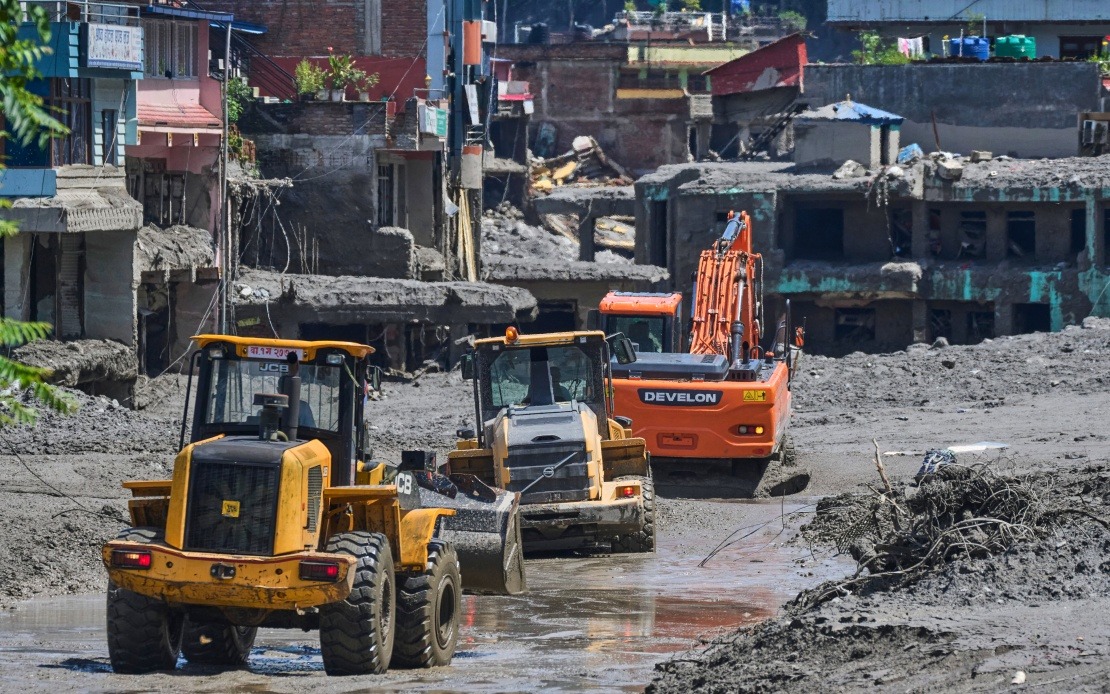
Nepal is mobilising its full disaster response apparatus following a catastrophic flood that swept through the Bhote Koshi River last Wednesday, with the government and international community now grappling with the scale of destruction across multiple affected regions. The Kathmandu embassy has confirmed that authorities have prioritised immediate rescue operations, emergency relief distribution, and comprehensive damage assessment in the wake of the disaster, signalling the government's determination to mount an aggressive response despite the inherent challenges of conducting search operations in difficult terrain and unstable conditions.
The flooding wreaked substantial havoc across four key districts in central Nepal, with Rasuwa, Nuwakot, Dhading and Gorkha experiencing the most severe impacts. These mountain and foothill regions, characterised by challenging topography and limited infrastructure connectivity, have proven particularly vulnerable to the sudden surge of floodwaters, which destroyed homes, swept away roads and bridges, and damaged critical utilities. The initial casualty toll and property destruction figures remain fluid as rescue teams continue their operations and the full extent of damage becomes apparent through systematic assessment.
The Nepal government's coordinated response reflects the scale of the emergency, with the Office of the Prime Minister and the Council of Ministers directing security agencies and relevant departments to prioritise locating survivors and providing immediate humanitarian aid. Officials are simultaneously working to quantify human losses and infrastructure damage, a process that often reveals far worse conditions than initial reports suggest once assessment teams gain access to remote affected areas. This dual focus on immediate rescue and systematic damage documentation is essential for both saving lives and planning medium-term recovery initiatives.
Recognising that national resources alone may prove insufficient to manage the humanitarian fallout, Nepal's government has launched an appeal for international financial assistance. The Prime Minister's office has specifically called upon individuals, corporate entities, non-governmental organisations, and philanthropic donors to contribute funds dedicated to facilitating the safe relocation of displaced populations and supporting their long-term rehabilitation and reconstruction efforts. This approach acknowledges both the immediate humanitarian needs and the extended recovery period that catastrophic natural disasters typically demand.
The appeal extends specifically to Nepal's diaspora communities across the region, with the embassy in Kuala Lumpur reaching out directly to Nepali nationals residing in Malaysia. The embassy has requested support from ethnic Nepali associations, business communities, social welfare organisations, and other concerned groups to channel financial contributions toward those affected by the flooding. This targeted approach recognises the deep connections between overseas Nepali communities and their homeland, leveraging emotional and cultural ties to mobilise resources during critical moments.
To facilitate donations, Nepal's government has established dedicated relief channels through the nation's banking system. The Prime Minister's Disaster Relief Fund and the Prime Minister's Relief Fund maintain designated accounts at two major institutions: Rastriya Banijya Bank operates two separate accounts specifically for this purpose, with account numbers 1130100003762001 and 1130100000006006, while Nepal Bank Limited manages accounts numbered 00211600510039000003 and 00200100510039000001. These formalised banking arrangements ensure that contributions reach the government's central disaster coordination machinery rather than dispersing through informal channels that may lack transparency or accountability.
The embassy has made comprehensive donation information publicly available through its official Facebook channel, including QR codes that enable digital payment transfers, reflecting modern fundraising approaches that simplify the donation process for diaspora communities and international supporters. This digital accessibility proves particularly valuable for younger Nepali professionals in Malaysia and other nations who prefer electronic transactions over traditional bank visits, potentially accelerating the flow of contributions during the critical early weeks of the disaster response.
For Malaysian readers and policymakers, the Nepal disaster carries particular relevance given the geographical proximity of the two nations within South and Southeast Asia and the presence of significant Nepali communities in Malaysia. The incident underscores the vulnerability of mountainous developing nations to climate-related hazards and the cascading challenges that natural disasters create for already-stretched government resources and infrastructure. Malaysia's own experience with regional flooding events provides perspective on the complexity of coordinating large-scale rescue and relief operations across difficult terrain.
The Bhote Koshi flooding also illustrates the importance of regional solidarity and transnational support networks during humanitarian crises. Unlike major metropolitan centres that receive global media attention immediately, disasters in remote mountain regions often struggle for international visibility, potentially limiting the flow of international assistance. The role of diaspora communities and embassy outreach in amplifying awareness and mobilising support becomes crucial for ensuring that affected populations receive adequate resources.
For Malaysia's bilateral relationship with Nepal, the disaster presents an opportunity to demonstrate regional partnership and humanitarian commitment. Beyond financial contributions from private citizens, such crises sometimes prompt government-to-government assistance, whether through technical expertise in disaster management, medical teams, or emergency relief supplies. The coordination mechanisms established by Nepal's government for international support reception could benefit from Malaysian expertise given this country's experience managing and recovering from its own flood events.
The coming weeks will reveal whether the international appeal generates sufficient resources to adequately support displaced Nepali citizens. Historical patterns suggest that initial donations flow relatively quickly, but sustained support for longer-term reconstruction proves more challenging to maintain as global attention shifts elsewhere. The efficiency with which Nepal's government channels contributed funds directly to affected communities will significantly influence public confidence in the relief distribution system and the effectiveness of the overall recovery effort.
As Nepal grapples with this unprecedented challenge, the response demonstrates both the resilience of affected communities and the critical importance of preparedness, international cooperation, and transparent disaster management frameworks. The embassy's active engagement of overseas Nepali networks reflects recognition that in an increasingly globalised world, national disasters often generate international responses that can meaningfully complement domestic resources.

