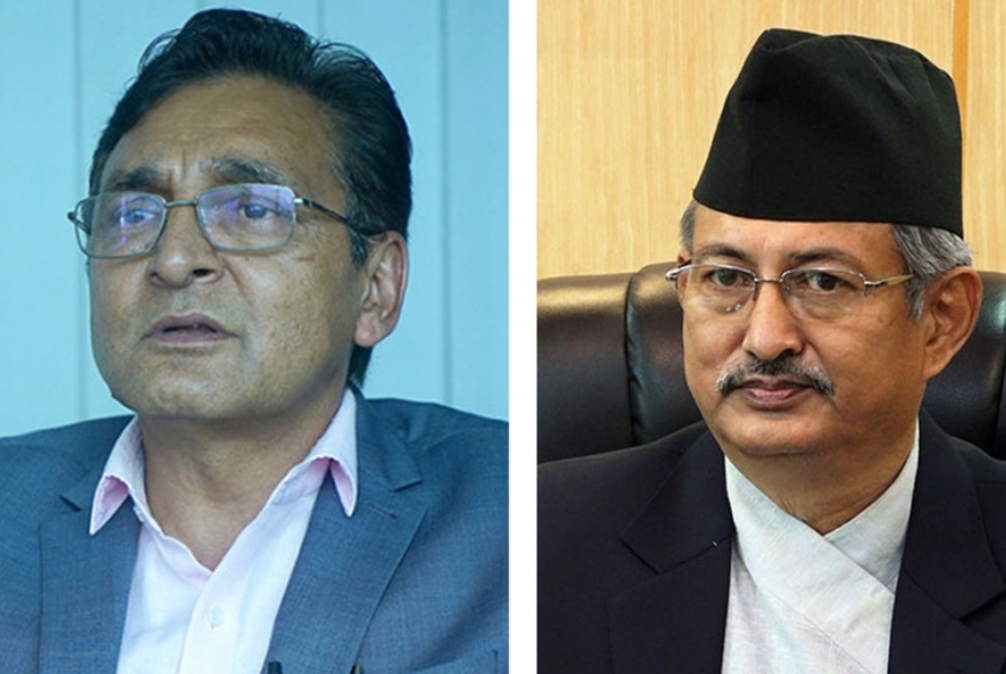
A district court in Kathmandu has handed down convictions against two former senior government officials for their roles in an elaborate scheme that exploited international refugee resettlement pathways, marking a significant outcome in Nepal's fight against high-level institutional corruption. Former Deputy Prime Minister and Energy Minister Top Bahadur Rayamajhi received a four-year prison sentence for offences against the state, fraud, and involvement in organised crime, while ex-Home Minister Bal Krishna Khand was handed a two-year term as an accomplice. The verdicts, announced late Tuesday, signal judicial accountability in a case that touched on both domestic malfeasance and international humanitarian mechanisms.
Rayamajhi, currently in custody, and Khand, who secured bail, have consistently maintained their innocence throughout the investigation and legal proceedings. Their legal representatives have signalled their intention to challenge the convictions at higher judicial levels. Dharma Raj Regmi, representing Rayamajhi, contended that his client bore no responsibility for refugee policy formulation, suggesting the prosecution's case rested on circumstantial connections rather than direct culpability. Khand's counsel similarly indicated plans to pursue appellate remedies, indicating the defence teams view the verdicts as legally vulnerable on substantive grounds.
Beyond the two former ministers, the court has convicted fourteen additional individuals, comprising a diverse cast spanning bureaucratic and community leadership positions. Notably, the group includes a former high-ranking official within the home ministry and a prominent figure from the Bhutanese refugee community itself, suggesting the scam involved coordination across multiple institutional and social layers. Sentences for these co-conspirators extend to four years in some cases, reflecting the court's assessment of varying degrees of culpability within the broader criminal enterprise. The inclusion of refugee community leadership in the prosecutions raises complex questions about coercion, complicity, and incentive structures operating within vulnerable populations residing in camps.
The mechanics of the fraud centred on document forgery—specifically, the creation of false credentials enabling individuals of Nepali nationality to pose as Bhutanese refugees eligible for third-country resettlement. The scheme exploited a genuine and substantial refugee crisis that has shaped regional demographics for over three decades. The investigation remained dormant until 2023, after both Rayamajhi and Khand had already exited their ministerial positions, suggesting either late detection or delayed prosecutorial action. Authorities have not yet clarified whether any fraudulently documented individuals actually reached the United States through the scheme, a critical evidentiary gap affecting full understanding of the operation's scope and impact.
The underlying context involves nearly 120,000 Bhutanese nationals of Nepali ethnic origin who have sought refuge in Nepal since the early 1990s, fleeing what they characterised as systematic political marginalisation within Bhutan's Buddhist-majority polity. Bhutan, a nation of fewer than 800,000 people nestled in the eastern Himalayas, has long maintained restrictive citizenship and cultural assimilation policies that displaced its Nepali-speaking minority. Diplomatic efforts between Kathmandu and Thimphu to negotiate repatriation proved fruitless, establishing conditions for international humanitarian intervention through third-country resettlement.
The United States emerged as the primary resettlement destination, accepting approximately 100,000 Bhutanese refugees from Nepal—a figure constituting roughly 88 per cent of the nearly 113,000 individuals ultimately resettled across Western nations. Canada and Australia similarly admitted significant cohorts, distributing the refugee burden across the Anglophone developed world. This extensive resettlement programme represented one of the largest refugee movements of the post-Cold War era, yet it apparently created administrative vulnerabilities that enterprising officials exploited for personal gain.
The fraud's discovery and prosecution occur against a backdrop of sustained anti-corruption mobilisation within Nepal itself. In September of the preceding year, youth-driven anti-corruption demonstrations claimed 76 lives and catalysed the collapse of Nepal's incumbent government, reflecting grassroots revulsion at perceived endemic malfeasance within state institutions. The electorate's frustration crystallised in the March election of a new government led by Balendra Shah, a 36-year-old former musician-turned-politician representing Generation Z aspirations for institutional reform. Shah's administration has explicitly prioritised anti-corruption campaigns, positioning the prosecution of high-level officials as central to its mandate for national regeneration.
The refugee scam prosecutions thus acquire symbolic resonance beyond the specific criminal conduct involved. They represent tangible government action addressing corruption narratives that mobilised Nepal's youth and destabilised the previous political order. Convictions of former ministers signal responsiveness to popular demands for accountability, potentially bolstering the Shah administration's legitimacy among constituencies demanding systemic change. However, the reliance on appellate processes and the legal uncertainties surrounding specific evidentiary burdens mean final resolution remains pending.
For the broader regional context, the case illuminates vulnerabilities within international refugee protection mechanisms when they intersect with weak institutional governance in transit or host nations. The exploitation of Bhutanese refugee documentation by Nepali officials demonstrates how humanitarian crises create opportunities for corrupt actors to extract value through fraudulent identity conversion. This dynamic carries implications for refugee processing in Southeast Asia, where similar vulnerabilities may exist in systems processing displaced populations from Myanmar, Cambodia, and other conflict zones. The case suggests necessity for stronger documentary verification protocols and international coordination in resettlement programmes serving the region.
Several thousand Bhutanese refugees continue residing in Nepali camps, their repatriation prospects dimming as diplomatic resolution appears unlikely. Their continued liminal status as permanent temporary residents reflects the incomplete character of the regional resettlement response. The fraud's occurrence within this stalled population underscores how protracted displacement creates social pathology and institutional deterioration, potentially motivating desperate accommodation with corruption as survival mechanism. The court verdicts, while legally significant, cannot resolve these broader structural challenges confronting Nepal's refugee management and Myanmar's regional displacement crises that continue accumulating displaced persons across Southeast Asia.

