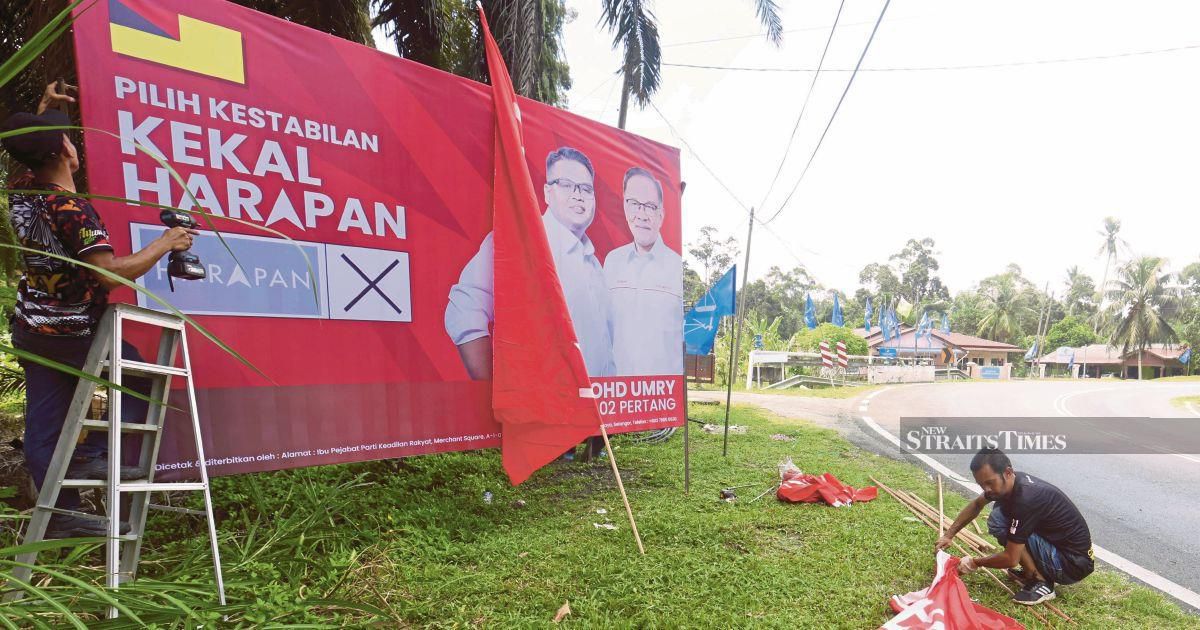
The Negri Sembilan state election represents a pivotal moment for Malaysian politics, with 103 candidates contending for 36 legislative seats in a contest that carries implications extending well beyond the state's borders. The electoral battle unfolds against a backdrop of deepening complexity within the country's coalition landscape, where Bersatu finds itself navigating treacherous political terrain as it attempts to balance its relationships with Barisan Nasional and Perikatan Nasional—two groupings that have fundamentally reshaped Malaysian governance in recent years.
For Bersatu specifically, this contest serves as a crucial test of its viability as an independent political force within Malaysia's fragmented party system. The party, which has oscillated between alliance partnerships and confrontation with its rivals, faces mounting pressure to demonstrate electoral relevance and organisational strength. The outcomes in Negri Sembilan will provide early indicators of whether Bersatu's strategy of maintaining simultaneous engagement with both BN and PN proves sustainable or whether the party must ultimately commit more decisively to one coalition structure. This electoral crossroads reflects broader questions about party positioning that Malaysian voters have grappled with throughout the post-2018 political realignment.
The cooperation arrangement between BN and PN within Negri Sembilan deserves particular scrutiny, as it illustrates the pragmatic accommodations that have become characteristic of contemporary Malaysian politics. Rather than engaging in outright competition, these two historically dominant political groupings have negotiated settlements regarding seat allocation and campaign coordination. Such arrangements, once unthinkable within Malaysia's adversarial political culture, now represent routine mechanisms for managing rivalry and securing electoral advantage. The specific terms of BN-PN cooperation in Negri Sembilan will signal whether this partnership represents genuine ideological convergence or merely tactical convenience designed to maximise combined electoral performance against alternative political forces.
Bersatu's position within this framework remains notably ambiguous and potentially precarious. The party cannot simply defer to BN's traditional structures without risking irrelevance, yet aggressive posturing against either coalition partner could isolate it from access to power or ministerial positions. This dilemma encapsulates the strategic vulnerability of mid-sized Malaysian parties in an era when electoral mathematics increasingly favour large bloc formations. Bersatu must therefore calibrate its approach with extraordinary precision, selecting specific constituencies where it can run independently without undermining coalition arrangements, while simultaneously demonstrating sufficient loyalty to secure tangible rewards from electoral cooperation.
Negri Sembilan itself holds particular significance within Malaysia's political economy. As a sultanate with distinctive constitutional arrangements and a comparatively small electorate, the state has historically operated according to its own political rhythms, occasionally diverging from national patterns. The state's mining heritage, agricultural sectors, and growing urban centres around areas like Seremban create a socioeconomic profile that differs meaningfully from more urbanised states or those dependent on specific industries. Understanding voter preferences in Negri Sembilan therefore requires attention to local concerns regarding infrastructure, commodity prices, and development priorities, not merely national political narratives.
The candidate field itself merits examination for what it reveals about party confidence and resource allocation. With 103 candidates contending for just 36 seats, competition intensity significantly exceeds what would emerge from straightforward three-way party competition. This surplus of candidates suggests either that smaller parties harbour genuine aspirations for breakthrough performances or that larger parties are running multiple candidates strategically in winnable seats to maximise representation opportunities. The distribution of these 103 contenders across the three primary groupings will illuminate the relative organisational capacity and confidence levels of BN, PN, and Bersatu respectively.
Regional dimensions of this election warrant consideration as well. Negri Sembilan's geographic positioning between Kuala Lumpur and the southern region creates potential spillover effects from developments in those areas. Political momentum established or lost in this state election could influence subsequent contests in neighbouring territories or generate narratives that reverberate through national media coverage. Southeast Asian observers monitoring Malaysia's political trajectory will similarly watch Negri Sembilan for indicators regarding the stability or fragility of coalition arrangements that underpin the federal government.
The timing of this election also merits attention within Malaysia's broader electoral calendar. Coming at a specific moment in the BN-PN cooperation experiment, the Negri Sembilan results will provide early feedback on whether voters genuinely embrace coalitional politics or whether they remain attached to more traditional partisan identities and competition frameworks. Early electoral returns often shape subsequent political calculations, with winning coalitions emboldened to replicate their strategies while unsuccessful approaches face rapid recalibration or abandonment.
For Bersatu particularly, this contest represents an opportunity to stake credible claims regarding its essential role within either coalition structure. Strong performance could strengthen its negotiating position for future cooperation arrangements, ministerial appointments, or autonomy in specific constituencies. Conversely, disappointing results might force uncomfortable conversations about the party's long-term viability and whether its leaders should pursue more explicit alignment with either BN or PN rather than attempting to maintain equidistant positioning between rival camps. The 103 candidates competing across Negri Sembilan's 36 seats will effectively determine not merely the composition of the state legislative assembly, but also the trajectory of Bersatu's role within Malaysia's evolving political order.

