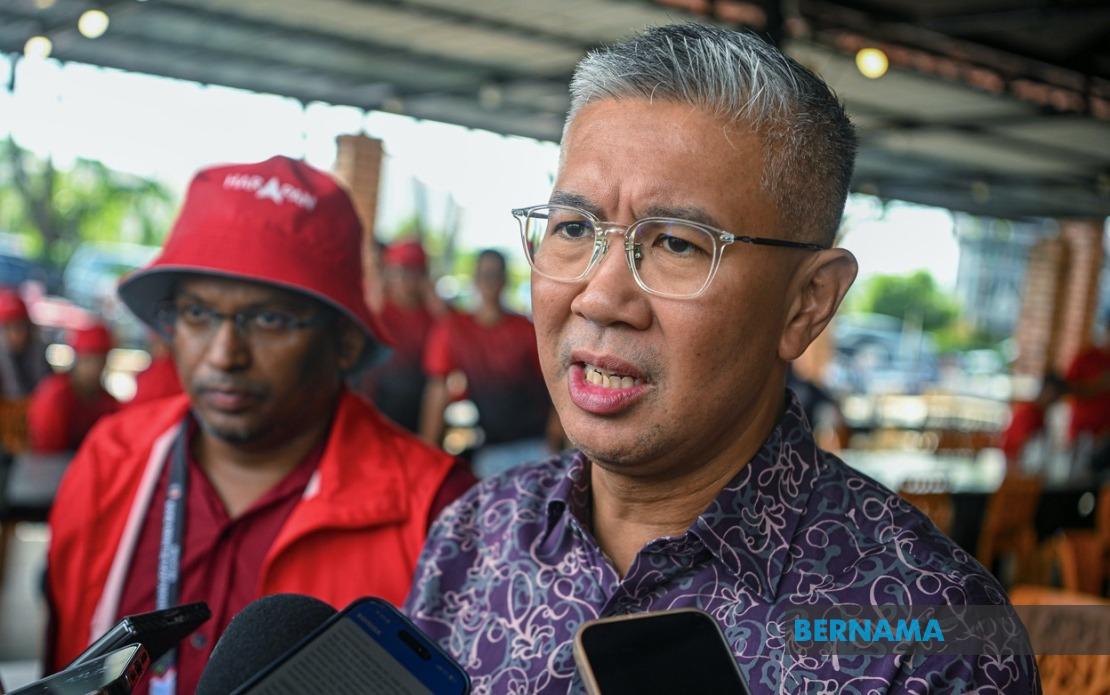
As Negeri Sembilan gears up for its 16th state election on August 1, the political focus has shifted from grand campaign promises to a more critical assessment of which coalition can actually deliver on its commitments. Tengku Datuk Seri Zafrul Tengku Abdul Aziz, serving as senior political advisor to the Prime Minister, has challenged voters in the state to look beyond the rhetorical flourishes typical of election campaigns and instead scrutinise each party's proven capacity to transform pledges into tangible outcomes for ordinary Malaysians.
The distinction Tengku Zafrul has drawn—between promising and performing—strikes at a fundamental question increasingly occupying voters' minds across the region. With three major political coalitions presenting manifestos to the electorate, each promising prosperity, improved services, and economic development, the challenge for voters lies in determining which organisation possesses the administrative machinery, political will, and financial resources necessary to honour its commitments. This concern has become more acute in Malaysian politics following cycles of unfulfilled election pledges at both federal and state levels, which have gradually eroded public confidence in political messaging.
The Pakatan Harapan administration's tenure in Negeri Sembilan, spanning two years and eight months, provides a concrete case study in this regard. Tengku Zafrul emphasised that many commitments detailed in the coalition's initial manifesto have already been implemented during this period. This claim carries particular weight because it allows voters to examine not hypothetical promises but actual government performance against stated objectives. The track record becomes the primary metric by which voters can gauge the reliability of any new pledges being made during the current campaign cycle.
Tengku Zafrul acknowledged that all three major coalitions—Pakatan Harapan, Barisan Nasional, and Perikatan Nasional—each bring their own distinct policy priorities and organisational strengths to the contest. Rather than dismissing rival manifestos, he advocated for voters to engage thoughtfully with all three documents, recognising that each reflects different philosophical approaches to governance. However, his underlying argument remained consistent: the capacity to execute matters more than the ambition of the plan. This represents a maturation of electoral discourse, where technical competence and proven administrative capability become decisive factors alongside ideological orientation.
The manifesto implementation gap has become a persistent challenge across Southeast Asia, where governments frequently struggle to translate campaign commitments into concrete policy outcomes. Budget constraints, bureaucratic resistance, competing priorities, and changing economic circumstances often derail ambitious plans announced during elections. What distinguishes the more credible parties is not the grandeur of their promises but their demonstrated ability to navigate these obstacles and deliver measurable improvements in citizens' lives, whether through improved infrastructure, education quality, healthcare access, or economic opportunities.
During his campaign engagement in Port Dickson, Tengku Zafrul expressed confidence in Datuk Dr G. Rajasekaran, the Pakatan Harapan candidate contesting the Sri Tanjung seat. The Sri Tanjung constituency represents a competitive five-way race, with candidates fielded by Barisan Nasional, Perikatan Nasional's Bersatu component, and two independent candidates. This fragmented contest reflects broader patterns of electoral splintering visible across Malaysian politics, where traditional two-coalition battles have given way to more complex multipolarity.
When addressing concerns about internal party divisions within Negeri Sembilan's PKR structure, Tengku Zafrul asserted that his interactions with party leadership and grassroots machinery across multiple constituencies had revealed no substantive evidence of organisational fracture or sabotage campaigns against candidates. The clarification mattered because internal discord within ruling coalitions frequently undermines campaign effectiveness and voter confidence. However, the timing and specificity of addressing these rumours also suggested that such divisions, whether real or perceived, had gained sufficient currency among political observers to warrant direct public refutation.
The electoral calendar itself underscores the approaching crunch. Early voting commenced on July 28, allowing certain categories of voters including frontline workers and those unable to vote on polling day to cast ballots in advance. The compressed timeline between campaign period and election day—with polling scheduled for August 1—compressed the window available for political messaging and voter persuasion efforts. This acceleration meant campaigns needed to focus messaging efficiently, prioritising the issues and arguments most likely to resonate with undecided voters in the final stretch.
Rajasekaran's own assessment of campaign momentum proved revealing about ground-level sentiment in at least one constituency. His observation that voters throughout his campaign week had responded positively and warmly suggested that Pakatan Harapan's grassroots outreach was generating genuine engagement rather than merely ceremonial party ritual. However, anecdotal reports from individual candidates require contextualisation within broader polling data and regional voting patterns to constitute reliable predictors of overall state results.
The competitive landscape in Sri Tanjung encapsulates the broader fragmentation characterising Malaysian electoral politics post-2018. The presence of two independent candidates competing against representatives from three major political formations reflects how traditional party machinery has weakened in some constituencies, with individual personalities and local grievances sometimes outweighing partisan affiliation. This dynamic has introduced greater unpredictability into state and federal elections, making constituency-level performance increasingly difficult to predict from national polling trends.
Tengku Zafrul's emphasis on implementation capacity rather than campaign promises also carries implications for how Malaysians and Southeast Asian voters more broadly might evaluate political choices. In an era of economic uncertainty, climate challenges, and evolving geopolitical pressures, the ability to execute coherent policy rather than merely articulate vision has become increasingly consequential. Parties offering realistic, achievable commitments backed by technical competence and administrative experience may ultimately prove more valuable to voters than those promising transformative change without demonstrating concrete capacity for delivery.
The Negeri Sembilan election, therefore, serves as a test case for whether Malaysian voters are increasingly embracing pragmatism over ideology when casting ballots. If Tengku Zafrul's framing resonates with the electorate, it suggests a maturation of electoral behaviour where performance metrics supersede partisan loyalty. This pattern, if replicated across Malaysia and the region, could fundamentally reshape how political parties construct their messaging and how voters evaluate their choices, placing implementation track record at the centre of electoral contestation.

