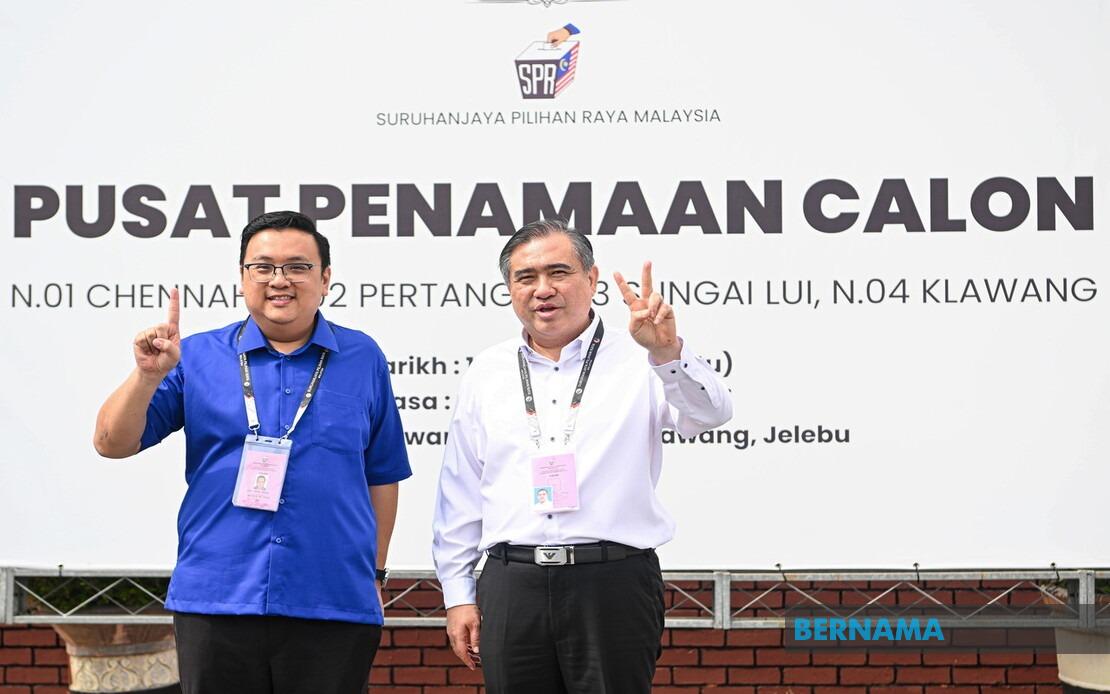
The 16th Negeri Sembilan State Election, scheduled for August 1, will showcase a fundamentally altered competitive landscape compared to recent polls, with three-cornered contests emerging as the dominant battleground format. Of the 36 state assembly seats contested, only 11 will feature the traditional straight fight between two candidates, a sharp decline from the 27 straight fights recorded in the previous state election. This shrinking number of binary contests reflects a broader fragmentation in Malaysia's political landscape, where traditional two-coalition dominance faces serious challenges from alternative political actors.
The most striking development is the unprecedented rise of multi-party contests. Twenty-one constituencies will host three-way battles, compared to just seven in 2023, while two seats will feature four-cornered fights and another two will witness five-cornered contests—a first for Negeri Sembilan. This diversification indicates that voters now face considerably more complex electoral mathematics, with strategic voting patterns becoming increasingly difficult to predict. The multiplication of contest formats suggests that neither Pakatan Harapan nor Barisan Nasional can claim the unified organizational dominance they have historically wielded in the state.
High-profile contests will punctuate the election, with several major national political figures testing their local appeal. Transport Minister Anthony Loke, who also serves as DAP secretary-general, will represent Pakatan Harapan in the straight fight for Chennah against Barisan Nasional's Siow Kong Choon. This contest carries symbolic weight beyond Negeri Sembilan, as Loke's profile extends to national coalition politics and transport policy. Equally significant, UMNO deputy president and Foreign Minister Datuk Seri Mohamad Hasan will defend the Rantau seat for Barisan Nasional against Pakatan Harapan's Dr Azizul Hakim Mahdi, making this one of the state's marquee races.
The position of Negeri Sembilan Menteri Besar will be fiercely contested through the Linggi constituency. PKR vice-president Datuk Seri Aminuddin Harun, who currently holds the menteri besar portfolio under Pakatan Harapan, faces a complex three-way challenge from Barisan Nasional's Datuk Mohd Faizal Ramli and Parti Pribumi Bersatu Malaysia's Zamri Md Said. This particular contest encapsulates the broader state-level dynamics, with the traditional coalition rivalry now complicated by the presence of Bersatu, which maintains a complex relationship with both major coalitions nationally while positioning itself as an alternative force at the state level.
Bersatu's expanded presence across Negeri Sembilan's constituencies reveals the party's strategic push to establish roots in states beyond its traditional strongholds. Across multiple seats, Bersatu candidates compete alongside representatives from the established coalitions, occasionally in four or five-way contests that dilute the vote share required to win. This fragmentation works to the advantage of whichever coalition can maintain message discipline and voter turnout, but disadvantages those whose vote is split across multiple parties claiming similar ideological space.
Independent candidates and smaller parties further complicate the electoral equation in several constituencies. In Nilai, incumbent J. Arul Kumar from Pakatan Harapan confronts not only Barisan Nasional's Lai Chien Kong, Bersatu's Datuk V. Saravana Kumar, and Barisan Jemaah Islamiah Se-Malaysia's Zamani Ibrahim, but also independent candidate Omar Mohd Isa. Similarly, Sri Tanjung will see incumbent Datuk Dr G. Rajasekaran of Pakatan Harapan navigating a five-way contest that includes independent candidates alongside representatives from Barisan Nasional, Bersatu, and the Socialist Party of Malaysia. The emergence of independent candidates, though numerically small, signals potential voter frustration with established party structures.
The Klawang constituency presents an intriguing case where Danni Rais, son of veteran politician Tan Sri Rais Yatim, will contest under Perikatan Nasional's banner against incumbent Datuk Bakri Sawir of Pakatan Harapan and Muhammad Adib Musa from Bersatu. Rais's entry into electoral politics under the PN banner demonstrates how family political legacies continue to shape candidate recruitment, even as coalition alignments shift. His candidacy also illustrates Perikatan Nasional's efforts to establish state-level presence through recruitment of politically connected figures.
These four-cornered and five-cornered contests represent uncharted electoral territory for Negeri Sembilan, with limited historical precedent for predicting outcomes when voters must choose among five competing candidates. Vote-splitting dynamics become acute in such scenarios, where a candidate might win with as little as 20 percent of the vote if opposition support fragments sufficiently. This creates both opportunity and risk for campaigns, as the calculation of required vote thresholds becomes substantially more complex than in traditional two or three-way contests.
The electoral commission has scheduled early voting for July 28, with 889,490 registered electors eligible to participate, comprising 867,151 ordinary voters, 16,884 military personnel and spouses, and 5,455 police personnel. The substantial eligible electorate ensures that turnout patterns and demographic voting shifts will materially impact results, particularly in constituencies where multiple viable candidates vie for office. Demographic concentration in urban versus rural areas will likely prove decisive in contests where vote splitting threatens majority-building.
The structural shift toward multi-cornered contests carries implications extending beyond Negeri Sembilan's borders. It suggests that Malaysia's political system may be experiencing a transition from the two-coalition framework that has structured competition since the 2018 general election. The rise of Bersatu as a consistent presence across multiple constituencies, combined with smaller parties' persistence and independent candidate participation, implies that voters increasingly demand alternatives to the traditional BN-PH binary. This fragmentation could become a template for other state elections and potentially the next general election, fundamentally altering how campaigns are conducted and how coalitions calculate winning strategies.
For Pakatan Harapan, defending the menteri besar position while managing challenges across multiple fronts requires sophisticated targeting and message discipline. For Barisan Nasional, the increased number of three-way contests provides opportunities to consolidate anti-Pakatan sentiment without necessarily achieving traditional majority support. For Bersatu and smaller parties, even limited electoral gains establish credibility as state-level actors and create leverage for future coalition negotiations. The August 1 results will reveal whether this fragmentation persists or whether voters ultimately consolidate around traditional party structures when facing concrete electoral choices.

