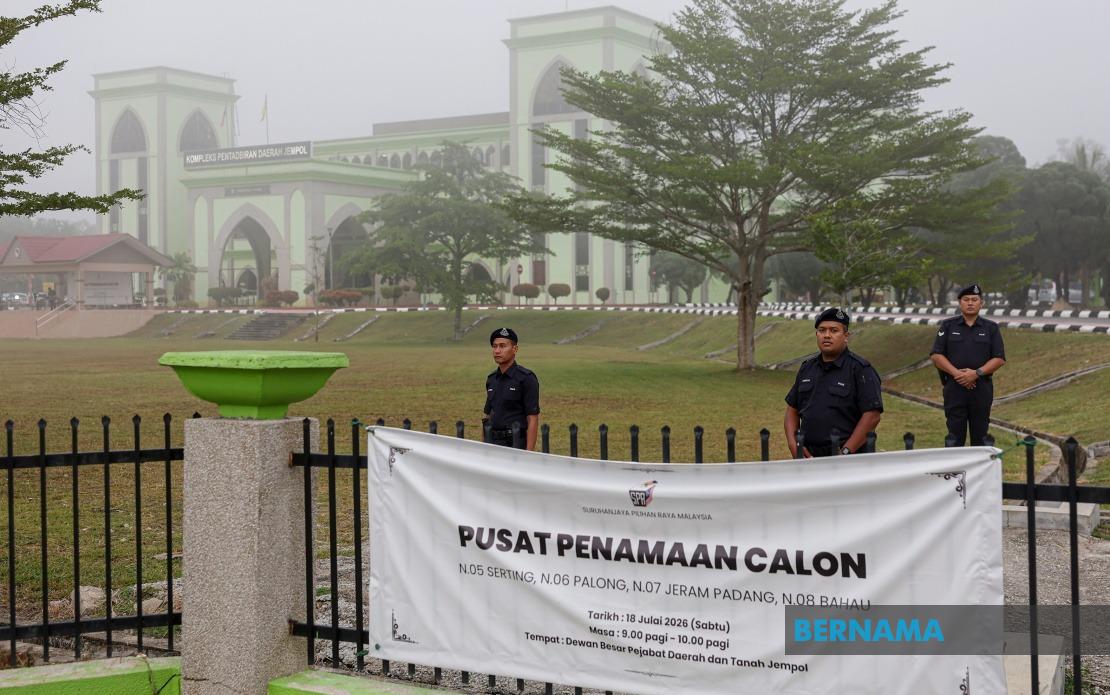
The 16th Negeri Sembilan state election formally entered its nomination phase this morning as all eight candidate registration centres opened their doors at 9 am sharp across the state's seven districts. The one-hour filing window, which concludes at 10 am, represents the critical gateway through which potential candidates must pass to secure their place on the ballot. Once this brief window closes, returning officers will immediately proceed to verify and publicly announce the complete roster of eligible candidates who have met all procedural and legal requirements to contest the August 1 election.
Election officials have orchestrated an extensive security operation to ensure the nomination process unfolds without incident. Negeri Sembilan police chief Datuk Alzafny Ahmad confirmed the deployment of 2,393 personnel across all nomination venues, a substantial mobilisation designed to safeguard the integrity of the electoral machinery and prevent any disruptions during this pivotal stage. Favourable weather conditions reported throughout all districts have further supported smooth operations across the voting constituencies.
The compressed campaign timeline that follows represents a critical phase for all contending parties. The official campaign period has been established as a 14-day window commencing immediately following the public announcement of eligible candidates and concluding at precisely 11:59 pm on July 31. This relatively concentrated campaigning schedule means political parties and independent candidates must rapidly mobilise resources, articulate their policy platforms, and connect with voters across Negeri Sembilan's 889,490 registered electorate within this narrow timeframe.
Negeri Sembilan's electoral landscape has shifted considerably since the 2023 state election, when Pakatan Harapan secured dominant control by capturing 17 of the 36 state assembly seats. Barisan Nasional emerged as the principal opposition with 14 seats, while Perikatan Nasional garnered five seats. The political dynamics have evolved substantially during the intervening three years, and today's nomination outcomes will provide the first concrete indication of how party organisational strength and voter sentiment have transformed across the state.
The electoral roll updated as of June 4 reveals a substantial voting population comprising 867,151 ordinary voters, supplemented by 16,884 military personnel and their spouses, and 5,455 police personnel eligible to participate as early voters. This diverse electorate base, distributed across the state's varied constituencies, will ultimately determine which party or coalition emerges victorious in the August 1 general election. The early voting opportunity scheduled for July 28 provides flexibility for security forces and military personnel who may face deployment constraints on polling day itself.
This election materialised following the official dissolution of the Negeri Sembilan State Legislative Assembly on June 5, an action taken after receiving formal consent from Tuanku Muhriz Tuanku Munawir, the Yang Dipertuan Besar of Negeri Sembilan. The dissolution process concluded the previous legislative session and triggered the constitutional machinery for convening a fresh electoral mandate, establishing the regulatory framework within which today's nomination procedures operate.
For Malaysian political observers, the Negeri Sembilan election carries significance as a regional bellwether. Sitting between the larger peninsular states and with constituencies spanning both urban and rural demographics, the state's electoral preferences often provide insights into broader peninsular voting trends. Outcomes here may carry implications for national coalition dynamics, particularly regarding the strength and cohesion of both Pakatan Harapan and the Barisan Nasional as they continue recalibrating their political alliances in the post-2023 landscape.
The Election Commission's logistical framework for managing this election reflects institutional refinement accumulated through successive electoral cycles. The staggered early voting provisions, the clear demarcation of campaign windows, and the deployment protocols coordinated between electoral authorities and security forces demonstrate a mature administrative apparatus designed to facilitate democratic participation while maintaining public order. The smooth opening of all eight nomination centres this morning suggests these preparatory arrangements are functioning as intended.
As Negeri Sembilan enters its formal campaign phase in coming days, political analysts will scrutinise candidate selections, party ticket allocations, and the specific constituencies where parties have chosen to field newcomers versus retain incumbent representatives. These nomination outcomes will crystallise the competitive landscape within which the August 1 contest will ultimately be decided, transforming the preliminary administrative procedures of today into the substantive political battleground of the coming weeks.

