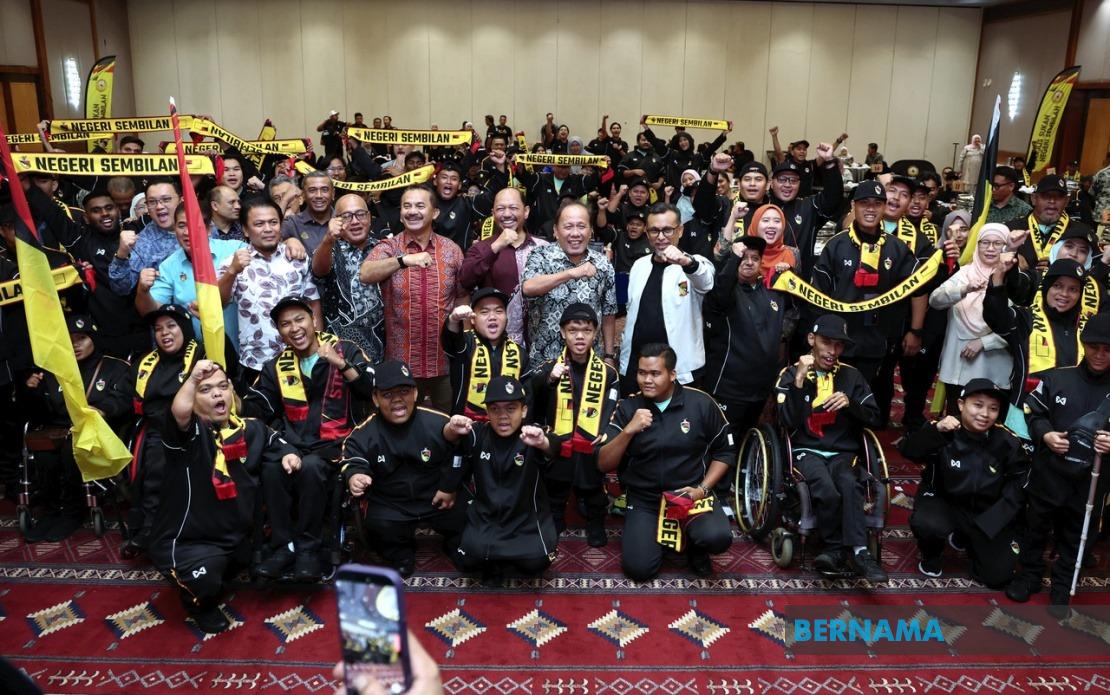
Negeri Sembilan is banking on its para athletes to deliver 12 gold medals when the state sends 80 competitors to the 2026 Para Malaysia Games in Selangor, which will commence on September 5. The ambitious target reflects state leadership's determination to reverse a recent slump in performance and restore pride in the contingent's medal-winning capabilities. Menteri Besar Datuk Ismail Lasim unveiled the target during a flag handover ceremony held in Seremban, signalling the state's commitment to a stronger showing in the Para SUKMA arena.
The goal takes on greater significance given Negeri Sembilan's underperformance at the recently concluded SUKMA 2026 Games, where the state's regular athletes managed only seven gold medals from a total haul of 48 medals. This represents a marked decline compared to the same competition two years earlier, when Negeri Sembilan secured 19 gold medals alongside 37 additional medals across silver and bronze categories. The contrast between these performances has clearly motivated state officials to chart a more promising course for their Para SUKMA contingent.
Ismail Lasim emphasised that the 12-gold target transcends mere numerical aspiration, instead serving as a benchmark of the rigour, dedication and methodical preparation that athletes have invested throughout their training cycles. He projected confidence that the objective remains achievable, provided each para athlete fully mobilises their capabilities and demonstrates the calibre of performance expected at such a high-profile regional competition. The Menteri Besar's rhetoric underscored the psychological importance of establishing clear goals as a motivational tool for competitor preparation.
Critically, Negeri Sembilan's para athletes have previously demonstrated the capacity to exceed current ambitions. At the 2024 Para SUKMA Games held in Sarawak, the state's para contingent accumulated an impressive 14 gold medals, alongside 19 silver and 20 bronze medals, totalling 53 medals. This historical performance suggests that the current 12-gold target, while challenging, represents a realistic benchmark rather than an overreach. The Sarawak result illustrates that Negeri Sembilan possesses talent within its para athlete pool and has the institutional knowledge to optimise their preparation and competitive outcomes.
State officials have crafted a comprehensive support framework extending beyond training protocols. Recognising that tangible incentives can galvanise athlete motivation and performance, authorities have committed to providing financial rewards for medallists at the Para SUKMA Games. This approach aligns with broader regional and international best practices where monetary incentivisation has proven effective in sustaining athlete commitment and intensity during crucial competitions.
The Para SUKMA competition holds particular significance within Malaysia's sporting calendar as a showcase for adaptive athletes whose achievements often receive less mainstream attention than conventional sports. The Selangor-hosted Games provides these competitors with a dedicated platform to demonstrate exceptional abilities and garner recognition within their sporting communities and beyond. For Negeri Sembilan specifically, a strong para sports performance would represent a counterbalance to the state's disappointing outing at the regular SUKMA competition, potentially restoring stakeholder confidence in the state's sports development systems and athlete support mechanisms.
Ismail Lasim's statements reflected a characterisation of para athletes as individuals possessing distinctive resilience and determination that extends beyond typical competitor attributes. By framing these athletes as possessing an "extraordinary fighting spirit," state leadership sought to inspire confidence both within the contingent and among supporters. This narrative positioning emphasises how para sports participation demands not merely physical prowess but also psychological fortitude and adaptability, qualities that Negeri Sembilan officials believe will translate into medal success.
The state contingent's preparation has been overseen by the State Youth and Sports Development Action Committee, chaired by Datuk Mustapha Nagoor, alongside the Negeri Sembilan Sports Council led by director Marhizah Abdul Razak. This administrative infrastructure indicates structured governance of athlete preparation and resource allocation. The involvement of multiple state agencies demonstrates the multi-layered approach required to optimise para athlete performance across training facilities, nutritional support, coaching expertise, and psychological preparation.
For Malaysian readers and Southeast Asian observers, Negeri Sembilan's para sports trajectory illuminates broader questions about how states allocate resources between conventional and adaptive athlete development. The disparity between the state's SUKMA and Para SUKMA target outcomes suggests potential imbalances in funding, coaching calibre, or facility access between these two athlete populations. The 12-gold target therefore represents not merely a competitive ambition but also an institutional commitment to elevating para sports within Malaysia's broader athletic ecosystem, particularly within Negeri Sembilan's sports development framework.

