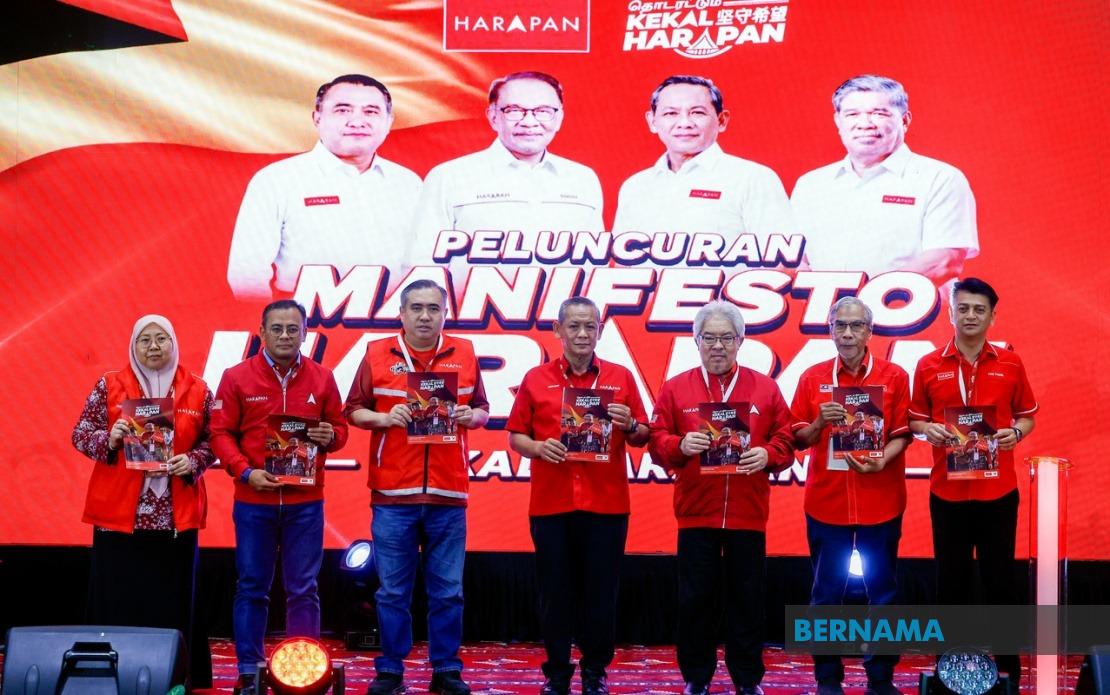
Pakatan Harapan's approach to the forthcoming Negeri Sembilan state election centres on tangible, implementable commitments rather than aspirational pledges, according to the coalition's state leadership. Speaking at the manifesto launch in Seremban on July 20, Menteri Besar Datuk Seri Aminuddin Harun framed the coalition's electoral platform as a natural progression of eight years governing the state, distinguished by a focus on consolidating existing programmes and deepening their impact within communities.
The distinction Aminuddin drew between political rhetoric and deliverable promises reflects a broader strategic shift in how established governing coalitions present themselves to voters. Rather than promising transformative new initiatives, PH's manifesto positions itself as built upon proven implementation capacity and institutional knowledge accumulated through nearly a decade in office. This messaging appeals to voters concerned with consistent service delivery and predictable governance, while differentiating PH from opposition parties that may offer more radical policy shifts.
The manifesto, unveiled under the banner 'Negeri Sembilan Kekal Harapan' (Negeri Sembilan Stays With Harapan), articulates ten principal commitments that span key governance domains. These commitments emerged from systematic review of ongoing state programmes, reflecting an administration strategy of refinement rather than wholesale policy overhaul. The emphasis on strengthening foundations and ensuring plans materialise over the next electoral cycle suggests PH views continuity and incremental improvement as electoral assets.
Aminuddin's role as both state coalition chairman and Menteri Besar contesting the Linggi seat places him at the centre of PH's electoral machinery in Negeri Sembilan. His position allows him to articulate party narrative while simultaneously demonstrating personal accountability by seeking direct re-endorsement from his constituency. This personal stake in electoral outcomes underscores the stakes for PH leadership and provides a focal point for voter attention and expectations.
The framing of next five years as a consolidation period responds implicitly to voter fatigue with constant policy churn and rhetoric-laden campaigns. By positioning themselves as stewards of proven programmes rather than architects of untested reforms, PH seeks to project stability and managerial competence. This approach particularly resonates in state politics where local service delivery and day-to-day governance tangibly affect residents' lives more directly than federal-level announcements.
For Malaysian voters across other states, the Negeri Sembilan contest signals broader patterns within PH's electoral positioning. As Malaysia's political landscape continues to fragment with multiple viable coalitions competing across state elections, incumbents increasingly emphasise proven track records. The implicit acknowledgement that visionary promises require backing by actual institutional performance underscores a maturing Malaysian electorate evaluating governance through concrete outcomes.
The emphasis on building foundations that benefit future generations introduces a longer-term governance perspective, appealing to family-oriented Malaysian voters concerned with intergenerational outcomes. This language extends beyond immediate electoral cycles, positioning PH's administration as custodian of state development trajectories rather than administrators focused narrowly on short-term electoral optics. Such framing carries particular weight in state politics where communities possess stronger institutional memory of governance performance.
State-level manifestos in Malaysia traditionally receive less media attention than federal-level counterparts, yet they crystallise voter choices regarding local administration, resource allocation, and developmental priorities. Negeri Sembilan's manifesto launch exemplifies how governing coalitions calibrate messaging for voters evaluating competence, consistency, and programmatic continuity. The choice to emphasise deliverables and existing initiatives reflects calculated assessment that Malaysian voters increasingly demand evidence-based governance platforms.
The electoral context in Negeri Sembilan encompasses broader Southeast Asian trends toward greater accountability expectations from voters and reduced tolerance for unfulfilled campaign promises. Across the region, voters in successive elections demonstrate growing sophistication in evaluating parties' implementation records. PH's explicit commitment to tangible delivery aligns with this global trend toward governance being assessed through measurable outcomes rather than rhetorical flourish.
As Malaysia's political system matures and state-level elections gain competitive intensity, the nature of electoral discourse shifts toward programmatic specificity and demonstrated implementation capacity. Aminuddin's assertion that PH's manifesto reflects what the coalition has accomplished and seeks to improve represents this evolution. Voters in Negeri Sembilan and beyond increasingly distinguish between parties capable of executing policies and those relying on persuasive oratory disconnected from institutional capacity.
The coalition's sustained focus on continuing and enhancing existing programmes carries implicit recognition that voter preferences have shifted toward incremental improvement over disruptive change. This positioning may prove decisive in determining Negeri Sembilan's electoral outcome, particularly among undecided voters evaluating stability and competence as primary selection criteria. State-level politics increasingly determines overall national political configurations, making Negeri Sembilan's contest consequential beyond regional boundaries.

