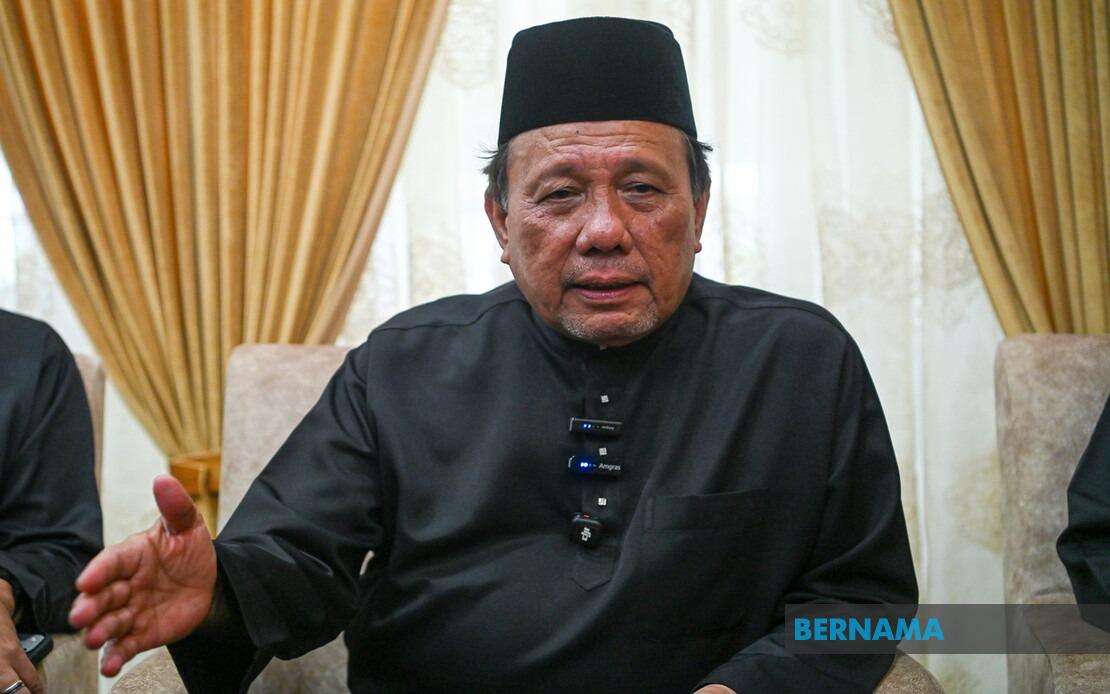
Datuk Ismail Lasim, the Menteri Besar of Negeri Sembilan, has assumed the position of chairman at Negeri Sembilan Football Club (NSFC) following a leadership transition within the organisation. The appointment became effective on August 14, marking a significant development in the state's football governance structure. This move comes after Datuk Seri Aminuddin Harun stepped down from the role, creating an opening for new direction at the helm of the club.
The transition has been welcomed by football administration circles in the state. Tunku Besar Tampin Tunku Syed Razman Tunku Syed Idrus Al-Qadri, president of the Negeri Sembilan Football Association (PBNS), outlined the rationale behind the appointment in a statement issued from Seremban. According to him, Ismail's deep familiarity with the local football ecosystem made him a natural choice to guide the club's future trajectory. His previous involvement with the organisation and understanding of its institutional values positioned him well to assume this leadership responsibility.
Ismail brings substantial credentials to the role, having served the state's football programme in various capacities over several decades. During the 1990s and early 2000s, he held the position of team manager for Negeri Sembilan's football operations, gaining hands-on experience in player management, tactical operations, and inter-organisational coordination. This experience proved foundational to his understanding of how the club functions at operational level. His involvement did not cease there; in 2010, he took on the role of vice-president at PBNS, broadening his exposure to governance matters and strategic planning within the football association hierarchy.
The PBNS president expressed confidence that Ismail's return to a leadership position, albeit in a different capacity, would benefit the organisation substantially. Tunku Syed Razman emphasised that the menteri besar's experience in football administration and his proven leadership abilities would be instrumental in steering NSFC through what he characterised as a period requiring professional, sustainable, and competitive development. The language used suggests the club faces challenges that require steady, experienced stewardship rather than untested direction.
Under Ismail's chairmanship, the club is expected to focus on several interconnected objectives that reflect contemporary thinking in Malaysian football. The PBNS president outlined an agenda centred on building an organisation that operates on professional standards while remaining financially sustainable and capable of competing effectively against rival clubs. This tripartite emphasis—professionalism, sustainability, and competitiveness—suggests recognition that Negeri Sembilan football has struggled with consistency in one or more of these areas.
Player development constitutes a cornerstone of the club's intended direction moving forward. Rather than relying solely on the transfer market or loan arrangements with larger clubs, NSFC intends to invest in systematic development of homegrown talent. This approach aligns with broader trends across Southeast Asian football, where clubs are increasingly recognising that long-term competitiveness depends on building robust youth academies and talent pipelines. For a state like Negeri Sembilan, which lacks the commercial pulling power of larger urban centres, developing local players also serves the practical purpose of retaining talented individuals who might otherwise migrate to clubs in Kuala Lumpur or other major cities.
Club structure and organisational efficiency represent another priority area. The statement indicates recognition that success depends not merely on field performance but on having administrative systems and hierarchical arrangements that function smoothly. This reflects a more sophisticated understanding of club management than purely sporting considerations. A well-structured organisation can manage finances more effectively, coordinate between different departments seamlessly, and respond more nimbly to operational challenges.
Commercial development has been explicitly identified as a focus area, signalling that NSFC intends to diversify its revenue streams beyond traditional matchday attendance and broadcasting rights. This could encompass sponsorship agreements, merchandising operations, corporate partnerships, and other income-generating activities. For a state-level club competing in Malaysia's professional football landscape, commercial viability is increasingly essential for financial survival and competitive investment.
Community and supporter relations warrant particular emphasis given their inclusion in the club's stated priorities. Football clubs function as community institutions in their localities, and their legitimacy depends substantially on maintaining strong connections with supporters and the broader public. NSFC's intention to strengthen these relationships suggests recognition that the club must serve as more than merely a sporting entity—it functions as a symbol of state pride and a focal point for collective identity.
The appointment also reflects the intertwined nature of political and sporting institutions in Malaysia. As menteri besar, Ismail occupies the highest executive position in state government, yet he simultaneously assumes leadership of a sports organisation. This convergence is not unusual in the Malaysian context, where political leaders frequently take on ceremonial or executive roles in sporting bodies. The arrangement potentially enables the club to benefit from state government resources and political capital, though it also raises questions about governance separation and potential conflicts of interest.
Looking ahead, success will depend on whether Ismail can translate his experience and political standing into concrete improvements in the club's performance and operations. The Malaysian football public and Negeri Sembilan supporters will be watching closely to assess whether this leadership transition yields tangible benefits. Given the competitive nature of Malaysia's football landscape, where numerous clubs vie for limited resources and supporter attention, the club must demonstrate clear progress in coming months to validate this appointment decision.
The appointment carries broader implications for how Malaysian states approach football governance and development. Negeri Sembilan's decision to tap experienced administrators from within its own political and sporting ecosystem could serve as a model for other states seeking to revitalise their clubs. Conversely, if the arrangement proves ineffective, it may prompt reconsideration of whether senior government officials should simultaneously hold positions in sporting organisations.

