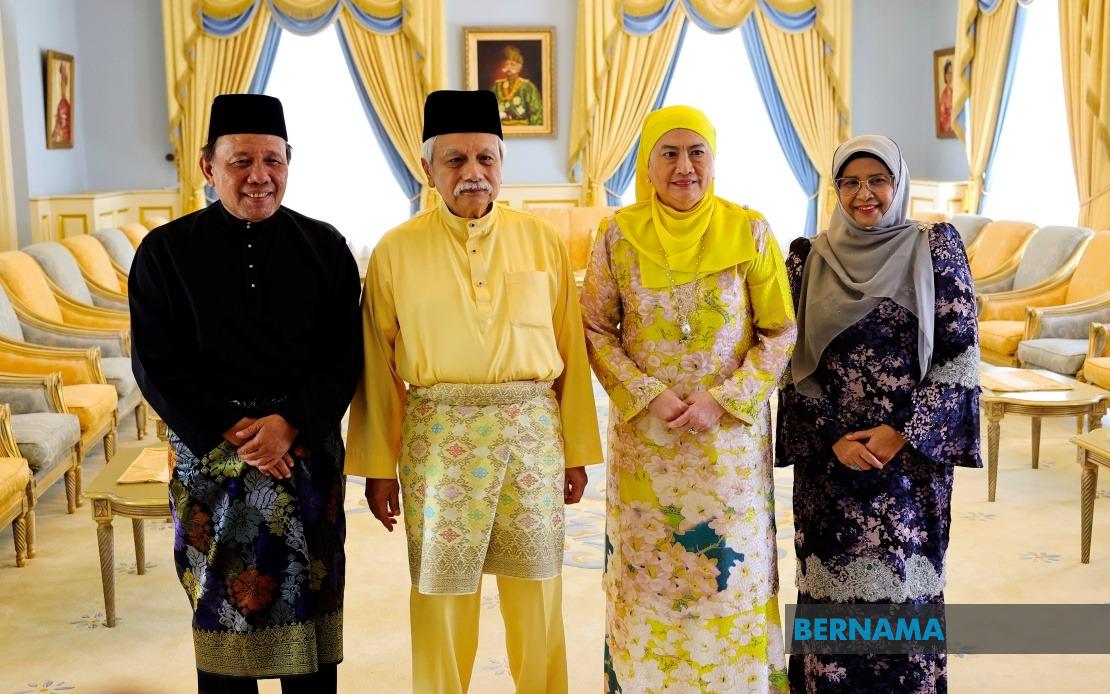
Negeri Sembilan's newly installed Menteri Besar Datuk Ismail Lasim has made a significant commitment to centre the state's royal institution and cherished customs within his administration's framework, declaring these elements as foundational to effective governance. Speaking after his oath-taking ceremony before Tuanku Muhriz Tuanku Munawir at Istana Besar Seri Menanti, Lasim emphasised that protecting and honouring the monarchy represents not merely a governmental obligation but a shared civic duty binding all citizens of the state.
The newly appointed leader articulated a vision where respect for the royal institution functions as a stabilising force that strengthens bonds between the palace and the state machinery. He framed this commitment within a broader governance philosophy centred on preserving the distinctive identity that has characterised Negeri Sembilan's administration throughout its history. By positioning the institution as integral to administrative stability, Lasim signalled that constitutional monarchical values would permeate policy decisions and governmental interactions across his tenure.
Lasim identified two interconnected responsibilities for Negeri Sembilan citizens seeking to maintain harmony within the state. Firstly, inhabitants must develop a thorough comprehension of the state's time-honoured customs and traditions, recognising them as living practices rather than historical artifacts. Secondly, citizens must actively demonstrate respect for the royal institution through their conduct and support for governmental initiatives that reinforce this relationship. This dual framework suggests the administration plans to engage communities in preserving these values through education and civic participation.
Addressing the practical dimensions of governance, Lasim outlined his approach to managing potential friction points between different arms of government and between the state and federal authorities. He acknowledged that conflicts and related complications inevitably emerge in any complex administration, but insisted that identifying constructive pathways to minimise such occurrences forms part of his governmental mandate. This pragmatic acknowledgement distinguishes his position from purely ceremonial rhetoric, indicating a willingness to navigate institutional complexities while maintaining established principles.
The Juasseh assemblyman's administrative philosophy prioritises the immediate welfare and material interests of Negeri Sembilan residents alongside institutional preservation. Rather than treating these objectives as competing priorities, Lasim presented them as complementary, suggesting that honouring traditional institutions actually creates the stable environment necessary for effective service delivery. This framing may resonate with constituencies concerned about balancing modernisation impulses with respect for established governance structures.
On the federal dimension, Lasim moved decisively to normalise cooperative relations between Negeri Sembilan's state administration and the federal government despite potential political complexities. He noted that Barisan Nasional, which constitutes the governing coalition in the state, maintains its position within the federal Unity Government framework, thereby establishing natural channels for inter-governmental coordination. This positioning allows the state administration to access federal resources and align policy initiatives without requiring ideological compromise or political repositioning.
Lasim's comments regarding continuity with previous administrations reveal a pragmatic governing orientation that transcends typical partisan boundaries. He indicated that effective policies implemented by his predecessors warrant preservation and enhancement rather than wholesale replacement, a position that could either reflect genuine cross-party consensus on development priorities or represent a tactical acknowledgement of popular measures. This approach may stabilise investor confidence and community expectations by reducing the disruption typically accompanying new administrations.
The Menteri Besar's emphasis on maintaining beneficial existing initiatives while improving their implementation demonstrates a recognition that state governance requires sustained focus on service delivery over symbolic transformation. Rather than embarking on extensive institutional restructuring, his stated preference is consolidation and refinement of programmes that demonstrably improve residents' lives. This measured approach contrasts with more radical administrative overhauls that sometimes accompany leadership transitions.
The sworn oath ceremony before the Yang Dipertuan Besar underscores the formal constitutional relationship binding the executive to the state's monarchy. This ceremonial affirmation carries particular significance in Negeri Sembilan, which maintains distinctive customary governance arrangements rooted in its historical Minangkabau heritage. The ruler's role transcends ceremonial formality, embodying constitutional authority that shapes the boundaries within which elected administrators must operate.
For Malaysian observers beyond Negeri Sembilan, Lasim's inaugural statements carry implications regarding how states manage the interplay between democratic governance and constitutional monarchy. His emphasis on institutional respect provides a model for balancing electoral mandates with established power structures. As Malaysia navigates discussions about institutional reform and democratic accountability, Negeri Sembilan's demonstrated commitment to strengthening rather than challenging traditional arrangements offers one regional perspective on these national tensions.
The coordination framework Lasim described between state and federal levels reflects broader realities of Malaysian federalism, where state administrations must function within constitutional parameters while negotiating resource distribution with Putrajaya. His explicit positioning within the Unity Government architecture removes potential ambiguity about his administration's alignment with national governance structures, likely facilitating smoother administrative collaboration on matters affecting state residents.
Looking forward, Lasim's pledges establish reference points against which his administration's performance will be measured. Citizens and observers will assess whether stated commitment to preserving royal institution dignity translates into concrete administrative choices, particularly if decisions arise that could be perceived as challenging traditional prerogatives or customs. Similarly, the promised continuity in beneficial policies will require transparent identification of which initiatives qualify for preservation and how improvement will be assessed and implemented across the state's development landscape.

