The race to govern Negeri Sembilan entered its formal phase today as nomination centres across the state opened their doors to prospective candidates seeking to secure a mandate from nearly 900,000 eligible voters. The Election Commission's opening of eight nomination centres at 9 am marks the beginning of a closely watched contest that will reshape the political landscape of Malaysia's central state. Candidates have a narrow two-hour window—closing at 10 am—to lodge their nomination papers with the respective Returning Officer, after which the list of eligible contenders will be officially published and the campaign battle truly commences.
The electoral calendar has been meticulously set by the Election Commission to unfold over the next fortnight. Following the publication of the candidate list, political parties and independent hopefuls will have exactly 14 days to campaign and canvass support, with the campaign period ending at 11.59 pm on July 31. Early voting has been scheduled for July 28 to accommodate military personnel, police officers and their families, while the general polling day is set for August 1. This timeline was triggered after the Negeri Sembilan State Legislative Assembly was dissolved on June 5 with the formal consent of the Yang Dipertuan Besar, Tuanku Muhriz Tuanku Munawir, setting the constitutional machinery in motion for this crucial state-level contest.
Interest in the election has been robust, with the Election Commission reporting that 464 nomination forms had been distributed to prospective candidates by the eve of nomination day. Of these, 70 candidates had already paid the mandatory election deposits required to formalise their participation, signalling confidence among various political factions in their chances of electoral success. The deposit requirement serves as a filter against frivolous candidacies and represents a significant financial commitment from those serious about contesting the 36 state seats now up for grabs across Negeri Sembilan's constituencies.
The voting population that will decide the outcome comprises 889,490 individuals across the state. This electorate is drawn from three distinct categories: 867,151 ordinary registered voters, 16,884 military personnel and their spouses, and 5,455 police officers and their spouses. This composition reflects both the civilian majority and the institutional representation within the Malaysian electoral framework, with special provisions made for uniformed personnel to participate in early voting arrangements. The size and distribution of this voter base will be crucial in determining whether any single political coalition can secure a clear majority to form the next state government.
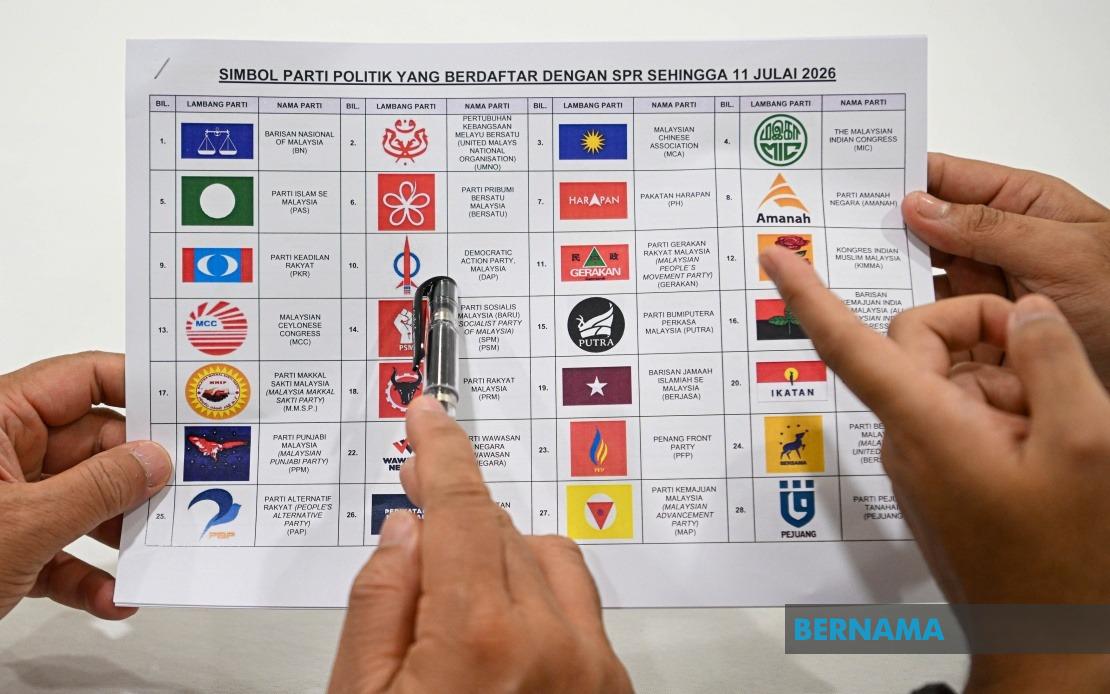
The political landscape in this election reflects the broader tripartite divisions that have characterised Malaysian politics in recent years. Pakatan Harapan will field candidates in all 36 seats, representing the broadest showing of confidence in their ability to contest every available position. Barisan Nasional, the traditional ruling coalition, will contest 25 seats, while Perikatan Nasional will compete in 11 seats. Beyond these three major blocs, smaller parties including Parti Orang Asli Malaysia, the Socialist Party of Malaysia, and Parti Barisan Jemaah Islamiah Se-Malaysia will each put forward single candidates. Notably, Parti Pribumi Bersatu Malaysia will field 24 candidates, some of whom will contest under the Bersatu banner while two others represent Urimai, demonstrating the complex inter-party arrangements that characterise contemporary Malaysian electoral politics.
The context of this election is shaped by the results of the previous state contest in 2023. In that election, Pakatan Harapan emerged as the largest bloc with 17 of the 36 seats, though falling short of a clear majority. Barisan Nasional secured 14 seats, while Perikatan Nasional captured five. These results established a competitive but fragmented parliament where the leading coalition held a tenuous grip on power, setting the stage for this fresh contest where realignments and shifting voter sentiment could dramatically alter the composition of the next assembly. The margin between the top two blocs was narrow enough to make this election genuinely competitive, with both established coalitions viewing the contest as an opportunity to reshape their standing in the state.
Logistical preparations for managing the election have been extensive. The Negeri Sembilan police force has mobilised 4,800 officers and personnel from state resources, supplemented by an additional 1,373 officers and personnel deployed from Bukit Aman headquarters. This substantial security presence reflects the need to ensure orderly conduct throughout the nomination process and subsequent campaign period, preventing disruptions that could compromise the integrity of the democratic exercise. The Election Commission has issued explicit reminders to all candidates and their supporters to adhere strictly to electoral rules and refrain from any form of provocation that might jeopardise the smooth operation of the nomination proceedings.
Nomination day itself is expected to witness substantial scenes of political pageantry as party leaders, elected representatives, and grassroots supporters converge on the eight nomination centres throughout Negeri Sembilan. These gatherings traditionally serve as occasions for parties to demonstrate their organisational strength and popular support, with convoys of vehicles and rallies of supporters accompanying each candidate through the nomination process. The convergence of multiple parties, candidates, and supporters at different venues simultaneously creates both a display of democratic engagement and a significant logistical challenge for authorities tasked with maintaining order and managing crowd flows.
Weather conditions are expected to play a minor but notable role in the unfolding of nomination day. The Malaysian Meteorological Department has forecast generally fair conditions across most of the state during the morning hours when the nomination process will be underway, though Port Dickson and Seremban specifically are expected to experience rainfall. Afternoon thunderstorms are anticipated statewide, a typical pattern for this period of the Malaysian calendar. These meteorological considerations, while not determinative, will influence crowd sizes and the logistics of candidate processions and supporter gatherings throughout the day.
The significance of this election extends beyond Negeri Sembilan's own governance. As a state election occurring within the Malaysian federal context, it provides an important barometer of shifting voter preferences and the evolving dynamics between the major political coalitions. The results could influence calculations at the federal level regarding coalition stability and electoral prospects, particularly given the relatively narrow margins that characterised the 2023 state election. For regional observers and political analysts across Southeast Asia, this contest offers insights into how Malaysian voters are responding to current governance, economic conditions, and the performance of their state administration under Pakatan Harapan's stewardship since 2023.

