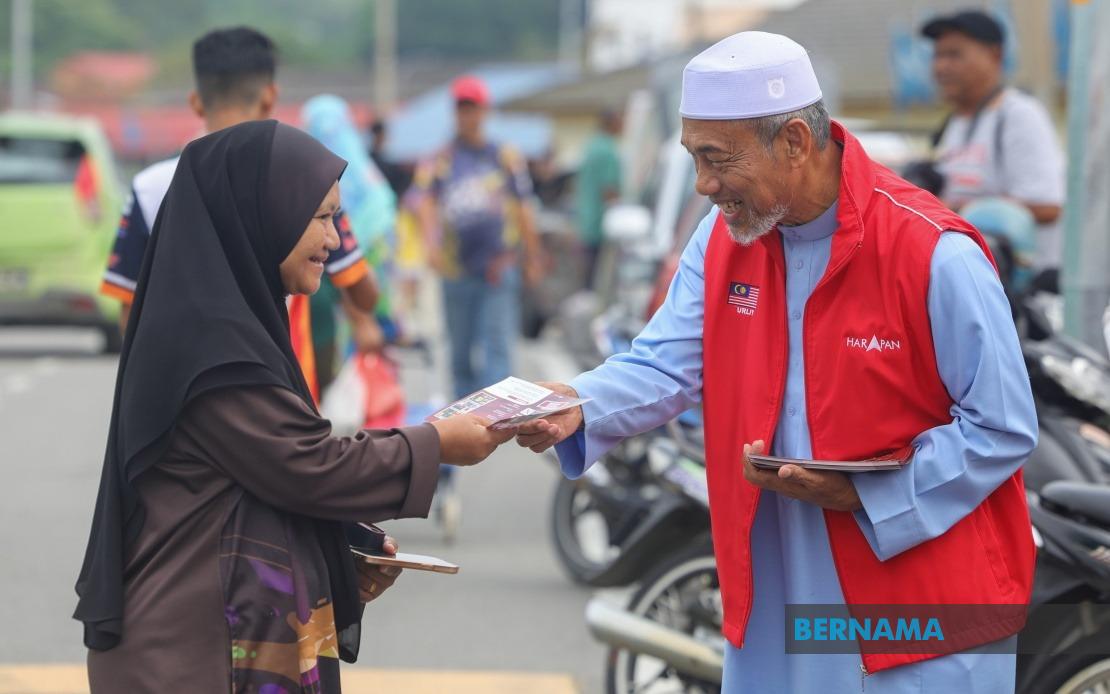
The race for the 16th Negeri Sembilan State Assembly has shifted into high gear as candidates deployed across the state commenced an intensive phase of voter engagement on the second day of the official campaign period. The candidates are capitalising on the remaining 12 days before polling to conduct an exhaustive series of grassroots activities, with many scheduling multiple programmes daily to penetrate their constituencies at the neighbourhood level. This aggressive approach reflects the competitive nature of the contest and the importance parties place on direct voter contact during the critical final fortnight of campaigning.
Menteri Besar Datuk Seri Aminuddin Harun, contesting the Linggi seat under the Pakatan Harapan banner, exemplifies the intensity of this push. Beginning with dawn prayers at Masjid Jamek Pasir Panjang, his schedule expanded to encompass breakfast engagements with residents, successive walkabouts across multiple residential areas including Pasir Panjang, Taman Setia, and Taman Kekatong, and a dedicated community session with Indian residents. The Negeri Sembilan PKR chairman and Port Dickson Member of Parliament emphasised that these encounters provide opportunities to understand voter concerns directly while reinforcing his commitment to delivering development benefits across the constituency. His messaging stressed continuity and inclusive progress, framed within the broader PH platform for Negeri Sembilan's advancement.
The Pakatan Harapan campaign machinery demonstrated similar intensity across other constituencies. DAP secretary-general Anthony Loke, defending the Chennah state seat, transitioned seamlessly from a morning market walkabout at Seremban Central Market to an evening electoral dinner, maximising exposure across different voter demographics and dayparts. Meanwhile, PH candidate Kamarul Ariffin Wafa for Seri Menanti orchestrated an eight-point programme itinerary encompassing market visits and residential engagement, while his party colleague Yaacob Mahmood in Serting focused on informal breakfast interactions and business district visits in Felda Raja Alias 3 and Bandar Seri Jempol. These candidates recognise that contemporary electoral success depends on sustained, personal contact rather than relying solely on mass media or rally-based mobilisation.
The Barisan Nasional coalition similarly mobilised its machinery with comparable vigour. Datuk Seri Mohamad Hasan, the incumbent Rantau assemblyman and BN deputy chairman commonly known as Tok Mat, maintained his ground presence through community centre engagement in Mambau's Taman Kelab Tuanku PDM facility. His party colleague Datuk Seri Jalaluddin Alias, chairing the Negeri Sembilan UMNO Liaison Committee, combined youth-oriented activities by attending a sepak takraw tournament in Pertang with targeted outreach to the Orang Asli community in Kampung Utara Putra. This dual approach—simultaneous engagement with mainstream and minority communities—reflects BN's traditional strategy of constructing broad electoral coalitions across demographic lines.
The logistical undertaking facing candidates is substantial. With 889,490 registered voters across the state, distributed across multiple constituencies with varying demographic compositions, the necessity for comprehensive ground coverage is evident. The eligible electorate comprises 867,151 ordinary voters, supplemented by 16,884 military personnel and their spouses plus 5,455 police officers, many of whom will exercise voting rights during the early voting period on July 28. This dispersed voter base necessitates the multi-programme daily schedules candidates have adopted, as no single event can adequately reach all segments in a given locality.
For Malaysian political analysts, the intensity of these campaigns underscores the shifting nature of electoral competition in the peninsula. While major rallies and party conventions remain important for energising party activists and media attention, candidate viability increasingly depends on demonstrated capacity to engage directly with ordinary residents in their localities. The emphasis on breakfast meetings, market walkabouts, and informal community sessions signals campaigns' recognition that voters respond to personalised contact and perception of accessibility. This represents evolution from earlier periods when media coverage and organisational machinery alone could determine outcomes.
The timing of the Negeri Sembilan election carries additional significance within the broader Malaysian political context. The 16th state assembly poll represents the first major electoral contest following the recalibration of political alignments that occurred in national politics. Negeri Sembilan's status as a Pakatan Harapan-controlled state makes it a test case for the coalition's capacity to consolidate support and defend territory against both Barisan Nasional resurgence and potential internal pressures. The aggressive campaigning by both major coalitions reflects the stakes involved—victory would signal renewed momentum, while defeat could trigger reassessment of political strategies ahead of any future national contest.
From a Southeast Asian perspective, the Negeri Sembilan election demonstrates how Malaysian politics, despite occasional moments of instability, maintains institutional resilience through regular electoral cycles. The Election Commission's management of the process—including the early voting provision for military and police personnel—reflects procedural maturity and recognition of diverse electorate needs. This institutional steadiness contrasts with electoral challenges confronting other regional democracies and underscores Malaysia's position as an established electoral democracy despite occasional political turbulence.
The candidates' emphasis on listening to constituent concerns and translating those into policy commitments reflects voter expectations that have evolved significantly over the past decade. Contemporary Malaysian voters demonstrate decreasing tolerance for purely transactional politics and increasing demand for substantive engagement on local issues. The focus by candidates across party lines on attending community markets, informal residential areas, and minority community venues suggests campaigns' recognition that modern voters expect detailed understanding of neighbourhood-specific challenges rather than generic national messaging. This localisation of campaign discourse may ultimately shape how the victor in Negeri Sembilan approaches governance.
For the remaining campaign period leading to the August 1 polling day, candidates can expect the intensity demonstrated on the second day to persist or potentially escalate. The psychological pressure on candidates to demonstrate visible commitment through packed schedules means most will likely maintain daily programme loadings approaching nine events, despite physical demands. This sustained intensity serves multiple functions—it generates media content, energises party activists through visible organisational activity, and creates genuine opportunities for voter contact that campaigns trust will translate into electoral support. Whether this grassroots saturation strategy proves decisive will become apparent on August 1.

