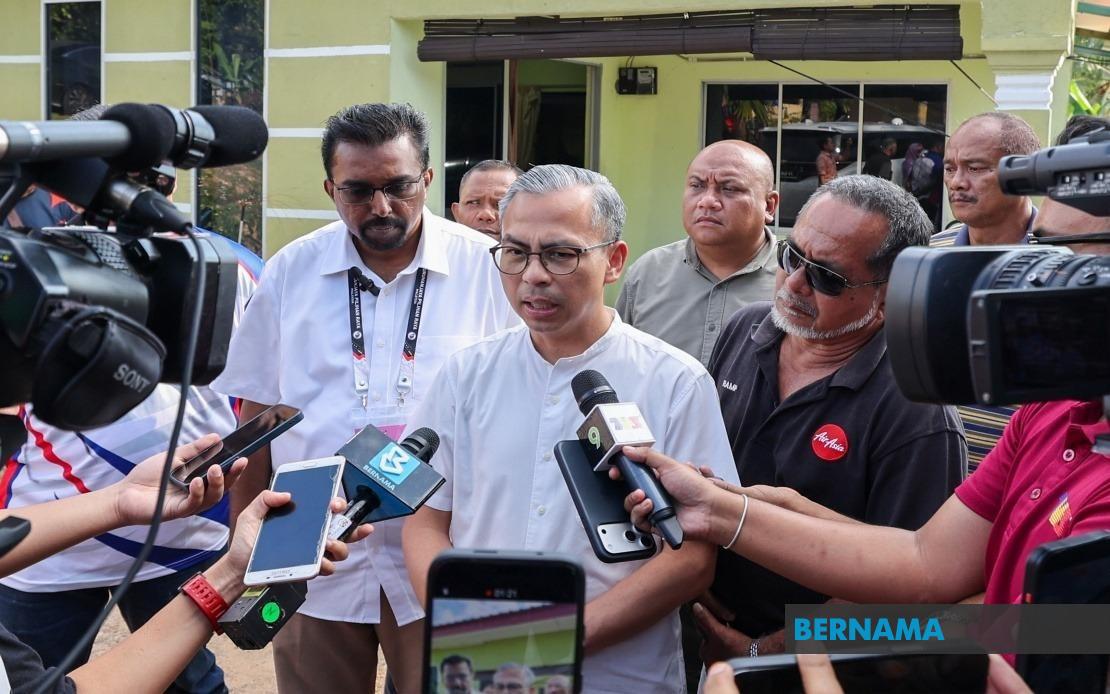
The campaign environment for the Negeri Sembilan state election is proving relatively orderly on social media, according to Communications Minister Datuk Seri Fahmi Fadzil, who reported that the Malaysian Communications and Multimedia Commission (MCMC) has fielded merely 16 complaints since campaigning commenced. Speaking at the Ziarah Kasih MADANI programme in Jempol, Fahmi characterised the overall situation as controlled, though he remained vigilant about potential complications as voting approaches on August 1.
Of the complaints received, fourteen centred on telecommunications network problems rather than content-related issues, while the remaining two involved fraudulent social media accounts. This breakdown suggests that technical infrastructure challenges, rather than deliberate misinformation campaigns, currently represent the primary concern for election regulators. The distinction carries significance for understanding the nature of digital disruption during electoral periods in Malaysia, where connectivity gaps sometimes prove as consequential as false information in shaping campaign narratives.
Fahmi's assessment comes with an important caveat regarding the election timeline. With approximately seven to eight days of campaigning remaining at the time of his statement, and with polling still weeks away on August 1, the minister acknowledged that historical patterns typically show dramatic intensification of online activity during the final 72 to 96 hours before voting. This window represents a critical period when coordinated disinformation campaigns and viral false claims tend to proliferate, potentially overwhelming fact-checking mechanisms and platform moderation teams.
The minister urged citizens to take personal responsibility for information quality by reporting suspicious content to social media platform operators directly, escalating matters to MCMC only when platforms fail to respond appropriately. This distributed approach to content moderation reflects the reality that government agencies alone cannot monitor the vast volume of election-related communications across multiple platforms, particularly as messaging becomes more dispersed across encrypted channels and smaller networks beyond the reach of traditional oversight.
Beyond campaign content concerns, Fahmi devoted considerable attention to internet connectivity gaps affecting rural communities, particularly in Felda settlements. His visit to Felda Palong 1 revealed that coverage deficiencies concentrated along main access roads rather than within residential areas themselves, identifying a specific infrastructure gap that simultaneously impacts both economic activity and emergency response capabilities. Poor connectivity on arterial routes effectively isolates settlements, hindering business operations and creating genuine safety vulnerabilities when residents require rapid communication with emergency services.
The identification of this problem pattern suggests a broader issue in Malaysia's digital infrastructure strategy. Despite telecommunications companies signing a memorandum of understanding regarding network sharing arrangements last year, implementation has lagged considerably. Fahmi's directive to MCMC to address road-corridor connectivity urgently reflects frustration with the pace of progress among commercial operators, where profit incentives may not align with public service obligations in sparsely populated areas. His stated principle—that internet access should accompany road infrastructure—establishes a policy aspiration rather than current reality.
To bridge connectivity gaps more rapidly, authorities are pursuing multiple simultaneous approaches. Constructing new telecommunications towers represents the conventional solution but requires significant capital investment and time for planning and deployment. Optimising existing infrastructure through technology upgrades can yield incremental improvements without new construction. Satellite services such as Starlink offer interim relief while longer-term solutions develop, representing a pragmatic acceptance that ground-based networks alone cannot solve universal coverage within acceptable timeframes.
The communications sector's challenges extend beyond physical infrastructure to customer service mechanisms. Fahmi directed telecommunications companies to enhance complaint feedback systems, specifically recommending integration of artificial intelligence tools that permit users to track complaint resolution status in real time. This instruction acknowledges persistent frustration among Malaysian consumers regarding opaque complaint processes, where citizens often remain uncertain whether their reports are being actively investigated or languishing in administrative backlogs. AI-powered status tracking addresses this transparency gap without requiring dramatic organisational restructuring.
For Malaysian and Southeast Asian readers, the Negeri Sembilan election serves as a regional barometer for how electoral authorities manage digital campaign environments during periods of intense political activity. Unlike democracies with longer experience in regulating online campaigning, Malaysia's regulatory framework remains relatively recent, with institutional learning occurring through each electoral cycle. The apparently low complaint volume might indicate either effective platform moderation and public restraint, or alternatively, under-reporting of violations that escape MCMC's attention or exceed its capacity to process.
The timing of early voting on July 28, five days before general polling on August 1, compresses the critical final campaign period when social media activity typically surges. This condensed timeline potentially magnifies the impact of viral false claims, as the reduced window for fact-checking and counter-messaging decreases. Election officials and platform operators will need heightened vigilance during this compressed period to prevent last-minute disinformation from influencing voter decisions.
Fahmi's public comments serve multiple audiences simultaneously. To election officials and platform operators, they communicate expectations for rigorous monitoring and swift action against violations. To the public, they encourage reporting of suspicious content while acknowledging that authorities retain the situation's upper hand currently. To telecommunications companies, they convey ministerial displeasure with infrastructure deployment pace while offering collaborative pathways forward through shared responsibility mechanisms.
The Negeri Sembilan election unfolds during a period when regional democracies increasingly grapple with balancing electoral integrity against digital rights. Singapore's strict approach contrasts with Indonesia's more permissive environment, while Thailand's military-influenced system maintains tight content control. Malaysia's approach, emphasizing collaborative regulation with platforms, distributed citizen responsibility, and technological solutions, reflects a middle path that prioritises swift intervention without comprehensive information control. The outcome will influence how subsequent Malaysian elections approach digital campaign management.

