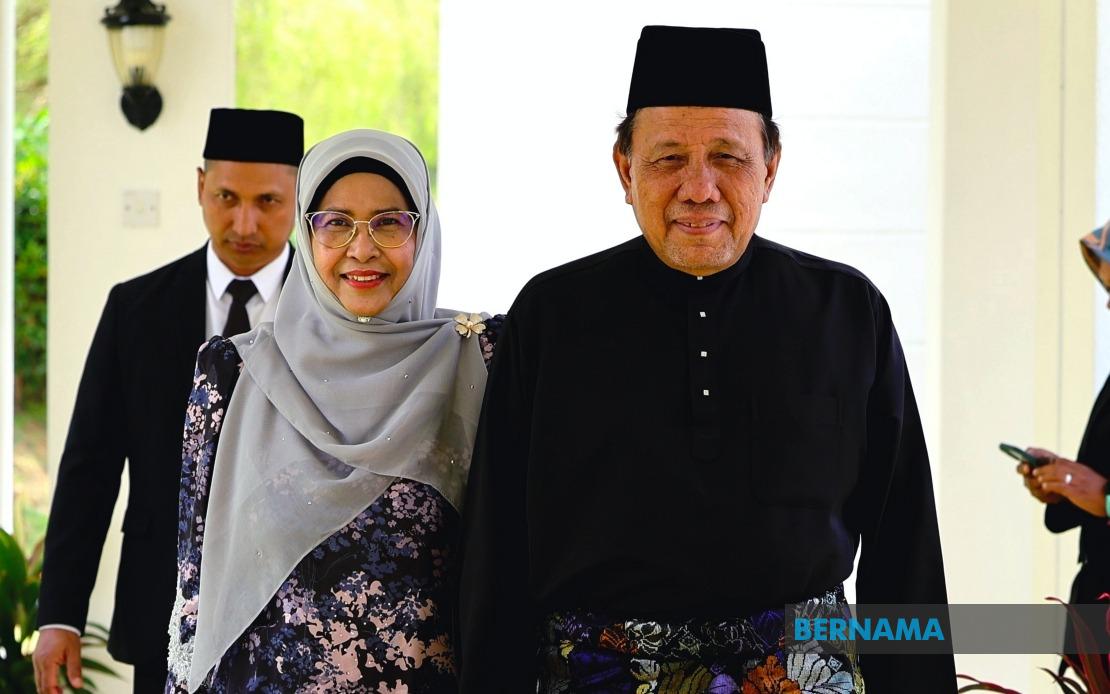
Negeri Sembilan has declared August 3 as an occasional public holiday in recognition of the state's successful conclusion of its 16th election and to honour the collective efforts of voters and stakeholders across the region. The announcement came from newly sworn-in Menteri Besar Datuk Ismail Lasim during his maiden press conference following the swearing-in ceremony at Istana Besar Seri Menanti in Kuala Pilah. The decision was made with the full approval of Tuanku Muhriz Tuanku Munawir, the Yang Dipertuan Besar of Negeri Sembilan, underscoring the ceremonial importance of the electoral milestone for the state.
Ismail expressed deep gratitude to the royal ruler for granting consent to both his appointment as Menteri Besar and the declaration of the holiday itself. The Menteri Besar noted that the additional day off would provide much-needed respite for residents who have been engaged in the electoral process, allowing communities across the state to recuperate and celebrate the democratic exercise. In his remarks, Ismail emphasised the significance of royal endorsement in validating the government's decision-making, reflecting Malaysia's constitutional framework in which state rulers play a ceremonial and advisory role in ministerial appointments and major governance decisions.
The August 2 election, which concluded on that date, resulted in a decisive outcome that provides clear governance direction for Negeri Sembilan over the coming term. Barisan Nasional, the traditional ruling coalition, secured 18 of the 36 contested state assembly seats, while Perikatan Nasional captured seven seats, together commanding a supermajority in the legislature. This two-thirds majority gives the combined coalition substantial authority to pass legislation and implement policy initiatives without reliance on opposition support, a significant advantage in state governance.
With 103 candidates vying for representation across the state's 36 constituencies, the electoral contest represented a substantial mobilisation of political activity and civic participation. The two-coalition arrangement between Barisan Nasional and Perikatan Nasional marks a continuation of the broader political cooperation that has characterised several Malaysian states in recent years, demonstrating the evolving nature of coalition politics at the subnational level. For Malaysia's electoral landscape, such outcomes reflect shifting voter preferences and strategic political realignments that extend beyond the federal sphere.
The swearing-in of Ismail, who is 67 years old, represents a transition in Negeri Sembilan's executive leadership and signals the beginning of a new administrative chapter for the state. His immediate prioritisation of acknowledging the electorate and rewarding them with a holiday suggests an early emphasis on public goodwill and inclusive governance messaging. The ceremonial aspects of his appointment, conducted before the Yang Dipertuan Besar at the state palace, underscore the formal constitutional processes that govern Malaysia's system of responsible government at state level.
For Malaysian employers and workers in Negeri Sembilan, the declaration carries practical implications as organisations adjust their operational schedules for the additional public holiday. Such proclamations by state governments typically filter through to public sector agencies and private enterprises that observe state-specific holidays, requiring administrative adjustments for payroll processing and service continuity planning. The timing of the holiday immediately after election day provides constituencies across the state with a unified moment to process the electoral outcome and anticipate the incoming administration's agenda.
The electoral results also carry significance for how political coalitions are evolving across Malaysia's peninsular states. The partnership between Barisan Nasional and Perikatan Nasional in Negeri Sembilan reflects the pragmatic political calculations that govern state-level coalition-building, where traditional rivalries may be subordinated to achieve governance majorities. This pattern has emerged in several states and continues to shape the broader trajectory of Malaysian electoral politics as parties navigate post-2022 realignments and seek sustainable governing arrangements.
Ismail's first public statements as Menteri Besar emphasise continuity, gratitude, and acknowledgment of the democratic mandate granted by voters. His reference to citizens being exhausted from the electoral campaign reflects the rigorous nature of state election contests, which demand sustained attention from voters, campaign volunteers, and election officials over the campaign period. By acknowledging this fatigue and providing relief, the incoming government positions itself as responsive to public wellbeing from its outset.
The declaration of a public holiday also serves a symbolic function in Malaysian politics, where such gestures are understood as government acknowledgment of significant national or state events. Election victories are frequently marked by holidays or celebratory proclamations, institutionalising major political transitions within the ceremonial calendar. For Negeri Sembilan residents, the August 3 holiday represents both a practical day of rest and a formal governmental recognition of the election's successful completion, linking routine administrative action with broader political significance.

