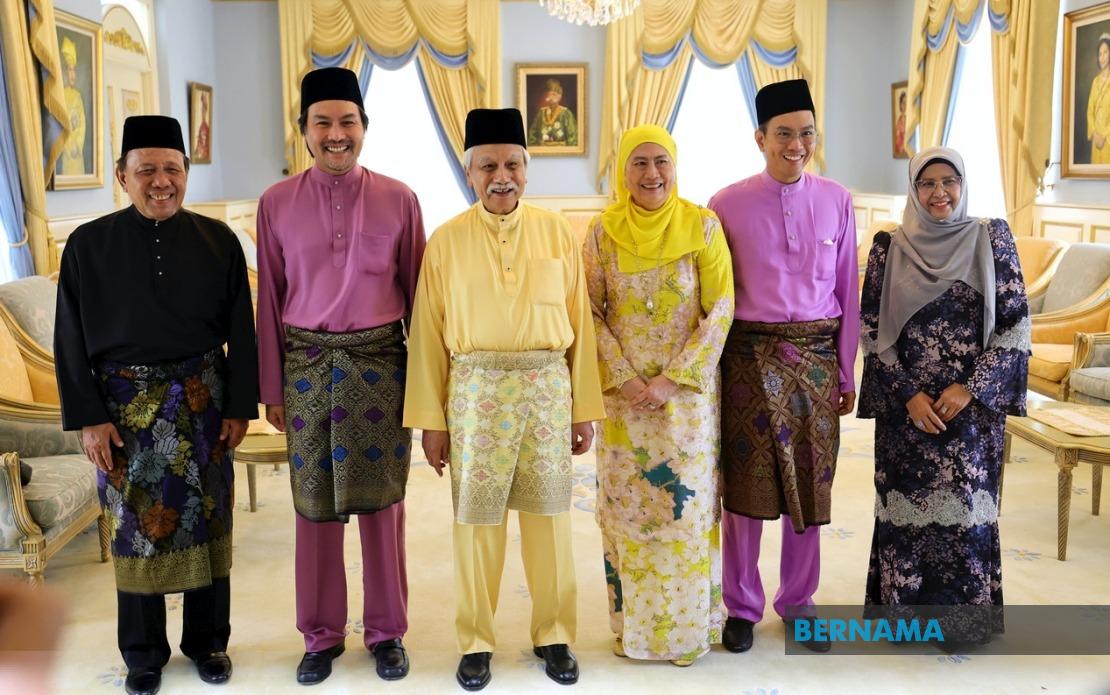
Datuk Ismail Lasim, who was sworn in as Menteri Besar of Negeri Sembilan on Friday, has indicated that the composition of the state executive council will be completed within the week. Speaking at his inaugural press conference in Kuala Pilah, the Juasseh assemblyman outlined a timeline that prioritises both internal party deliberations and formal approval from Tuanku Muhriz Tuanku Munawir, the Yang Dipertuan Besar of Negeri Sembilan. This measured approach reflects the complexity of coalition governance in the state following last week's election results.
The new Menteri Besar emphasised that preliminary discussions with Barisan Nasional leadership must precede any formal presentation of the proposed cabinet to the state's constitutional ruler. This procedural sequence underscores the constitutional importance of securing royal endorsement for ministerial appointments, a requirement that carries particular weight in states with reigning monarchies. Ismail's commitment to expediting this process demonstrates awareness that prolonged uncertainty over cabinet composition can hinder government efficiency and public confidence during the crucial early weeks of a new administration.
Central to the ongoing negotiations is the potential involvement of Perikatan Nasional representatives within the executive council structure. Ismail signalled his intention to meet with UMNO president Datuk Seri Dr Ahmad Zahid Hamidi to seek guidance on whether PN-aligned assemblymen should receive ministerial positions. This consultation reflects UMNO's dominant position within the governing coalition and its custodial role in determining cabinet architecture. The question of PN representation carries symbolic and practical significance, as it would signal the degree of integration between the two coalitions in actual governance rather than merely in electoral mathematics.
Regarding the size of the executive council, Ismail indicated a preference for maintaining the traditional ten-member structure that has characterised Negeri Sembilan's state administration in recent years. He cautioned, however, that this preference has not yet been formally finalised and remains subject to further deliberation. The choice between a compact cabinet and an expanded one carries implications for the number of portfolio holders and the scope of ministerial responsibilities, which in turn affects both efficiency and the accommodation of political interests across coalition partners.
The composition process also must account for Barisan Nasional's multi-party structure within the state assembly. Beyond UMNO, BN comprises MCA and MIC representatives who won seats in the recent election, and these component parties expect recognition through ministerial appointments. Ismail explicitly acknowledged that all these considerations would influence final portfolio distribution decisions. This acknowledgment reflects the traditional politics of ethnic representation embedded within BN's federal structure, whereby each component party traditionally receives ministerial recognition proportional to its electoral contribution.
BN's commanding performance in the state election has substantially eased the coalition-building process. The coalition secured 18 of the 36 contested seats, while Perikatan Nasional won seven, together providing a two-thirds legislative majority. This comfortable margin offers flexibility in cabinet formation while also increasing BN's responsibility for effective governance. The election involved 103 candidates competing across the 36 state legislative assembly seats, reflecting intensive political competition within Negeri Sembilan's relatively small electorate.
Ismail's stated priority of placing the welfare and well-being of the people at the centre of his administration provides the philosophical framework within which these technical discussions over EXCO composition are occurring. He articulated this commitment as the primary pillar guiding state administration, suggesting that portfolio allocation will ultimately serve broader development and service delivery objectives rather than purely factional interests. This framing, while conventional in inaugural statements, carries weight in setting expectations for his government's performance.
The expedited timeline for cabinet finalisation contrasts with the potentially prolonged discussions required in more finely balanced political situations. In states where coalitions hold smaller majorities or where internal party divisions are more pronounced, cabinet formation can stretch over weeks or months. Negeri Sembilan's strong BN majority and apparent unity of purpose between the coalitions suggest that technical obstacles are unlikely to cause delays, though the need to consult multiple stakeholders—the royal ruler, UMNO's central leadership, and coalition partners—necessarily introduces several decision-making layers.
For Malaysian readers tracking state-level political developments, the Negeri Sembilan situation illustrates how coalition governance operates in practice at the state level, where constitutional arrangements and ethnic representation politics intersect with pragmatic questions of ministerial selection. The outcome of these discussions will establish precedents for how federal-level coalition arrangements translate into state governance structures. Whether PN receives EXCO positions, for instance, could influence perceptions of federal coalition solidarity and commitment to genuine power-sharing beyond electoral cooperation.
The broader Southeast Asian context adds further significance to these developments. Malaysia's evolving approach to multi-party coalition governance, particularly following the substantial political realignments of recent years, continues to be refined through state-level experiments. Negeri Sembilan's resolution of cabinet composition, coming shortly after similar exercises in other states, contributes to emerging patterns in how Malaysian political coalitions operationalise governance structures while managing diverse interests and constitutional requirements. The successful and timely resolution of these questions will establish important baseline expectations for the new administration's capacity to translate electoral mandates into effective service delivery.

