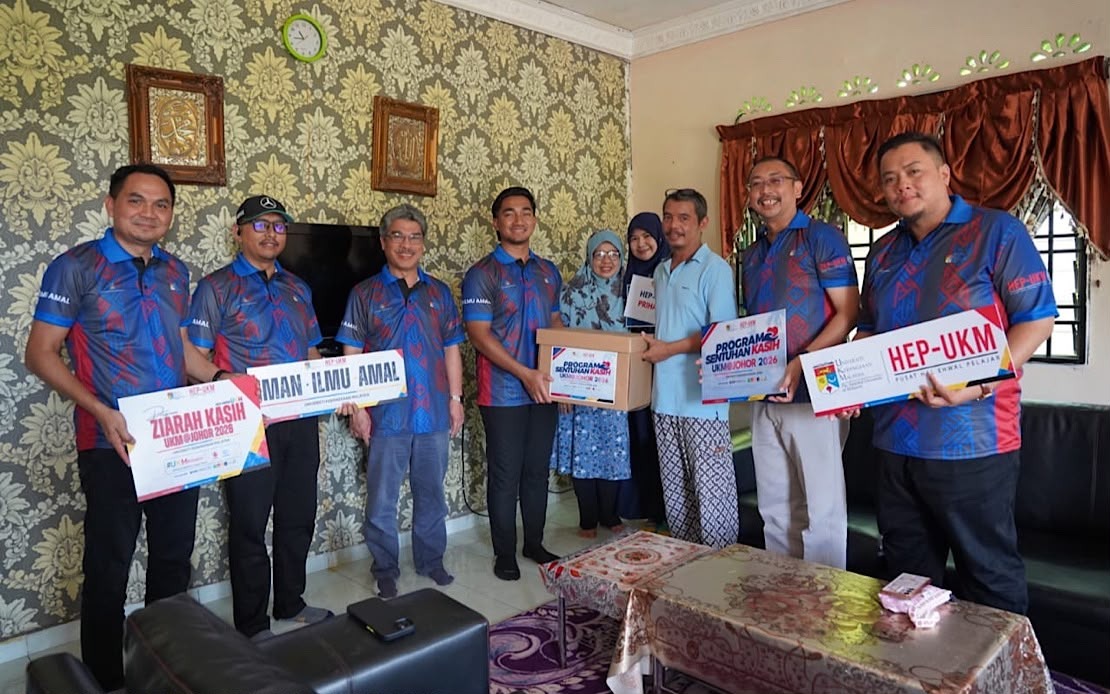
Universiti Kebangsaan Malaysia (UKM) has deepened its footprint beyond the campus through a significant community engagement exercise that brought together nearly 1,000 residents and 78 student volunteers across multiple Johor neighbourhoods last weekend. The Sentuhan Kasih UKM@Johor programme, coordinated by the university's Student Affairs Centre (HEP-UKM), represents a strategic effort to forge stronger bonds between one of Malaysia's premier research institutions and the communities it serves, moving beyond traditional academic boundaries to create tangible social value.
The initiative unfolded simultaneously across four distinct areas: Kota Masai and Pasir Gudang, alongside Kampung Baru Sri Aman and Taman Jaringan in Skudai. Operating under the banner "Dari Kampus ke Komuniti, Menyebar Kasih dan Bakti" (From Campus to Community, Spreading Love and Service), the programme combined practical neighbourhood work with health interventions and recreational activities. The presence of Higher Education Minister Datuk Seri Dr Zambry Abd Kadir underscored the political significance of the initiative, reflecting government backing for university-led social engagement across the nation.
The activities undertaken during the two-day programme extended beyond symbolic gestures. Students and community members collaborated on gotong-royong environmental and maintenance initiatives, reflecting the traditional Malaysian concept of collective neighbourhood care. Complementing this physical work, the team conducted mental health screening sessions, addressing an often-overlooked dimension of community welfare. Sports activities provided a recreational bridge between university students and residents, creating informal spaces for interaction and relationship-building that formal programmes rarely achieve.
Assoc Prof Dr Darfizzi Derawi, who directs the Student Affairs Centre and chairs the Sentuhan Kasih UKM@Johor programme, articulated a vision of universities as civic institutions rather than insular academic enclaves. His emphasis on moving beyond campus walls reflects a growing recognition in Malaysian higher education that student development requires exposure to real-world social dynamics. The hands-on engagement allows undergraduates to cultivate communication skills, adaptability and cultural competency that classroom instruction cannot replicate—competencies increasingly prized by employers seeking graduates who can navigate diverse environments and work effectively across social divides.
The programme's geographic focus on Johor carries particular weight. The state's industrial economy creates specific demographic pressures, with an estimated 80 per cent of residents in targeted areas employed in factory and manufacturing sectors. These workers often struggle to participate in weekend activities due to shift schedules and fatigue, yet community leader Herman Ismadi Ismail reported robust participation nonetheless. This suggests genuine receptivity among working-class communities to engagement with higher education institutions, a demographic layer often overlooked in discussions of town-gown relations in Malaysia.
For residents, the outreach offered something increasingly rare: direct access to institutional resources and information about university opportunities. In communities where tertiary education may seem distant or unattainable, proximity to student mentors and university staff creates tangible awareness of educational pathways. The visibility of UKM's commitment to their neighbourhoods carries messaging value beyond the weekend activities themselves, signalling that the institution views them as stakeholders rather than external audiences.
The programme extended into more intimate territory through welfare visits to seven families of UKM students in Tiram and Puteri Wangsa. These domiciliary calls represent a holistic approach to student support that recognises family circumstances profoundly shape academic performance and wellbeing. By visiting homes and engaging parents directly, UKM signals that student success depends on family stability and that the university takes responsibility for the broader ecosystem enabling study.
UKM Vice-Chancellor Prof Datuk Dr Sufian Jusoh positioned the initiative within a comprehensive institutional philosophy emphasising holistic human development. Beyond academic excellence, he stressed the university's commitment to student welfare as foundational to creating competitive graduates. This framing moves support programmes from the margins of university operations—often conceived as charitable add-ons—to the centre of institutional mission. His reference to support extending beyond financial assistance to psychological and social domains reflects sophisticated understanding that educational attainment depends on whole-person wellbeing.
The university's commitment to periodically expanding the Sentuhan Kasih model to other states signals this is not a one-off initiative but the beginning of a systematic nationwide network of community engagement. Such scaling up holds implications for how Malaysian universities position themselves in their societies. As higher education becomes increasingly expensive and selective, university-community relationships that demonstrate genuine institutional investment in broader social welfare can strengthen public support and legitimacy for the sector.
For Malaysian policymakers and university leaders navigating questions about higher education's social relevance, the UKM programme offers a practical template. It demonstrates that meaningful community engagement need not be resource-intensive, that student development and community service can reinforce rather than compete with each other, and that weekend outreach can yield both tangible community benefits and invaluable student learning. The near-1,000-resident participation rate suggests appetite exists within Malaysian communities for deeper connections with their local universities, waiting to be mobilised through consistent, genuine engagement rather than episodic charity.
The initiative also reflects broader regional trends in Southeast Asian higher education toward social responsibility and community partnership models. As universities across the region grapple with questions of relevance in rapidly urbanising societies, programmes like Sentuhan Kasih model how institutions can remain embedded in local communities while maintaining academic standards and research ambitions. The Johor programme thus carries implications extending beyond UKM, potentially influencing how peer institutions throughout Malaysia conceive their role beyond campus boundaries.

