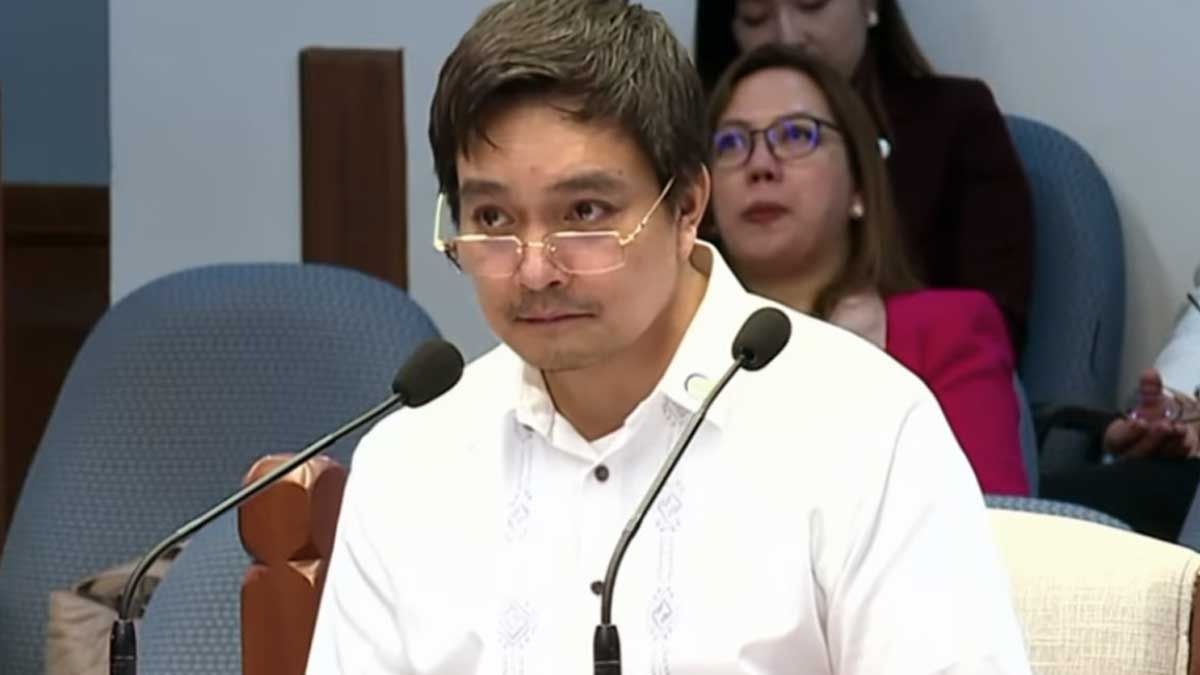
The Philippine National Bureau of Investigation's Regional Director Jeremy Lotoc has walked a narrow line in the ongoing impeachment proceedings against Vice President Sara Duterte, insisting that investigative materials point toward her involvement in an alleged assassination plot while simultaneously conceding he possesses no direct evidence of her personally contracting a killer. His testimony during the cross-examination phase of the trial on July 14 laid bare the evidentiary challenges prosecutors face in building what amounts to a conspiracy case without a clear paper trail or witness account of an actual contractual arrangement.
Lotoc, who headed the NBI's Crime Division when the investigation into Duterte's threats commenced, anchored the agency's position on her statements made during a November 23, 2024 online media briefing. During that broadcast, Duterte openly declared her intention to have President Ferdinand Marcos Jr., First Lady Liza Araneta-Marcos, and former House Speaker Martin Romualdez killed. These remarks became central to the fourth article of impeachment filed against her, transforming a public utterance into the foundation of a formal criminal accusation. The strategy appears designed to treat her stated intention as sufficient evidence of criminal conspiracy, though Philippine law typically demands substantiation beyond mere words.
Defence lawyer Mark Vinluan's cross-examination exposed significant weaknesses in this approach. When pressed directly whether he had personal knowledge that Duterte had contracted with anyone to commit murder, Lotoc could only retreat to the circumspect formula that the NBI "believes" this based on "evidence gathered" and "investigation." This distinction between belief and knowledge proved crucial in a legal setting where the burden of proof in an impeachment trial, while lower than in criminal proceedings, still demands concrete substantiation. Vinluan systematically forced the witness to acknowledge that many of Duterte's concurrent allegations against various government officials in the same video—accusations she referenced as context for her remarks—remained unverified by the NBI investigation.
The courtroom atmosphere grew tense when private prosecutor Amando Ligutan objected to what he termed Vinluan's "foul side remarks," accusing the defence counsel of twisting the witness's testimony. Senate presiding officer Francis "Chiz" Escudero twice intervened, admonishing both legal teams for what he characterized as conducting a "college debate" rather than serious impeachment proceedings. These interruptions highlighted the trial's fractious nature and the difficulty in maintaining evidentiary standards when the case fundamentally rests on interpreting a politician's provocative public statements. Escudero directed Lotoc to provide complete, specific answers that would resist misinterpretation—a tall order when dealing with politically charged testimony.
When Vinluan pointedly restated that the NBI director possessed no personal knowledge that Duterte contracted an assassin, Lotoc's affirmative response to this negative proposition became perhaps his most damaging admission. Despite his insistence that he "believes" the utterance reflected genuine intent based on gathered evidence, Lotoc essentially confirmed that his conclusion rested on inference rather than substantive proof. The distinction carries profound implications for an impeachment case, where senators must decide whether to remove a sitting vice president based on what amounts to an educated guess about her mental state and intentions when she made inflammatory remarks. No witness came forward claiming to have been approached to carry out the murders; no financial records emerged showing payment for such services; no documentation proved a contractual arrangement.
Senate President Sherwin Gatchalian's subsequent questioning revealed further gaps in the prosecution's case. When Gatchalian asked what evidence demonstrated Duterte's capability to execute her threats, Lotoc offered a circular argument: she is the vice president, therefore she has capability. Gatchalian immediately challenged this reasoning, correctly observing that occupying high office does not automatically translate into capacity to orchestrate assassinations. Lotoc then pivoted to Duterte's family history, specifically invoking the International Criminal Court investigation into her father, former President Rodrigo Duterte, regarding alleged extrajudicial killings during his administration's war on drugs. By this logic, the family's controversial history of state violence became proxy evidence for the daughter's alleged criminal intent.
This reliance on familial association and historical context rather than direct evidence reveals how the case has evolved into something more akin to character assassination than traditional legal proceeding. The NBI appears to be arguing that because Rodrigo Duterte's government allegedly engaged in extrajudicial executions, his daughter—who served as both a local government official and city mayor—likely possesses both the capability and willingness to commission murders. While the family's documented involvement in controversial security operations might reasonably inform assessments of her potential threat, it falls considerably short of proving she acted on her threats. The logic essentially substitutes family reputation for individual culpability.
For Malaysian observers of Philippine politics, this trial exemplifies the fragility of institutional checks when political divisions run deep. The National Bureau of Investigation's investigative work may have been thorough in assembling background materials and analyzing statements, yet the fundamental absence of smoking-gun evidence—a person who was approached, records of payment, communications showing intent—suggests the prosecution assembled a circumstantial case and elevated it to the level of formal criminal accusation. The impeachment process, designed as a tool for removing officials who have committed high crimes, increasingly functions as a mechanism for settling political scores when the electorate cannot remove someone through normal democratic means.
The trial's trajectory will likely hinge on whether a sufficient majority of senators view Duterte's public statements as sufficient evidence of criminal conspiracy or whether they demand more substantial proof before removing her from office. Lotoc's testimony, despite his confident assertion that evidence supports a particular conclusion, ultimately demonstrates the investigative team's inability to build a case that transcends inference and supposition. For regional observers monitoring democratic governance in Southeast Asia, the proceeding serves as a cautionary example of how institutional mechanisms designed to punish genuine wrongdoing can become weaponized when political calculations override evidentiary standards.
The impeachment trial continues amid broader tensions within Philippine politics, with the case itself becoming a flashpoint for debates about executive power, institutional independence, and the proper use of constitutional remedies. Whether the Senate ultimately votes to remove Duterte will depend less on the forensic quality of evidence presented by the NBI and more on the political arithmetic among lawmakers. Lotoc's concession that he lacks personal knowledge of the central charge—while maintaining belief based on gathered materials—encapsulates the trial's essential paradox: the NBI may be correct in its assessment, but correctness in informal evaluations differs fundamentally from the proof required to terminate the tenure of a sitting constitutional officer.

