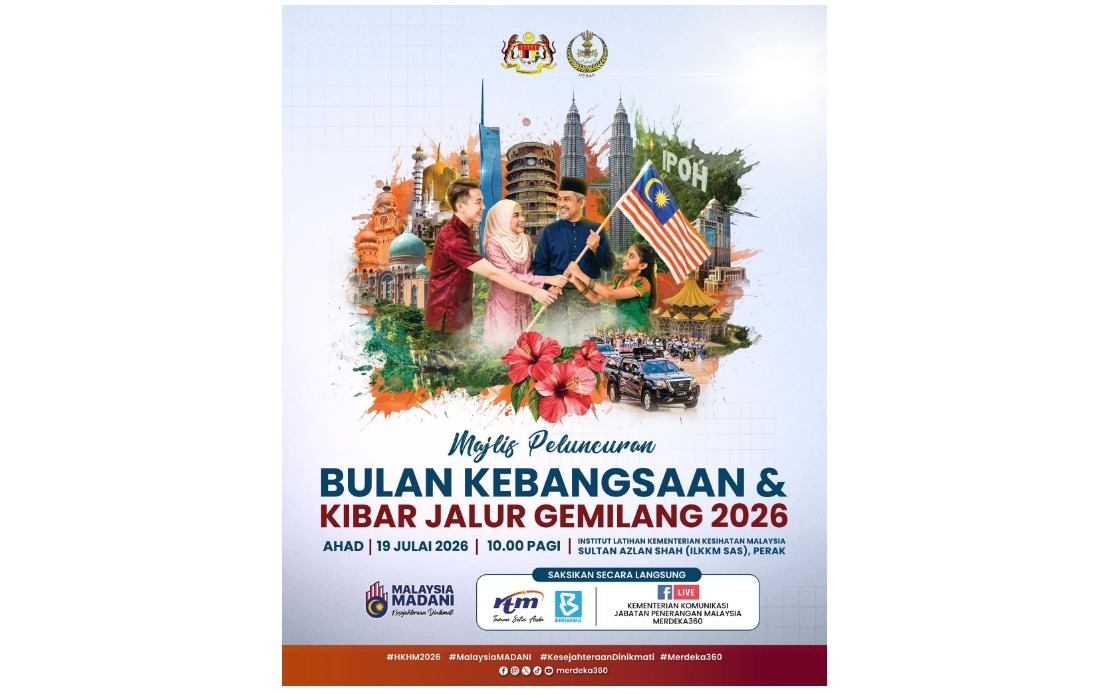
The official launch of Malaysia's National Month and Fly the Jalur Gemilang 2026 campaign will take place on July 19 at Institut Latihan Kementerian Kesihatan Malaysia Sultan Azlan Shah in Perak, officially signalling the beginning of this year's patriotic celebrations across the country. The ceremony, commencing at 10 am, will be widely broadcast to reach audiences nationwide through Radio Televisyen Malaysia, BERNAMA TV, and various social media platforms operated by government agencies including Merdeka360, the Ministry of Communications, and the Department of Information Malaysia.
The initiative carries the overarching theme "Malaysia MADANI: Kesejahteraan Dinikmati," a phrase that encapsulates the government's vision of prosperity shared equitably among all citizens. This thematic framework has been selected to guide both the 2026 National Day and Malaysia Day celebrations, with the Malaysia MADANI logo serving as the official emblem that will remain in use through the coming year. The choice reflects deliberate messaging about inclusive economic development and nationwide benefit-sharing as core national values.
Underscoring the broader Malaysia MADANI framework, the selected theme emphasises foundational principles centred on justice, human dignity, and collective welfare. Government officials have positioned these celebrations as an opportunity to reinforce that national development should not concentrate benefits among select groups but rather ensure all Malaysians—regardless of background or economic status—experience tangible improvements in their quality of life. This messaging represents an intentional pivot toward emphasising inclusive governance amid ongoing discussions about economic inequality in the region.
The Ministry of Communications has coordinated comprehensive promotional support through the Merdeka360 digital platform, which will serve as a centralised repository for celebration materials. Citizens and organisations are encouraged to download official logos, patriotic musical compositions, and extensive promotional resources designed to amplify nationalist sentiment throughout the campaign period. This digital-first approach reflects contemporary strategies for grassroots engagement and allows decentralised participation across Malaysia's diverse communities.
Communications Minister Datuk Seri Fahmi Fadzil previously outlined the specific venues and dates for the year's major commemorative events. The primary National Day celebration will unfold at Dataran Putrajaya on August 31, deliberately calibrated to strike a balance between ceremonial significance and financial restraint—described as "modest yet vibrant" in scale. This approach signals governmental sensitivity to fiscal prudence while maintaining the ceremonial importance these occasions demand within Malaysian political culture.
Complementing the August national observance, Malaysia Day 2026 will be celebrated on September 16 with festivities centred in Sarawak, honouring the eastern Malaysian state's distinctive historical role in national formation. This geographic distribution of major ceremonies across different states represents a deliberate federalism strategy, ensuring that major population centres and regions throughout the peninsula and beyond share in hosting national commemorations. Such scheduling also provides opportunities for varied cultural expressions reflective of Malaysia's regional diversity.
Seven supporting programmes and patriotic initiatives have been orchestrated nationwide to sustain celebratory momentum beyond the primary launch and major events. These include Kembara Bahasa HKHM, a language-focused outreach programme; Quran Hour, reflecting the country's Islamic heritage; Ambang Merdeka activities; Merdeka Countdown promotional campaigns; RIUH Merdeka entertainment initiatives; and the National Statesmen Commemoration Ceremony honouring historical political figures. This multi-faceted programming architecture ensures diverse population segments find avenues for participation aligned with their values and interests.
For Malaysian readers and regional observers, these celebrations assume particular significance as they occur amid broader questions about national cohesion, economic inclusivity, and inter-ethnic relations. The deliberate emphasis on "shared prosperity" through Malaysia MADANI messaging suggests government recognition that patriotic sentiment requires concrete demonstration of equitable development benefits. Southeast Asian countries monitoring Malaysia's approach to national identity reinforcement may find instructive lessons in how this framework attempts reconciling nationalist objectives with inclusive governance commitments.
The extensive broadcast and digital distribution plans indicate recognition that contemporary national celebrations require multimedia penetration to maintain relevance across generational divides. By channelling ceremonies through traditional broadcast media alongside social platforms, organisers aim to reach both established audiences and younger demographics increasingly shaped by digital information consumption. This hybrid approach reflects evolving understandings of how nations construct and communicate shared identity in an age of fragmented media landscapes.

