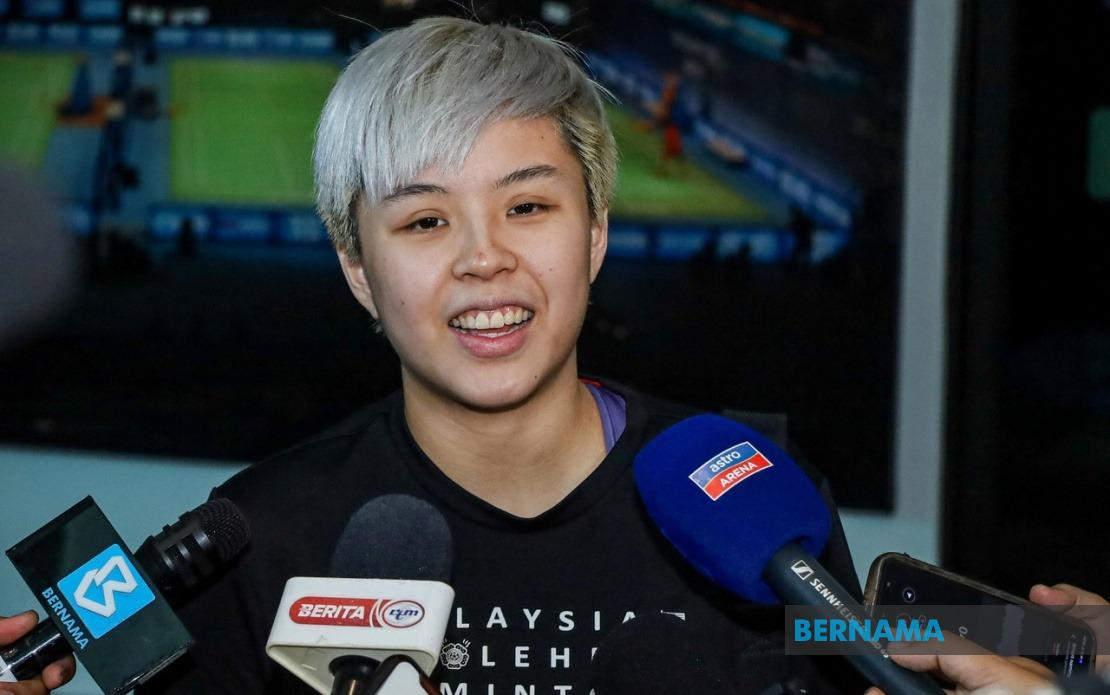
Toh Ee Wei, a key figure in Malaysia's mixed doubles badminton contingent, has successfully completed anterior cruciate ligament surgery on her left knee at a medical facility in Melbourne, Australia. The Badminton Association of Malaysia (BAM) confirmed on Tuesday that the procedure took place the previous day, marking a significant milestone in the player's recovery journey following a serious injury sustained during competitive play in Singapore last month.
The 25-year-old sustained the ACL injury during the quarter-final round of the Singapore Open 2026 held in May. The damage to her anterior cruciate ligament—one of the four major ligaments in the knee joint responsible for stability during rotational movements and sudden directional changes—threatened to sideline the athlete for an extended period. ACL injuries are particularly concerning for badminton players, who rely heavily on explosive movements, rapid directional shifts, and powerful leg drive to execute the sport's demanding technical requirements.
BAM released a formal statement affirming its commitment to supporting Ee Wei's rehabilitation phase. The association pledged to furnish comprehensive medical oversight and targeted rehabilitation programmes throughout her recovery, recognising that the post-operative period is equally critical as the surgical intervention itself. The statement underscored that the athlete would receive the full spectrum of organisational resources necessary to facilitate her return to competitive badminton.
In her own remarks shared through BAM's statement, Ee Wei expressed relief at the successful outcome of the surgical procedure. She acknowledged the overwhelming wave of encouragement and support she had received from the badminton community, fellow athletes, and the broader Malaysian public during the anxious period preceding surgery. Such expressions of solidarity are particularly meaningful for professional athletes facing career-threatening injuries, often providing psychological resilience during the challenging recovery months ahead.
The player's statement revealed a focused mindset oriented toward the rehabilitation process. Ee Wei articulated her intention to commit fully to the structured recovery programme, understanding that half-hearted engagement or insufficient dedication during rehabilitation could compromise the surgery's effectiveness and extend her absence from the sport. Her determination to return stronger reflects the mental fortitude often required of elite athletes navigating career disruptions.
For Malaysian badminton, Ee Wei's absence represents a notable gap in the mixed doubles roster at a critical juncture. The mixed doubles category has become increasingly competitive in international championships, with Chinese and Thai pairings dominating recent tournaments. Malaysia's mixed doubles programme, while historically strong, has faced challenges in recent years, making the recovery of established players like Ee Wei crucial for maintaining competitive depth and medal prospects at major tournaments.
The timing of her injury during the Singapore Open, a prestigious international tournament that typically attracts elite competitors from across Asia, added urgency to her medical management. The decision to conduct surgery in Melbourne, rather than domestically, suggests BAM's confidence in Australian orthopaedic specialists for high-stakes athletic knee procedures. Such decisions reflect the association's willingness to invest in world-class medical expertise for its elite players.
ACL rehabilitation for professional badminton players typically spans several months, with athletes undergoing carefully structured phases of physiotherapy. The initial post-operative phase focuses on reducing inflammation and restoring basic range of motion. Subsequent phases emphasise progressive strengthening, proprioceptive training to restore the knee's positional awareness, and sport-specific agility work designed to rebuild the explosive movements badminton demands. Full return to competitive play often requires six to nine months or longer, depending on individual healing rates and rehabilitation compliance.
Ee Wei's case also highlights the injury risks inherent in badminton, a sport that demands extreme physical intensity despite its non-contact nature. The rapid acceleration, deceleration, and lateral movements fundamental to badminton place tremendous stress on the knee joint, particularly the ACL. Players often sustain injuries not through collision but through the biomechanical demands placed on stabilising structures during routine competitive actions.
The success of her surgery represents an important first step, but the true measure of success will emerge during rehabilitation. The player's expressed commitment to the recovery process, combined with BAM's supportive framework and access to quality medical care, positions her favourably for eventual return to competition. Many athletes successfully return to elite-level performance following ACL injuries, though the psychological dimension of regaining confidence after such injuries should not be underestimated.
For the broader Malaysian badminton fraternity, Ee Wei's situation underscores the importance of injury prevention strategies and access to quality medical support. As Malaysia continues to invest in its badminton programme, ensuring athletes have access to world-standard orthopedic care and rehabilitation services remains essential for maintaining competitive standards across all categories, from singles to mixed doubles.
As Ee Wei embarks on her rehabilitation journey in the coming months, the Malaysian badminton community will be watching her progress closely. Her successful surgery and demonstrated resolve suggest a genuine prospect of return to the court, where she can once again contribute to Malaysia's competitive badminton aspirations at regional and international tournaments.

