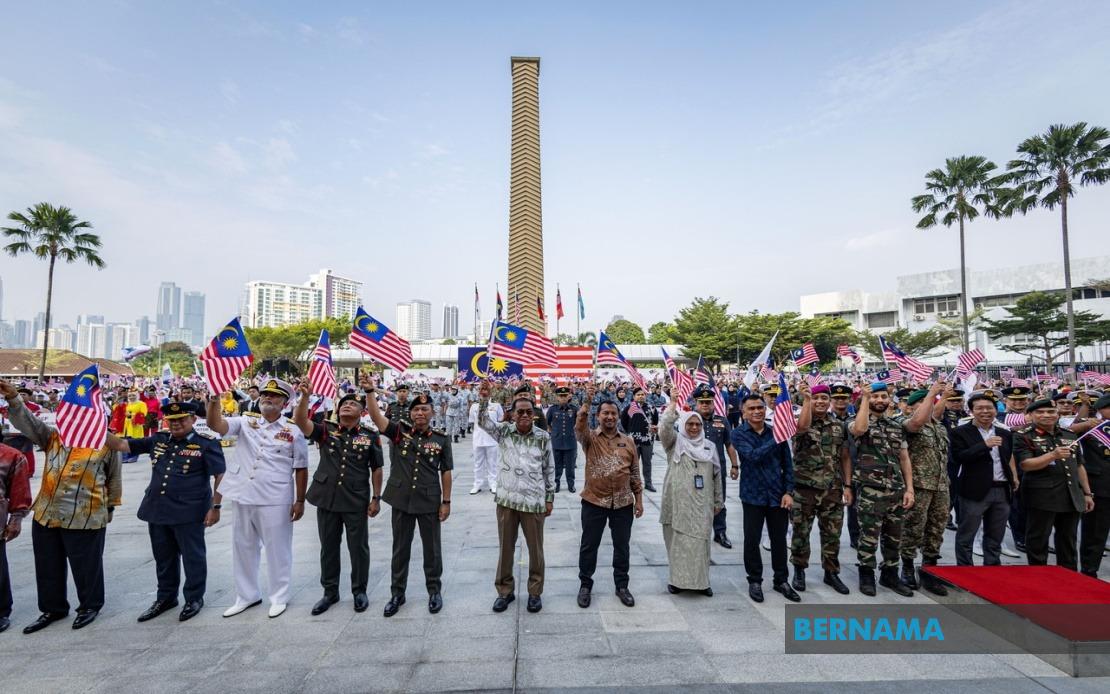
Datuk Seri Mohamed Khaled Nordin, Malaysia's Defence Minister, has delivered a pointed message to the nation: the forthcoming National Day and Malaysia Day commemorations must remain occasions for genuine patriotic expression rather than vehicles for sectarian disputes and political messaging. Speaking at the Defence Ministry's launch of the National Month and Fly the Jalur Gemilang campaign in Kuala Lumpur on August 27, Mohamed Khaled framed the celebration period as a critical juncture where Malaysians should consciously choose unity over division, affection for country over grievance-driven activism.
The minister's remarks arrive amid growing calls within certain segments of civil society to boycott or minimise participation in this year's festivities, citing concerns about humanitarian issues including the Rohingya crisis. Rather than dismissing these concerns outright, Mohamed Khaled articulated a competing vision—one that positions patriotic observance as itself a form of resistance to polarisation. His argument rests on the premise that strong, visible national cohesion sends a signal to both domestic and international audiences that Malaysians will not permit their country to become mired in factional conflict or weaponised for external propaganda purposes.
This stance reveals an underlying tension in contemporary Malaysian politics between substantive policy disagreement and expressions of national identity. Critics of government actions on refugee and humanitarian matters view boycotts as a legitimate form of democratic dissent, leveraging the symbolic weight of National Day to amplify their message. Conversely, officials like Mohamed Khaled contend that fragmenting national celebrations undermines the foundational unity upon which Malaysia's stability and sovereignty depend. The Defence Minister's position reflects a particular ordering of priorities: the preservation of social cohesion as a prerequisite for addressing any specific grievance, rather than viewing specific grievances as legitimate reasons to withhold patriotic participation.
Malaysia's historical context lends weight to arguments emphasising national unity. The country was constructed through carefully negotiated social contracts among diverse communities—Malays, Chinese, Indians, and indigenous peoples—with Islam serving as the federation's religion while guaranteeing religious freedom to adherents of other faiths. These arrangements emerged from recognition that premature independence might fracture along communal lines. Successive governments have consistently framed threats to communal harmony as threats to the nation itself, a framing that shapes official responses to calls for boycotts or protests during national commemorations.
Yet Mohamed Khaled's characterisation of the Rohingya issue as merely a "sentiment" rather than a substantive policy matter may strike many observers as minimising genuine humanitarian concerns. Malaysia hosts over 180,000 Rohingya refugees and asylum seekers, making it one of the largest host nations for this displaced population. Advocates for stronger support for Rohingya communities argue that national identity should be capacious enough to encompass both pride in Malaysia's democratic institutions and commitment to international humanitarian obligations. The suggestion that raising such concerns during National Day is inherently divisive may be perceived as attempt to ring-fence patriotism from moral questioning.
The Defence Ministry campaign emphasising the Jalur Gemilang—Malaysia's flag—as an emblem deserving of universal respect and gratitude represents a broader strategy of elevating nationalist symbolism to transcendent status. By calling on citizens to fly the flag with "pride and gratitude" while remembering the sacrifices of security personnel, Mohamed Khaled connects patriotic expression to recognition of state institutions and their personnel. This rhetorical move subtly suggests that questioning government policy approaches to humanitarian matters might constitute ingratitude toward those serving the nation's security interests.
For Malaysian readers and observers across Southeast Asia, this intervention signals ongoing contestation over the proper scope of patriotic expression. Regional neighbours, particularly those with significant refugee populations or minority religious communities, will note how Malaysia navigates the balance between national unity and space for dissenting voices on humanitarian matters. Thailand, Indonesia, and other ASEAN members face similar tensions between celebrating national identity and addressing concerns raised by human rights advocates regarding treatment of vulnerable populations including refugees and religious minorities.
Mohamed Khaled's emphasis on Malaysia as "an independent, peaceful, and sovereign country built on mutual understanding and harmony among the various races and religions" articulates the official vision guiding national ceremonial life. This characterisation is aspirational rather than merely descriptive—it represents an ideal toward which the country should strive rather than a settled reality. Implicitly, his remarks suggest that fractious public discourse during moments designated for national celebration moves the country away from this ideal rather than toward necessary reform.
The practical implications of the Defence Minister's position extend to civil society organisations and activists planning activities during the National Month period. Those inclined to use the occasion for advocacy face implicit pressure to either mute their messaging or risk being characterised as unpatriotic or divisive. This dynamic can suppress discussion of policy matters during precisely the moments when national attention is most concentrated, potentially limiting avenues for democratic expression and public debate about significant issues.
Moving forward, the question facing Malaysian society involves determining whether these sometimes-competing values—patriotic national celebration and space for substantive policy critique—can genuinely coexist, or whether official approaches will continue treating them as inherently antagonistic. The Defence Minister's framing assumes that emotional unity and policy disagreement cannot simultaneously occupy the same civic space, particularly during commemorative occasions. Alternative approaches might envision National Day as sufficiently robust to accommodate both fervent patriotism and serious conversation about how Malaysia might better align its values with its international humanitarian obligations.
The coming weeks will reveal whether civil society actors heed Mohamed Khaled's implicit caution, whether participation rates in National Day events remain robust across communities, and whether the Defence Ministry's campaign successfully repositions the Jalur Gemilang as transcending factional divisions. These outcomes will provide empirical evidence regarding the current state of national cohesion and the extent to which Malaysians view patriotic expression and policy dissent as compatible or mutually exclusive forms of citizenship.

