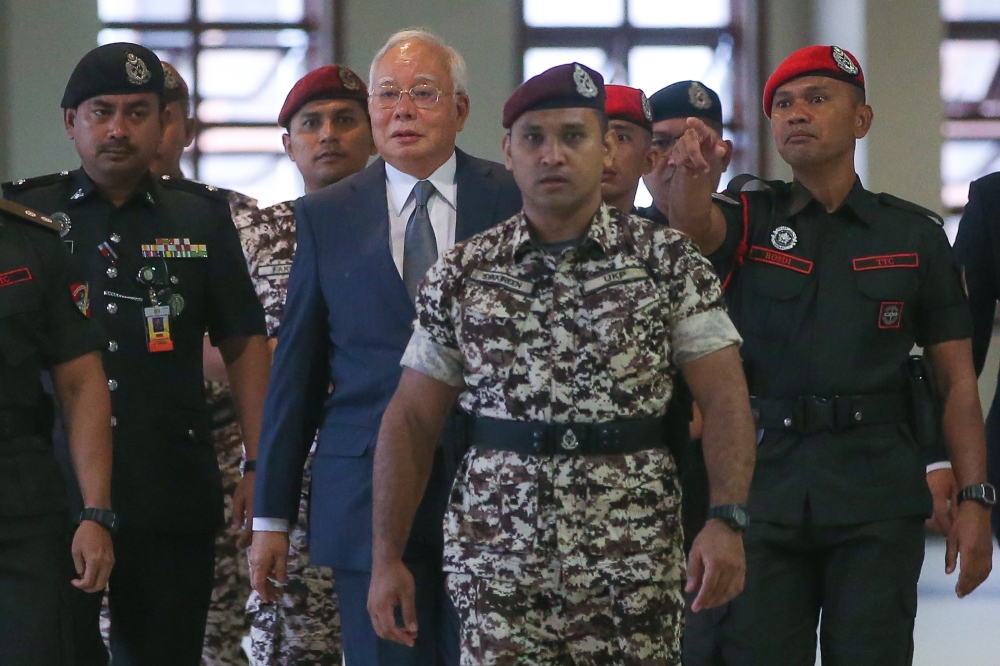
The High Court in Kuala Lumpur received testimony on Wednesday suggesting that former Prime Minister Datuk Seri Najib Tun Razak initiated the return of US$620 million following the 2013 general election primarily due to his personal discomfort with maintaining such a large amount. This disclosure emerged during ongoing proceedings examining the movement and handling of funds connected to the 1MDB scandal, one of the most significant financial controversies in Malaysia's modern history.
The explanation presented before the court provides a window into the decision-making process surrounding substantial international fund transfers during a period when Malaysia's political establishment faced mounting scrutiny over state investment management. The testimony indicated that psychological considerations, rather than solely operational or strategic financial factors, influenced the determination to repatriate the considerable sum. This revelation underscores the complexity of motivations behind financial manoeuvres that have become central to multiple legal investigations and public inquiries across several countries.
The 1MDB affair, which unfolded across 2009 to 2015 under Najib's administration, has generated extensive court battles, asset freezes, and diplomatic complications involving nations from Singapore to Switzerland. The fund was initially established with purported objectives of advancing Malaysia's economic development and attracting international investment, yet subsequently became mired in allegations of systematic misappropriation and money laundering. The US$620 million movement represents merely one segment of the far larger puzzle of capital flows that prosecutors and investigators have attempted to reconstruct and document.
For Malaysian observers, the framing of such substantial financial decisions around personal comfort levels raises questions about governance standards and institutional checks that should govern the movement of state resources. The testimony suggests an individual rather than systematic institutional process guided the repatriation decision, contrasting sharply with conventional best practices in treasury management where such transactions typically involve multiple oversight layers and formal approval mechanisms. This distinction between personal preference and institutional procedure has remained a recurring theme throughout investigations into how 1MDB funds were handled during its operational period.
The High Court proceedings continue to methodically examine documentation, communication records, and witness accounts to establish timelines and responsibility chains. Each session produces fresh details that either support or complicate the prosecution's narrative regarding knowledge, authorization, and intent among senior officials. The testimony about Najib's discomfort with retaining the US$620 million adds another interpretive layer to understanding whether decisions reflected deliberate concealment strategies or genuine uncertainty about appropriate fund management protocols.
Regional implications extend beyond Malaysia's borders, as neighbouring countries including Singapore and Indonesia have conducted parallel investigations touching on fund flows through their financial systems. International regulatory bodies and law enforcement agencies have coordinated efforts to trace assets and recover funds allegedly diverted through multiple jurisdictions. The court testimony therefore carries significance not merely for Malaysia's domestic accountability agenda but for the broader regional conversation about cross-border financial transparency and enforcement capacity.
The 1MDB investigation has already produced numerous convictions and significant asset seizures, yet questions persist regarding the ultimate recovery of funds and the complete accounting of beneficiaries across various transactions. The US Department of Justice has itself pursued civil forfeiture actions against properties and assets in American territory allegedly purchased with misappropriated 1MDB funds, reflecting the international character of the scandal's consequences.
For Malaysia's investors and business community, the ongoing litigation serves as a ongoing reminder of governance weaknesses that became apparent in retrospective examination. Institutional reforms introduced since 2018 have attempted to strengthen oversight mechanisms and transparency requirements for state investment vehicles, yet sceptics note that systemic vulnerabilities in accountability structures may persist beneath surface-level procedural modifications. The testimony offered in court regarding individual comfort levels with fund retention illustrates precisely the problem of governance systems excessively dependent on individual judgment without robust institutional constraints.
The defence strategy apparent in the court testimony appears to position Najib as someone responsive to his own uncertainties about financial management rather than as an architect of deliberate misappropriation. Whether the court ultimately accepts this characterization will substantially influence the verdict and its interpretation within Malaysia's evolving political discourse. The coming weeks and months will bring additional witnesses, documentary evidence, and legal arguments that collectively construct the judicial narrative surrounding this pivotal episode in the nation's financial history.
The case remains closely observed by governance advocates, financial regulators, and international observers monitoring Malaysia's commitment to accountability and institutional reform. The former Prime Minister's legal team continues pursuing various avenues of appeal and challenge, ensuring that 1MDB-related litigation will likely occupy Malaysian courts for years to come, with each disclosure and testimony adding texture to the multifaceted investigation of one of Asia's most consequential financial scandals.

