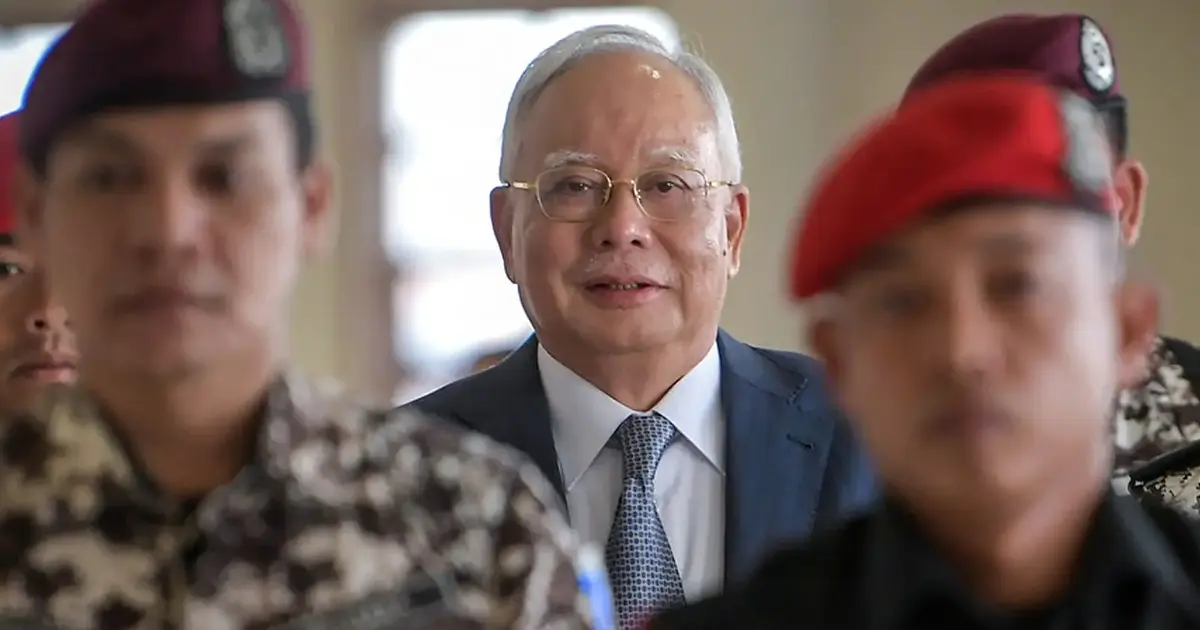
Former Prime Minister Najib Razak has secured permission from the Court of Appeal to participate in forthcoming proceedings that will determine the validity of the Malaysian Bar Council's challenge to a determination reached by the pardons board. The authorisation was granted through an ex parte application filed by the ex-premier's legal team, allowing him to be present during arguments that will likely have significant implications for his legal standing and public rehabilitation efforts.
The Court of Appeal's decision to permit Najib's attendance represents a procedural development in what has become an increasingly complex legal dispute involving multiple institutional actors within Malaysia's governance framework. The ex parte application—a legal mechanism where one party presents arguments to the court without the presence or knowledge of opposing counsel—was approved, demonstrating the court's willingness to accommodate the former leader's participation in matters directly affecting his interests.
The Malaysian Bar Council's challenge targets the substantive reasoning and legal foundation underlying the pardons board's decision, raising questions about the institutional processes through which clemency and executive pardons are evaluated and granted in Malaysia. The proceedings will require judicial examination of whether the board acted within its constitutional authority and adhered to proper legal procedures when reaching its determination. Such scrutiny of pardons board decisions remains relatively rare in Malaysian jurisprudence, making this case potentially precedent-setting.
For Najib, whose political career has been defined by legal battles spanning corruption charges, conviction, and subsequent appeals, the ability to physically present his arguments to the court underscores the continuing centrality of judicial processes to his attempt at political redemption and restoration of legitimacy. His presence at the hearing signals that his legal team views the proceedings as sufficiently significant to warrant his personal involvement rather than relying solely on counsel to represent his interests.
The Bar Council's intervention reflects ongoing professional concerns within the legal community regarding executive clemency procedures and their alignment with constitutional principles. As the representative body of Malaysia's legal practitioners, the Bar's decision to formally challenge the pardons board indicates substantial institutional concern that procedural irregularities or legal deficiencies may have characterised the board's deliberations. Such challenges serve an important constitutional function by ensuring that even exercises of executive prerogative remain subject to judicial review.
Malaysian administrative law has increasingly recognised that while executive discretion in matters of clemency is broad, it remains subject to principles of natural justice and procedural fairness. The hearing will likely explore whether the pardons board provided adequate reasoning for its decision and whether relevant considerations were properly weighed in the deliberation process. These technical legal questions carry substantial weight in determining whether the board's decision can withstand judicial scrutiny.
The political dimensions of this legal dispute extend beyond the immediate parties involved. Najib's rehabilitation has been an ongoing concern for observers of Malaysian politics, particularly given his conviction on corruption charges and the subsequent institutional and reputational damage inflicted on his party and coalition partners. Any judicial determination affecting the validity of pardons board decisions could influence broader public perceptions regarding the integrity of Malaysia's clemency mechanisms and executive accountability.
Regional observers have noted that Malaysia's handling of high-profile clemency cases attracts attention as an indicator of rule-of-law implementation and institutional independence. The willingness of the Court of Appeal to hear substantive challenges to pardons board determinations, and the Bar Council's active participation in such proceedings, demonstrate mechanisms through which Malaysia's judicial system exercises checks on executive discretion—a feature increasingly scrutinised in Southeast Asian governance contexts.
The forthcoming hearing will require legal arguments addressing fundamental questions about the scope and limits of pardons board authority, the constitutional foundation for clemency decisions, and the proper standards for judicial review of such determinations. Legal experts anticipate that the court's reasoning in this case will clarify important parameters governing executive clemency in Malaysia and establish precedent regarding the justiciability of pardons board decisions.
Najib's participation in the hearing also reflects broader patterns observable across Malaysian litigation, where high-profile defendants increasingly maintain active engagement with their legal proceedings rather than maintaining distance from courtroom proceedings. This approach allows former office-holders to shape narratives surrounding their legal cases and maintain political visibility during extended judicial processes.
The timing and outcome of this hearing may influence broader conversations within Malaysia regarding institutional reform, transparency in executive decision-making, and the balance between executive prerogative and judicial oversight. As the country continues navigating questions about democratic governance and institutional accountability, cases involving scrutiny of high-level government decisions attract heightened public and professional attention.
The Bar Council's challenge, combined with the Court of Appeal's willingness to hear arguments on the substantive merits, signals that Malaysian courts remain receptive to institutional checks on executive clemency decisions. Whether the court ultimately validates the Bar's concerns or upholds the pardons board's determination, the proceedings will contribute meaningfully to Malaysia's developing administrative law jurisprudence and provide clarity regarding constitutional boundaries governing clemency decisions.

