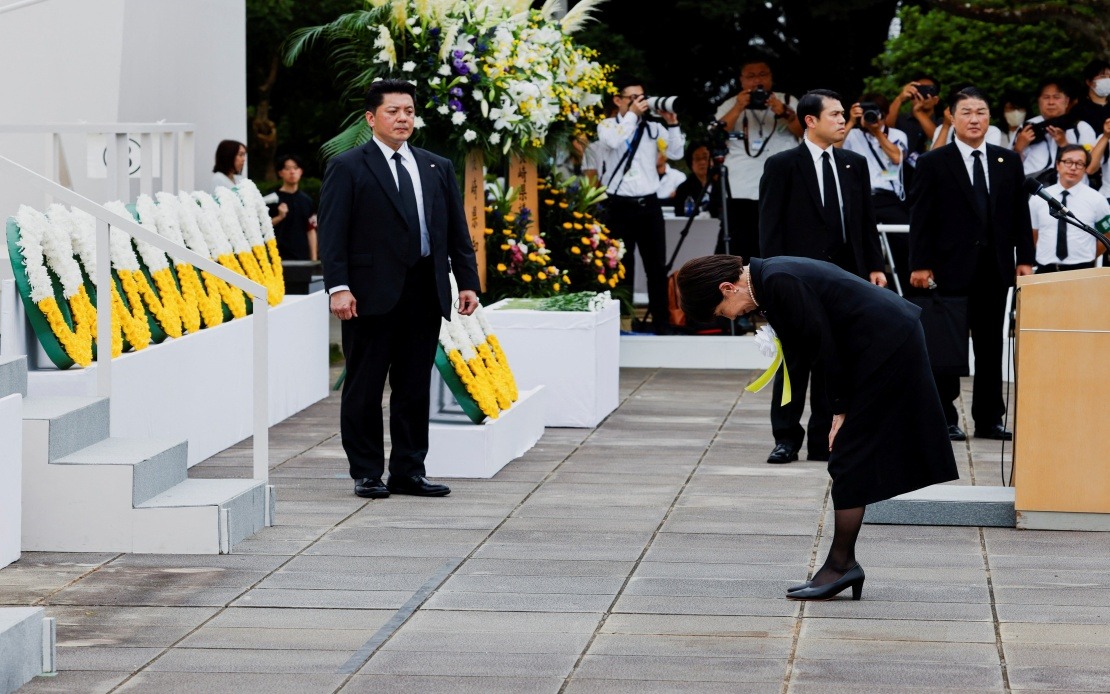
Nagasaki marked the 81st anniversary of the devastating atomic bombing on August 9, a solemn day of remembrance that has taken on renewed urgency given intensifying geopolitical tensions and competing international views on nuclear weapons. The southwestern Japanese city held a ceremony honouring those killed in the 1945 attack, with reflections on nuclear deterrence dominating discussion among world leaders and policymakers grappling with proliferation risks in an increasingly fractured global order.
The commemorative event in Nagasaki unfolded amid heightened international debate about whether nuclear weapons remain necessary for security or represent an existential threat to humanity. At 11.02 a.m., the precise moment when the "Fat Man" plutonium device was detonated over the city 81 years ago, participants observed a moment of silence—a ritual that connects contemporary observers to the instantaneous horror that claimed approximately 74,000 lives by the end of 1945 and left countless others permanently marked by radiation exposure. Nagasaki remains the only city ever subjected to atomic weapons in warfare, a distinction that amplifies the symbolic weight of annual commemorations.
Japan's Mayor Shiro Suzuki used the platform to articulate a moral case for worldwide nuclear disarmament, emphasizing that coexistence between humanity and nuclear arsenals remains fundamentally impossible. This message resonates beyond Japan's borders, particularly across Southeast Asia and the broader Indo-Pacific region, where anxieties about nuclear proliferation, regional power competition, and the risk of miscalculation have grown markedly. Prime Minister Sanae Takaichi joined the ceremony to reaffirm Japan's commitment to nuclear non-proliferation principles, whilst a statement from UN Secretary-General Antonio Guterres was read aloud, underscoring the international dimensions of the commemoration.
The timing of the anniversary carries special significance given deepening fissures in the global nuclear governance framework. In May, the Nuclear Non-Proliferation Treaty review conference—convened once every five years to assess compliance and chart direction—concluded without consensus for the third consecutive occasion following intense negotiations in New York. This breakdown of diplomatic consensus exposes fundamental disagreements between nuclear-armed states, non-nuclear nations seeking security guarantees, and developing countries demanding prioritization of disarmament over deterrence. For regional observers in Southeast Asia, such impasses signal the fragility of international mechanisms designed to prevent nuclear weapons spread.
Japan itself stands at a crossroads regarding nuclear policy. Longstanding national doctrine—the three non-nuclear principles enshrining prohibitions on producing, possessing, or permitting nuclear weapons on Japanese soil—has weathered decades of geopolitical change. However, recent years have witnessed growing internal discussion about whether these principles remain tenable amid perceived threats from neighbouring powers and perceived shifts in US security commitments. Takaichi's reaffirmation after Hiroshima's August 6 ceremony that "the government is upholding" the policy provides reassurance domestically and regionally, yet the very necessity of such reassurances indicates the principle is now contested terrain rather than settled consensus.
The vulnerability of Japan's nuclear non-proliferation stance reflects broader anxieties permeating the Indo-Pacific strategic landscape. For Malaysia and fellow Association of Southeast Asian Nations members, Japanese deliberations about nuclear deterrence carry implications for regional stability. Japan's possible reorientation toward a more militarised or nuclear-adjacent posture would reshape power dynamics throughout East and Southeast Asia, potentially accelerating arms races and eroding the diplomatic frameworks upon which small and medium-sized states depend for security. The annual Nagasaki ceremony thus functions as more than historical remembrance; it signals Japan's continued wrestle with security fundamentals in an era of strategic competition.
Atomic bomb survivors, designated hibakusha and now averaging over 86 years of age, constitute a dwindling cohort entrusted with transmitting eyewitness testimony to younger generations. Their advocacy and witness carry particular moral weight in these commemoration ceremonies, as living representatives of the war's atomic dimension become fewer each year. The race to document and preserve hibakusha narratives before they are lost reflects anxieties that without sustained remembrance grounded in survivor testimony, abstract arguments about nuclear policy risk divorcing decision-makers from the concrete human catastrophe nuclear weapons produce.
The global context framing this anniversary encompasses competing security logics. Nuclear-armed states justify arsenals as providing deterrence and stability, whilst nuclear-free nations and disarmament advocates argue that proliferation increases accident risks and renders verification increasingly difficult. Japan's experience—occupying the status of a non-nuclear power protected by a nuclear umbrella state whilst bearing moral authority to advocate disarmament—exemplifies the contradictions embedded in existing nuclear governance architecture. This position grants Japan diplomatic standing to critique nuclear weapons whilst potentially complicating its ability to influence outcomes.
For Malaysia and broader Southeast Asian audiences, the Nagasaki anniversary underscores the persistent salience of nuclear weapons in global politics despite decades of disarmament rhetoric. The region itself remains nuclear-weapons-free owing to the Southeast Asia Nuclear-Weapons-Free Zone Treaty, yet neighbouring great powers possess extensive arsenals. Observing Japan's careful balancing act—maintaining non-nuclear status whilst engaging with security realities—offers instructive parallels for smaller states navigating great power competition and proliferation risks in their own strategic environments.

