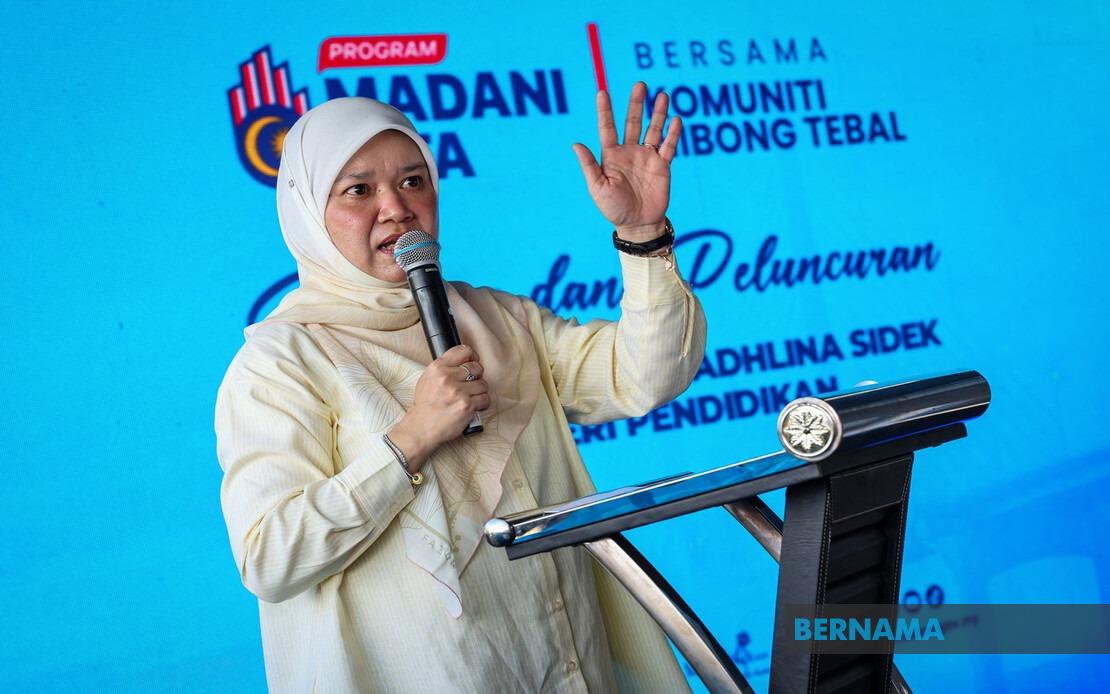
Education Minister Fadhlina Sidek has underscored the positive impact of the National Information Dissemination Centre (NADI) Mahir initiative, which permits families to acquire school uniforms through manageable instalment payments. Speaking in Nibong Tebal on August 8, the Education Minister highlighted how this scheme addresses a persistent financial challenge facing households across Malaysia, where the cumulative expense of school supplies often stretches family budgets during the academic year.
The initiative demonstrates a multifaceted approach to social welfare by simultaneously reducing parents' immediate financial strain while generating sustainable livelihoods for local entrepreneurs. By integrating consumer needs with small business development, the programme reflects a broader policy direction of using grassroots economic activity to support vulnerable families. The instalment-payment model proves particularly valuable in Malaysia's diverse socioeconomic landscape, where many working families struggle with lump-sum educational expenses alongside other living costs.
Central to NADI Mahir's success is the employment of 120 alumni from the NADI Mahir Jahit sewing programme, individuals who completed skills training through Pintar Services and have emerged as successful business proprietors. These entrepreneurs produce the school uniforms sold under the initiative, creating a closed-loop economic system that benefits consumers and small business operators simultaneously. This employment pathway exemplifies how targeted vocational training can translate into genuine entrepreneurial opportunities, particularly for individuals seeking entry into manufacturing and textile sectors.
Fadhlina, who represents Nibong Tebal as Member of Parliament, characterised the scheme as an exemplary programme for constituents facing financial constraints. Her direct involvement underscores the political commitment to making educational access more equitable across income brackets. The presence of Ministry of Communications deputy secretary-general Mano Verabathran and Malaysian Communications and Multimedia Commission State Affairs chief officer Bukhari Yahya at the announcement reflected broader government coordination in implementing the initiative at federal and state levels.
Beyond the uniform scheme, NADI operates multiple complementary programmes demonstrating a comprehensive approach to youth development and community support. The NADI Tuisyen Rakyat tutoring initiative has enrolled over 42,000 students nationally, with Nibong Tebal hosting 73 participants. This tutoring programme's reach proved significant during the 2025 Sijil Pelajaran Malaysia examination cycle, when 65 outstanding students benefited from its structured academic support, suggesting that accessible supplementary education directly correlates with improved examination outcomes.
Youth engagement through NADI E-Sukan represents another strategic pillar, establishing esports as a legitimate platform for talent identification and confidence building among young Malaysians. The competitive gaming environment enables youth to develop teamwork skills and strategic thinking while competing at local and national levels. Nibong Tebal's achievements within this ecosystem—including winning the national NADI E-Sukan MADANI Mobile Legends championship and securing second place in the Penang state Cooking Star competition—demonstrate that diverse interests can be channeled into structured, skill-building activities.
The NADI programme portfolio extends into artificial intelligence literacy, recognizing that technological competency increasingly determines employment prospects for Malaysian youth. The 1 NADI 1 Prompt Engineer initiative has attracted 11 participants in Nibong Tebal, introducing young people to generative AI tools and prompt engineering fundamentals. This exposure to emerging technologies positions participants ahead of labour market demands, as industries increasingly incorporate AI-driven processes across manufacturing, services, and knowledge sectors.
The cumulative effect of these interconnected initiatives suggests a deliberate policy strategy to address multiple dimensions of Malaysian social development simultaneously. Rather than implementing isolated interventions, NADI functions as an integrated platform combining financial relief for families, entrepreneurship opportunities for adults, academic support for students, youth engagement through recreation and competition, and future workforce preparation through technology training. This comprehensive approach recognises that sustainable development requires coordinated interventions addressing education, income generation, and social participation.
For Malaysian policymakers considering similar programmes, NADI's model offers valuable insights regarding programme integration and community-level implementation. The involvement of local entrepreneurs in supply chains strengthens community economics while ensuring that programme benefits extend beyond individual recipients. The school uniform instalment scheme particularly exemplifies how consumer-facing services can simultaneously function as business development tools, creating mutual value for both families and small entrepreneurs whilst reducing administrative burden compared to direct subsidy mechanisms.
The expansion of these initiatives across different states suggests potential for scaling successful Nibong Tebal pilot activities nationally. As the programme matures, monitoring participation data and employment outcomes for NADI Mahir Jahit graduates would provide evidence regarding programme effectiveness and guide resource allocation. Additionally, gathering feedback from participating families regarding the affordability and accessibility of instalment payment arrangements could inform refinements enhancing reach to lower-income households who face the greatest educational expense barriers.
Looking forward, NADI's integrated programming model positions Malaysia to address persistent equity challenges in education access whilst simultaneously supporting SME development and youth employability. The school uniform instalment initiative exemplifies how creative policy design can transform routine educational expenses into mechanisms for broader community development, demonstrating that fiscal responsibility and social welfare need not operate in opposition. As Malaysia navigates evolving socioeconomic pressures, comprehensive programmes like NADI offer blueprints for maximizing impact from targeted government investment.

