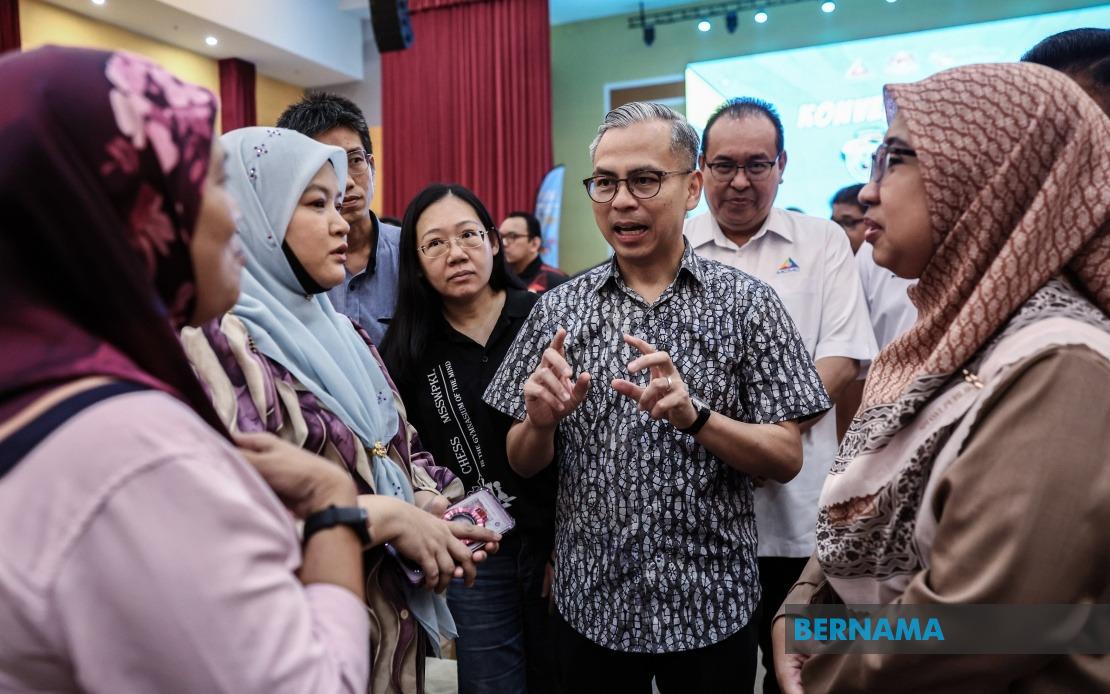
The government has sought to draw a clear distinction between parliamentary allocations and personal ministerial benefits, with Communications Minister Datuk Seri Fahmi Fadzil emphasizing that MyKhas operates as a constituency-focused fund rather than an MP entitlement. Speaking at a press conference in Kuala Lumpur on August 8, Fahmi underscored that the mechanism exists exclusively to address the welfare needs of residents and voters within specific parliamentary constituencies, operating under the direct administration of the Prime Minister's office.
This clarification comes as part of a broader push by the MADANI Government to reframe how public allocations are conceptualized and deployed. Prime Minister Datuk Seri Anwar Ibrahim has repeatedly stressed that government resources channeled to parliamentary areas represent a public trust rather than a personal political asset for elected representatives. The distinction carries significant weight in Malaysia's political landscape, where questions about the proper use of state resources have periodically generated public debate and scrutiny.
According to Fahmi, the MyKhas framework has been formally embedded within the Malaysia Plan and annual Budget documents as a special provision situated under the Prime Minister's authority. This institutional placement is deliberate, designed to ensure that disbursement decisions rest with the executive office rather than being left to individual MPs. The arrangement effectively positions the fund as part of the Prime Minister's discretionary toolkit for addressing constituency-level infrastructure and social needs, with specific MPs serving as intermediaries rather than primary decision-makers.
Fahmi himself noted the constraints this places on elected representatives, stating plainly that even he cannot utilize MyKhas for personal purposes or interests. This self-referential example was intended to underscore the universal application of the principle across all MPs regardless of seniority or portfolio. The statement reinforces that access to the fund is contingent on genuine constituency requirements, with the Prime Minister's office retaining ultimate authority over how and where the money is deployed.
The scope of potential MyKhas applications extends across diverse categories of public benefit. Prime Minister Anwar detailed in remarks on August 7 that the fund can support school facilities, Islamic religious schools and institutions, mosque developments, and critical infrastructure repairs such as drainage systems. This breadth suggests the mechanism is designed as a flexible tool for addressing a range of constituency-level priorities rather than being narrowly restricted to specific project types. The flexibility allows for responsiveness to genuine local needs as they emerge.
For constituencies governed by opposition parties, the government has established a separate administrative pathway. Fahmi explained that applications for assistance in opposition-held areas can be submitted through the Implementation Coordination Unit housed within the Prime Minister's Department. This provision aims to ensure that MyKhas reaches residents based on need rather than political affiliation, though the existence of a separate channel for opposition areas suggests some differentiation in the application process itself.
The MyKhas clarification also reflects broader tensions within Malaysia's political system regarding the proper boundaries between government resources and partisan political advantage. Historically, the question of whether elected representatives should be able to control or direct public funds has generated considerable political controversy. By institutionalizing MyKhas as a Prime Minister-controlled mechanism rather than an MP prerogative, the government appears to be attempting to reduce opportunities for those controversies to resurface or intensify.
Fahmi's role as Information Chief for PKR and government spokesman lends his statements particular weight in articulating the official government position. His emphasis that the allocation serves residents and voters rather than elected representatives aligns with Anwar's repeated messaging on this subject. The consistency across multiple government spokespersons suggests this is a deliberate communications strategy rather than an ad-hoc clarification.
The implications for Malaysian politics are potentially significant. If strictly observed, the MyKhas framework could represent a meaningful shift in how public resources are allocated at the constituency level, reducing the traditional role of individual MPs as gatekeepers for development funding. This could theoretically diminish one source of political patronage that has long characterized Malaysian electoral politics. However, the practical effectiveness of such a shift would depend heavily on enforcement and whether the Prime Minister's office actually operates the fund according to stated principles.
For constituents in both government-held and opposition-held seats, the clarification suggests that accessing MyKhas benefits requires engagement with the Prime Minister's office infrastructure rather than direct negotiation with their elected MP. This procedural shift could either enhance equity by removing political considerations, or complicate access by introducing additional bureaucratic layers. The effectiveness of the mechanism in reaching those genuinely in need will likely become apparent only as the fund's operations mature and patterns of disbursement become visible.
The government's articulation of MyKhas principles also carries implications for broader governance questions about the relationship between political representation and resource allocation. By emphasizing that elected representatives are stewards rather than owners of public funds, the government is advancing a particular interpretation of democratic accountability. This interpretation prioritizes the Prime Minister's role as ultimate custodian of public resources, even at the risk of reducing the direct constituency-level authority that MPs traditionally exercise.
Moving forward, the transparency with which MyKhas disbursements are tracked and reported will be crucial to validating the government's stated intentions. Public documentation of how the fund is allocated, which constituencies receive support, and what criteria drive funding decisions would help establish whether the mechanism operates as intended or devolves into a new form of centralized patronage. For Southeast Asian observers, Malaysia's experience with MyKhas may offer lessons about institutional design for managing constituency-level public resources in ways that reduce but cannot entirely eliminate political considerations.

