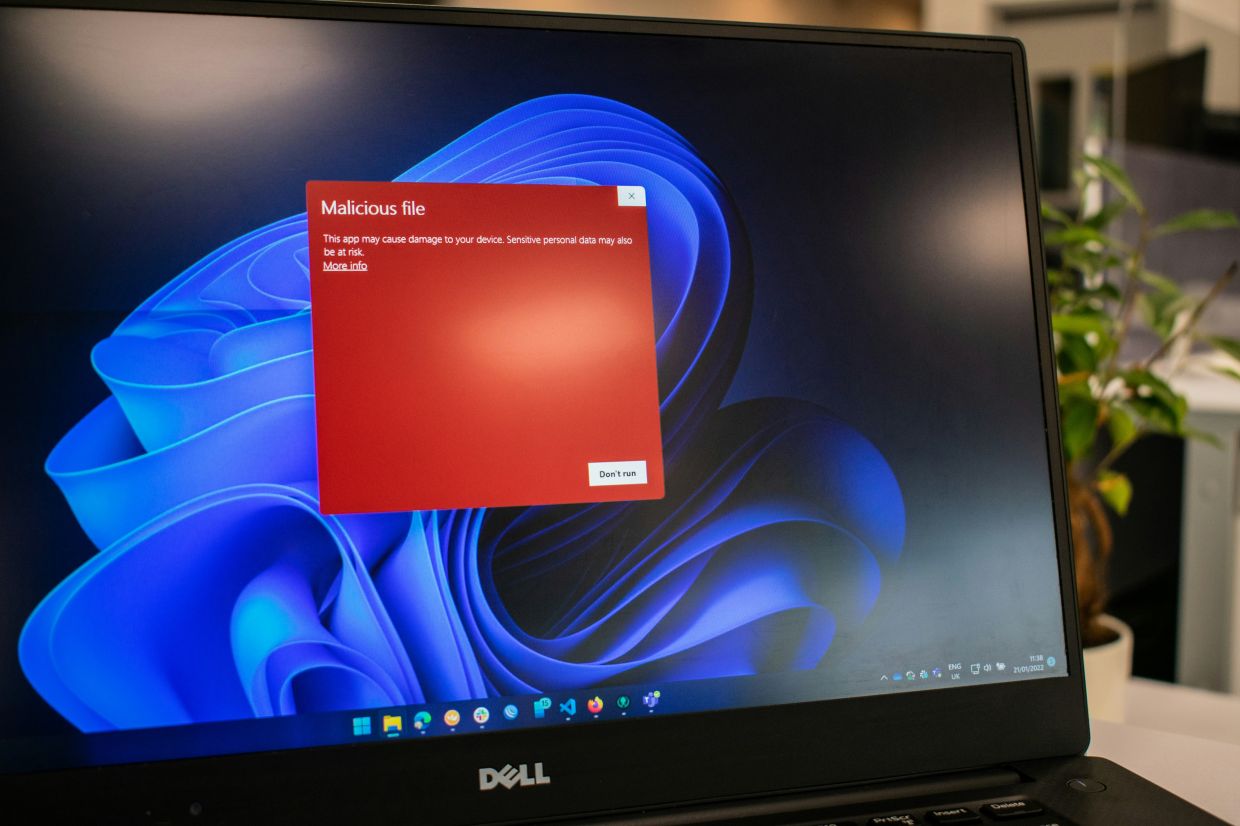
Malaysia's cybersecurity authority, MyCert, has sounded an urgent warning about a malware campaign actively circulating through WhatsApp Web and Desktop that specifically endangers Windows computer users across the region. The threat employs deceptive social engineering methods, with attackers crafting convincing messages that contain hidden malicious files pretending to be routine legal, financial, or debt-related documents that might ordinarily appear in professional correspondence.
The attack methodology relies on fooling recipients through file naming conventions that suggest benign content. Detected file names include variations such as "Acknowledgment of Debt.vbs", "Sila semak bil anda.vbs", "December statement of account.vbs", and "Reconciliation.vbs". Despite these innocent-sounding titles, the files are not the PDF or document formats their names imply. Instead, they are Visual Basic Script files, a Windows scripting format that executes code directly upon opening, immediately triggering the infection sequence without requiring user permission or awareness.
Understanding the technical mechanics of this attack reveals why it poses such significant danger. When a user opens one of these disguised script files, the malware executes a predetermined sequence of instructions that fundamentally compromises the device's security posture. The initial infection installs a Remote Access Trojan, commonly abbreviated as RAT, which transforms the victim's computer into a device that attackers can access and manipulate from remote locations. This persistent access remains active even after the user restarts their computer, establishing a foothold that survives standard security measures.
The installed RAT performs multiple harmful functions simultaneously. It systematically disables the security warnings and prompts that normally alert users to suspicious activity, essentially muting the computer's defensive systems. With these safeguards neutralized, the malware operates silently in the background, capturing everything displayed or typed on the keyboard. This surveillance capability extends to the most sensitive information: passwords for email and social media accounts, banking credentials, personal identification numbers, and one-time passwords generated by financial institutions. The attacker gains a complete mirror of the user's digital activity without triggering standard antivirus detection or alerting the compromised user.
The severity of this threat demands immediate awareness among Malaysian businesses and individuals who rely on WhatsApp for professional communication. Given that WhatsApp operates across desktop applications and web browsers used in both corporate and personal settings, the potential distribution network is exceptionally broad. Small business owners, freelancers, accountants, and corporate employees who regularly exchange financial documents through WhatsApp face elevated risk, as the file names and pretense of legitimacy align perfectly with ordinary workplace correspondence patterns.
MyCert's guidance emphasizes prevention as the strongest defense against this particular threat. Users receiving unexpected file attachments through WhatsApp, particularly those claiming to contain financial or legal information, should treat them with extreme suspicion and refrain from opening them. The critical safeguard is simple: if you did not explicitly request the file from a trusted sender, do not execute it. Equally important is refraining from forwarding such suspicious messages to others, as spreading the malware inadvertently expands the attacker's reach and victimizes additional users.
For those who may have already fallen victim to this attack, time is essential. Any device that has already opened or executed one of these malicious files must be immediately considered compromised, regardless of whether visible symptoms appear. The first action should be disconnecting the affected computer from the internet entirely, which severs the remote connection the attacker maintains. This prevents further data extraction and stops the RAT from continuing to monitor the device's activities. Employees using corporate computers should simultaneously notify their organisation's information technology department, allowing the IT team to assess the scope of potential damage and whether other systems require investigation.
The password reset process following infection demands particular care. Every single password, PIN, and sensitive credential that was ever entered on the compromised device must be changed immediately, but critically, this change must occur using a separate clean device that was never infected. Changing passwords through the infected system itself is counterproductive, as the malware would capture the new credentials during entry. This includes passwords for email accounts, banking platforms, cryptocurrency exchanges, social media, work systems, and any other service the user accessed on the compromised device. No password changed on an infected system can be considered secure.
Removing the malware from an infected device presents challenges that exceed the capabilities of standard antivirus software. The Remote Access Trojan installed by this campaign is specifically engineered to evade conventional security scanning, remaining hidden from typical detection mechanisms. While antivirus programs provide essential baseline protection, they frequently prove insufficient against advanced malware of this sophistication. Professional cybersecurity specialists with experience in forensic analysis and sophisticated malware removal possess the specialized tools and expertise necessary to locate and eliminate RATs. Attempting to simply run a regular antivirus scan and trust that the threat has been resolved is a dangerous assumption.
MyCert encourages victims to report incidents through multiple channels that compile data about active threats. The official reporting mechanism operates through [email protected], where users should submit screenshots of the original message, precise timestamp information, and the sender's phone number. Reporting directly on WhatsApp through the platform's built-in report function also generates valuable data. Users should simultaneously refrain from responding to the sender, as any reply confirms that the phone number is active and monitored, potentially inviting additional targeting. Comprehensive reporting helps MyCert track the scope and evolution of the campaign, informing future public warnings and enabling coordination with telecommunications providers and messaging platforms.
For Malaysian residents and businesses, this campaign represents the evolving sophistication of cybercriminals who exploit the trust embedded in familiar business document types and widely-used communication platforms. The combination of convincing social engineering with technical malware that defeats standard protections creates a multi-layered threat. Maintaining vigilance about unexpected file attachments, even from sources that appear legitimate, remains the most reliable defense against these campaigns as they inevitably evolve and adapt.

