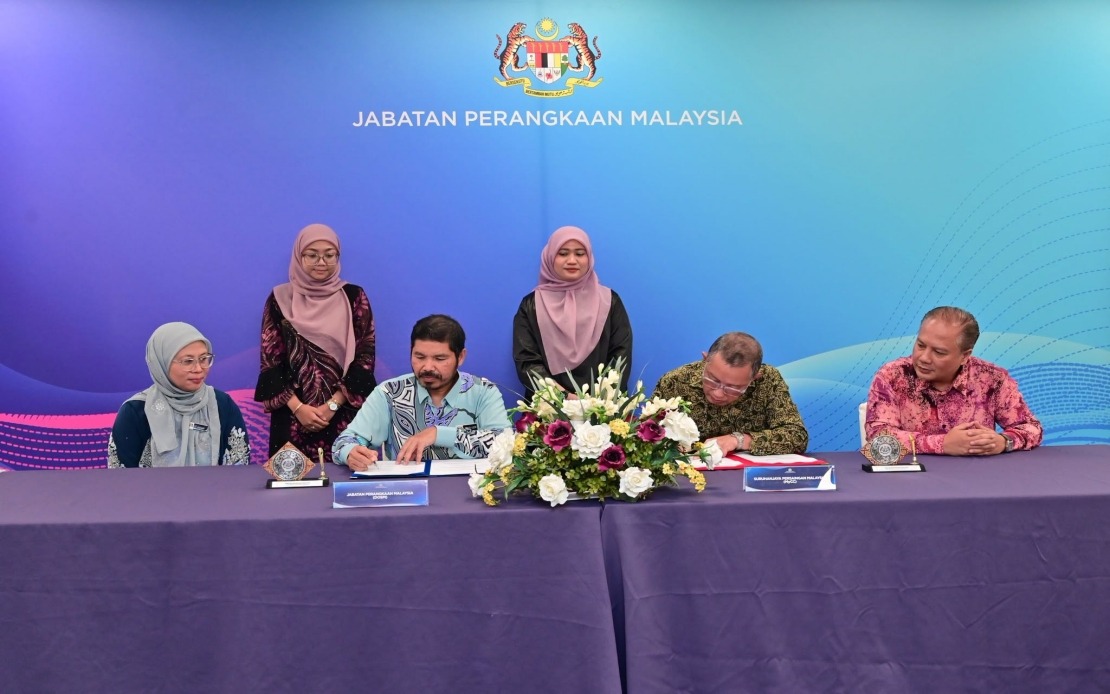
Malaysia's two key economic institutions have cemented a strategic partnership designed to harness the power of data analytics in strengthening competition enforcement and economic policymaking. The Malaysia Competition Commission (MyCC) and the Department of Statistics Malaysia (DOSM) signed a memorandum of understanding in Putrajaya on June 19, with officials from both agencies gathering at DOSM headquarters to formalize the collaboration. The signatures of MyCC chairman Tan Sri Idrus Harun and Chief Statistician Datuk Seri Dr Mohd Uzir Mahidin, witnessed by MyCC chief executive officer Datuk Iskandar Ismail and DOSM Deputy Chief Statistician (Economic Programmes) Siti Asiah Ahmad, reflect high-level commitment to the initiative.
The agreement represents a deliberate shift towards evidence-based governance in Malaysia's approach to maintaining fair markets and protecting economic interests. By pooling institutional expertise and data resources, the two organizations are positioning themselves to respond more effectively to emerging market issues and inform government policy decisions. This collaborative framework acknowledges a fundamental reality in the modern economy: the agency to monitor, analyze, and respond to complex market dynamics requires access to comprehensive, timely data and the analytical capacity to interpret it effectively.
At its core, the MoU creates structured mechanisms for regular data exchange between the competition authority and the statistics department. This includes sharing of administrative datasets and economic indicators that would otherwise remain siloed within separate government bodies. The framework extends beyond mere data transfer, however, establishing shared protocols for combining statistical expertise with competition economics knowledge to generate deeper insights into market behavior. For MyCC, this access to official statistical resources significantly enhances its capacity to investigate anticompetitive conduct and identify emerging threats to market competition.
Capacity building forms a central pillar of the partnership, acknowledging that data sharing alone cannot drive institutional change. The MoU explicitly commits both organizations to developing human capital through structured training programmes, knowledge exchanges, and expertise-sharing initiatives. This dimension addresses a common challenge in Southeast Asian public administration: ensuring that technical capabilities keep pace with evolving institutional missions. By rotating personnel between agencies and organizing joint training sessions, MyCC and DOSM can build a cadre of officials fluent in both competition economics and statistical methodologies.
The timing of this partnership reflects Malaysia's recognition that data now functions as a critical economic asset in the digital era. MyCC's leadership has identified data and analytics as essential tools for maintaining competitive markets, particularly as data itself becomes an increasingly valuable commodity in digital commerce. The collaboration allows Malaysia to develop indigenous capacity in competition economics analytics rather than relying solely on international expertise, building institutional resilience and context-specific analytical capabilities.
Joint monitoring of strategic economic sectors represents another significant dimension of the partnership. Rather than MyCC and DOSM operating independently in their respective domains, the MoU commits the organizations to coordinated surveillance of critical sectors and government policy implementation. This approach enables more holistic analysis of how policy decisions cascade through markets and impact competition. For instance, changes to government procurement policies, sector-specific regulations, or subsidy structures can now be analyzed through both a competition lens and a statistical perspective, potentially revealing unintended consequences earlier in the policy cycle.
The focus on understanding market structures, supply chains, and price dynamics carries particular relevance for Malaysian consumers and businesses. Price transparency and competition are foundational to consumer welfare, and when supply chains are disrupted or market structures distorted, price spikes often follow. By developing joint analytical capacity around these factors, MyCC and DOSM can provide early warning signals of potential price pressures and identify underlying structural issues requiring policy intervention. This capability becomes increasingly valuable as Malaysia navigates post-pandemic supply chain recalibration and responds to global economic volatility.
For the broader Malaysian business community, this partnership signals a government increasingly focused on creating transparent and fair market conditions. Companies operating across multiple sectors benefit from consistent, predictable competition enforcement informed by reliable economic data. The collaboration also suggests that Malaysia is developing institutional mechanisms to identify anticompetitive practices more proactively, reducing the likelihood that market distortions persist undetected until they cause significant economic damage.
The partnership also carries implications for Malaysia's standing within regional economic frameworks. As the country positions itself within the broader ASEAN economic architecture and engages in trade negotiations, having robust domestic capacity for economic analysis and competition enforcement strengthens Malaysia's credibility and negotiating position. Regional and international trade partners increasingly expect high standards of competition enforcement and transparent market governance. By deepening institutional collaboration between its competition and statistics agencies, Malaysia demonstrates commitment to these standards.
From DOSM's perspective, the collaboration reinforces the strategic value of official statistics beyond traditional economic reporting. By facilitating competition enforcement and market analysis, DOSM's data collection efforts gain direct policy relevance. This validation may support future arguments for expanded statistical capacity and resourcing, contributing to improved data infrastructure across the broader public sector.
The success of this partnership will ultimately depend on sustained commitment from senior leadership and the development of practical working relationships between technical staff at both organizations. Effective data sharing requires establishing clear protocols around confidentiality, access permissions, and data quality standards. Capacity-building initiatives need sufficient resourcing and consistent prioritization amid competing organizational demands. These implementation challenges are not unusual in cross-organizational government collaborations, but they require careful attention to translate the MoU's aspirations into tangible operational improvements.
Looking ahead, the MyCC-DOSM partnership creates foundations for more sophisticated competition analysis and market monitoring in Malaysia. As data analytics tools continue evolving and organizations gain experience with joint analytical projects, the partnership could expand to encompass emerging areas such as digital market competition, where understanding platform algorithms and data flows becomes essential to enforcing fair competition. The framework also creates potential for future expansions to include other agencies responsible for consumer protection, price monitoring, or sector-specific regulation.
Ultimately, this collaboration reflects a maturing approach to economic governance in Malaysia, one that recognizes interdependencies between different policy domains and seeks to leverage existing institutional resources more effectively. By breaking down traditional silos between competition enforcement and statistical analysis, the two agencies position themselves and Malaysia's broader policy apparatus to address complex economic challenges with greater sophistication and evidence-based precision.

%22%2F%3E%3C%2Fpattern%3E%3C%2Fdefs%3E%3Crect%20width%3D%22100%25%22%20height%3D%22100%25%22%20fill%3D%22url(%23ph2ajl0g)%22%2F%3E%3Crect%20width%3D%22100%25%22%20height%3D%22100%25%22%20fill%3D%22url(%23ph2ajl0p)%22%2F%3E%3Ctext%20x%3D%2250%25%22%20y%3D%2250%25%22%20text-anchor%3D%22middle%22%20dominant-baseline%3D%22central%22%20fill%3D%22rgba(255%2C255%2C255%2C0.95)%22%20font-family%3D%22Georgia%2C%20'Times%20New%20Roman'%2C%20serif%22%20font-weight%3D%22700%22%20font-size%3D%22194%22%20letter-spacing%3D%22-0.02em%22%3EGerakan%3C%2Ftext%3E%3C%2Fsvg%3E)