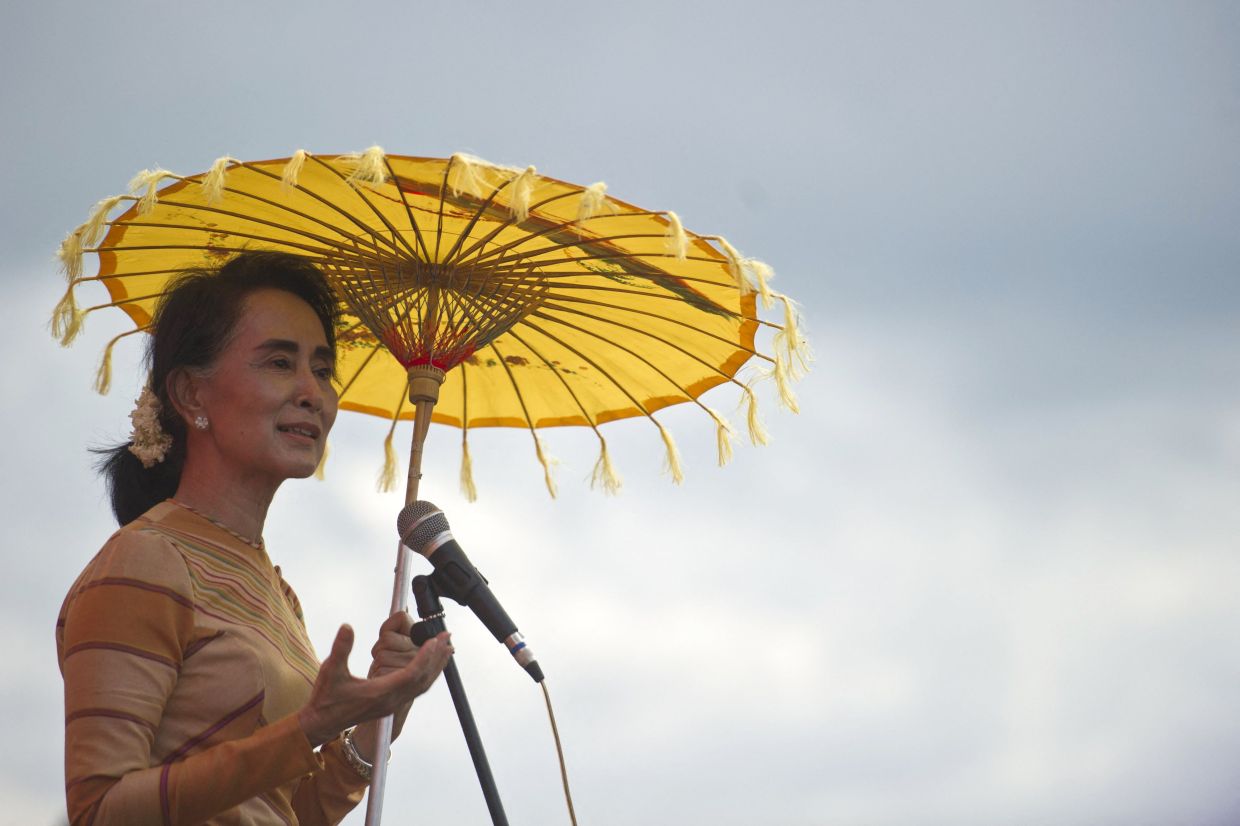
Myanmar's military regime has once again rebuffed Asean efforts to visit deposed leader Aung San Suu Kyi, delivering a pointed message about the regional bloc's diminishing sway over one of its own member states. In late June, junta spokesperson Khaing Khaing Soe dismissed the latest overture from Asean chair the Philippines' Foreign Secretary Maria Theresa Lazaro, stating flatly that Suu Kyi, now 81 years old, remains a convicted prisoner barred from meeting international representatives. This marked the second failed attempt by Lazaro to secure an audience with Myanmar's most prominent political prisoner, following an unsuccessful visit to Naypyitaw in January.
The pattern of denials carries far weightier implications than simple diplomatic discourtesy. By consistently blocking access to Suu Kyi, the junta under leader Min Aung Hlaing is sending unmistakable signals about how it views Asean's authority and relevance. As Hunter Marston, director of the South-East Asia programme at the Lowy Institute, observes, the regime's calculations rest on a fundamental asymmetry: Myanmar's military leadership no longer believes it requires Asean's endorsement or cooperation. The blocking of Asean envoys stands in stark contrast to the selective access granted to representatives from China and Thailand, illustrating Beijing and Bangkok's outsized diplomatic standing in Naypyitaw's corridors of power.
The junta's refusal to permit Asean oversight carries particular weight given the regional bloc's Five-Point Consensus, adopted after the February 2021 coup to establish a framework for Myanmar's political resolution. That plan explicitly calls for dialogue with all relevant parties, including deposed civilian leaders, yet Suu Kyi has remained largely incommunicado for more than two years. Recent reports suggest she was placed under house arrest in April, rendering her invisible to independent observers and international scrutiny. The regime's stonewalling effectively nullifies one of Asean's central demands, yet the grouping possesses limited enforcement mechanisms to compel compliance.
From the junta's perspective, restricting access to Suu Kyi serves multiple strategic objectives simultaneously. First, it preserves what analysts term a crucial diplomatic card—by controlling who may visit Myanmar's most recognizable political prisoner, the regime retains leverage in negotiations and sustains uncertainty about her condition and treatment. Second, it reasserts state sovereignty over Myanmar's internal political affairs, rejecting what Naypyitaw interprets as Asean's attempt to assume a supervisory role over domestic judicial proceedings. As independent Myanmar historian Phyo Win Latt argues, the junta's position rests on a fundamental rejection of external legitimacy: Asean recognition matters to the military, but Asean scrutiny does not.
The human toll of Myanmar's political crisis, however, extends far beyond diplomatic posturing. Since the coup, at least 100,000 people have died according to the Armed Conflict Location & Event Data project, which tracks global conflicts independently. Beyond the staggering death toll, millions have been displaced, humanitarian access remains severely constrained, and Myanmar's economy has deteriorated markedly. The military's apparent indifference to these catastrophic outcomes suggests that regime stability, rather than national reconstruction, drives Naypyitaw's policy calculus. Suu Kyi herself is serving an effective sentence of approximately 18 years, following multiple rounds of reduced jail time from an original 33-year conviction on charges widely dismissed as politically motivated.
Suu Kyi's confinement carries symbolic weight extending beyond her personal circumstances. As the civilian leader deposed in the coup and the democratic opposition's most recognizable figure, her isolation serves to silence potential rallying points for resistance while simultaneously demonstrating the regime's absolute control over Myanmar's political space. The junta's claim that she remains in good health, unsupported by independent verification, requires skeptical analysis given her advanced age and the documented isolation imposed upon her. Her son, Kim Aris, has pointedly noted that the regime has prevented any contact with his mother for five years, undercutting official assurances about her wellbeing.
Asean's frustration with Min Aung Hlaing's intransigence has translated into institutional measures, most notably the continued exclusion of the Myanmar leader from regional summit meetings. Yet this lever has proven largely ineffective in driving compliance with the Five-Point Consensus framework. The junta chief, who relinquished his formal military position to assume the presidency in April following a contested election widely characterized as stage-managed, appears unmoved by Asean's demands. He argues, with some internal logic, that other Asean states face territorial disputes and internal tensions that the bloc rarely intervenes to resolve, questioning why Myanmar should be held to a different standard.
This dispute reflects broader structural weaknesses within Asean's decision-making architecture. The bloc's founding principle of non-interference in member states' internal affairs has historically limited its capacity to enforce regional consensus, and Myanmar represents perhaps the clearest test case of this limitation. Amara Thiha, a non-resident fellow at the Stimson Centre think-tank, notes that Min Aung Hlaing perceives Asean's peace plan demands as fundamentally inequitable, selective application of pressure that ignores comparable disputes among other members. From Naypyitaw's perspective, therefore, non-compliance carries minimal costs relative to the assertion of undiluted state sovereignty.
The regime's cultivation of alternative partnerships underscores its strategic recalibration away from Asean toward external powers perceived as more accommodating. Chinese Foreign Minister Wang Yi's visit to Naypyitaw in April, during which he reportedly met Suu Kyi, granted Beijing diplomatic credit that Asean has been denied. Similarly, former Thai Foreign Minister Don Pramudwinai's 2023 visit secured access that Asean's current chair cannot obtain. These selective permissions reveal the junta's calculation regarding which international relationships warrant cultivation and which merit deflection.
For Malaysian and broader Southeast Asian observers, Myanmar's trajectory signals concerning patterns within regional governance. As one of Asean's founding members, Myanmar's defiance of collective consensus suggests the bloc's mechanisms for enforcing accountability remain inadequate. The military regime demonstrates that membership in regional institutions provides benefits—diplomatic recognition, economic participation, seat at the table—without meaningful constraints on state behavior. This asymmetry incentivizes intransigence rather than accommodation, particularly when external patrons like China remain strategically aligned with the junta.
The question of Suu Kyi's detention thus transcends her individual fate, becoming emblematic of broader regional power dynamics. Her continued isolation serves as a barometer of the junta's resolve and Asean's limitations. As long as the regime perceives that maintaining control over Myanmar's political space carries lower costs than accommodating regional pressure, incentives for compromise will remain minimal. The strategic challenge facing Asean involves either enhancing its enforcement capacity—a politically difficult proposition given member state divisions—or accepting that its role remains consultative rather than determinative regarding Myanmar's political future.
Moving forward, Myanmar's military government has signalled unambiguously that it will not permit external actors, regional or otherwise, to dictate the parameters of its domestic political settlement. The consistent denial of access to Suu Kyi represents not mere bureaucratic obstruction but rather a calculated assertion of state authority and international agency. Whether Asean can develop mechanisms to counter this posture, or whether the bloc must instead adapt expectations to accommodate Myanmar's assertive nationalism, remains an open question with implications extending throughout Southeast Asian governance.

