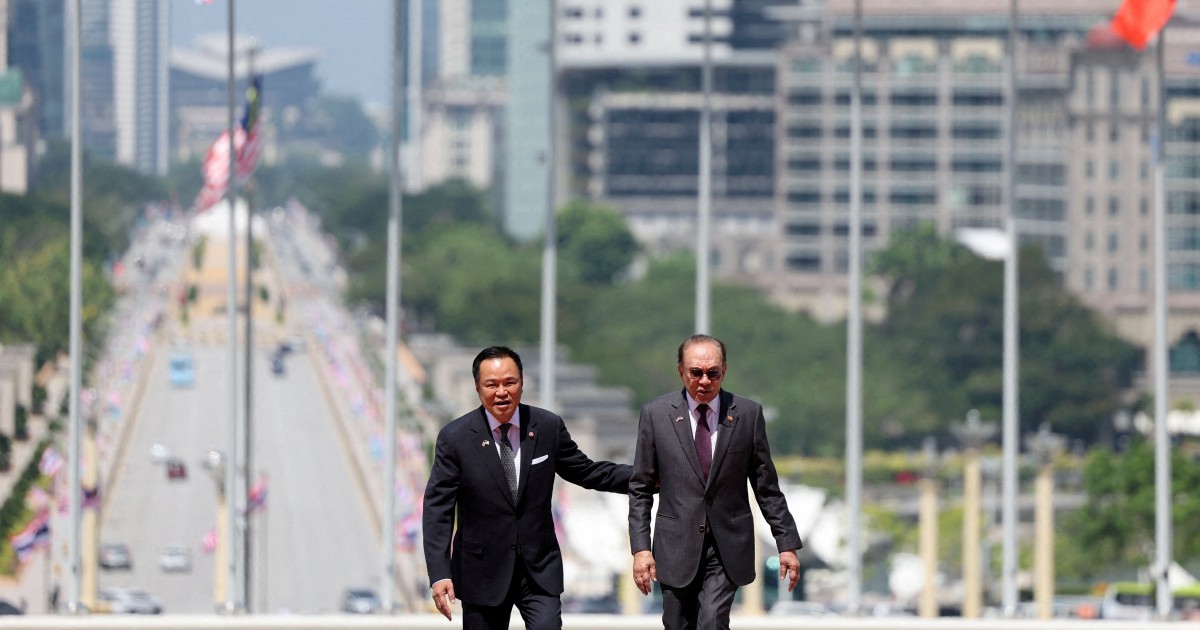
Prime Minister Datuk Seri Anwar Ibrahim has reiterated Malaysia's conviction that the ongoing Myanmar crisis demands a comprehensive approach rooted in dialogue among all relevant parties, while ultimately empowering the Myanmar people to determine their own political and social destiny. Speaking from Putrajaya, the Prime Minister underscored that narrow solutions imposed by individual actors or external powers would prove insufficient to address the profound instability that has gripped Southeast Asia's largest landmass since the February 2021 military coup.
Malaysia's emphasis on inclusive engagement reflects the nation's broader regional role as a founding member of the Association of Southeast Asian Nations, which has long championed the principle of non-interference in member states' internal affairs while simultaneously advocating for dialogue as a conflict-resolution mechanism. This positioning allows Kuala Lumpur to maintain diplomatic channels with various factions within Myanmar whilst avoiding the appearance of endorsing any particular political outcome. The Malaysian position acknowledges that Myanmar's crisis—characterized by civil disobedience campaigns, armed resistance, humanitarian suffering, and sectarian tensions—cannot be resolved through military means alone or through external impositions.
For Malaysian readers and policymakers, Myanmar's stability carries profound implications. The country is home to significant ethnic minority populations that maintain historical and cultural ties to communities across the Malaysian peninsula and Borneo, particularly the Rohingya Muslim minority whose plight has repeatedly drawn Malaysian humanitarian and diplomatic attention. Additionally, Myanmar's unresolved conflict has created regional security challenges, including refugee flows and the potential for transnational criminal networks to exploit ungoverned spaces along the Thai-Myanmar border, areas that indirectly affect Malaysian security interests.
Anwar's remarks signal that Malaysia remains committed to constructive regional diplomacy even as international pressure mounts on the Myanmar junta to restore democratic governance. The Association of Southeast Asian Nations, of which Myanmar is a member, has struggled to formulate a unified response to the crisis, with differing perspectives among member states on how aggressively to isolate or engage with the military regime. Malaysia's articulation of a stakeholder-inclusive approach suggests that Kuala Lumpur sees sustained dialogue and negotiation as more productive than isolation, though this stance requires careful navigation given international expectations that democratic nations oppose military coups.
The reference to allowing Myanmar's people to determine their own future carries particular weight, as it acknowledges the legitimate grievances of Myanmar citizens who had experienced a decade of democratic transition before the military reasserted control. This formulation respects Myanmar's sovereignty whilst simultaneously endorsing the principle that political legitimacy should ultimately rest on popular consent rather than coercive force. For Malaysia, which has its own experience with democratic transitions and constitutional governance, this represents a consistent application of values that Malaysian leaders frequently emphasize in regional forums.
The inclusive engagement framework that Anwar proposes would theoretically encompass military leadership, the deposed National League for Democracy government, armed ethnic organizations that control territories along Myanmar's borders, civil society organizations, and international stakeholders with legitimate interests in regional stability. Achieving such a comprehensive dialogue presents formidable diplomatic challenges, however, given the fundamental incompatibility of positions between the military council and the democracy movement. Yet Malaysia's historical experience facilitating dialogue in other regional disputes—such as its mediation efforts in conflicts involving the Philippines and other ASEAN members—demonstrates that Kuala Lumpur possesses both credibility and institutional capacity to contribute meaningfully to peace processes.
From a practical standpoint, Malaysia's approach recognizes that durable solutions to Myanmar's crisis will require addressing underlying structural issues beyond the immediate military-civilian power struggle. These include the historical marginalization of ethnic minorities, the unequal distribution of resource wealth, and the absence of constitutional arrangements that accommodate Myanmar's extraordinary ethnic and religious diversity. Malaysia, as a multiethnic nation that has navigated similar tensions through constitutional federalism and power-sharing arrangements, may potentially offer relevant experiences or perspectives to Myanmar's future deliberations, though such contributions would need to be carefully calibrated to avoid perceptions of external interference.
The Malaysian government's articulation of this position also reflects Kuala Lumpur's broader strategic calculus in Southeast Asia. As China and Western powers compete for influence throughout the region, Malaysia seeks to maintain independent agency and prevent the Myanmar crisis from becoming a proxy battleground for great power competition. By advocating for inclusive Myanmar-led solutions, Malaysia implicitly argues that external powers—whether China, India, the United States, or the European Union—should support rather than direct Myanmar's political trajectory.
Looking forward, Anwar's remarks establish parameters for Malaysia's continued engagement with Myanmar, suggesting that Kuala Lumpur will maintain diplomatic contact with various actors whilst consistently advocating for negotiated settlement. This approach carries risks, as it may appear to some observers as insufficiently robust in defending democratic principles, yet it reflects a reasoned judgment that sustained pressure combined with diplomatic space for negotiation offers better prospects for eventual conflict resolution than isolation or military intervention.

