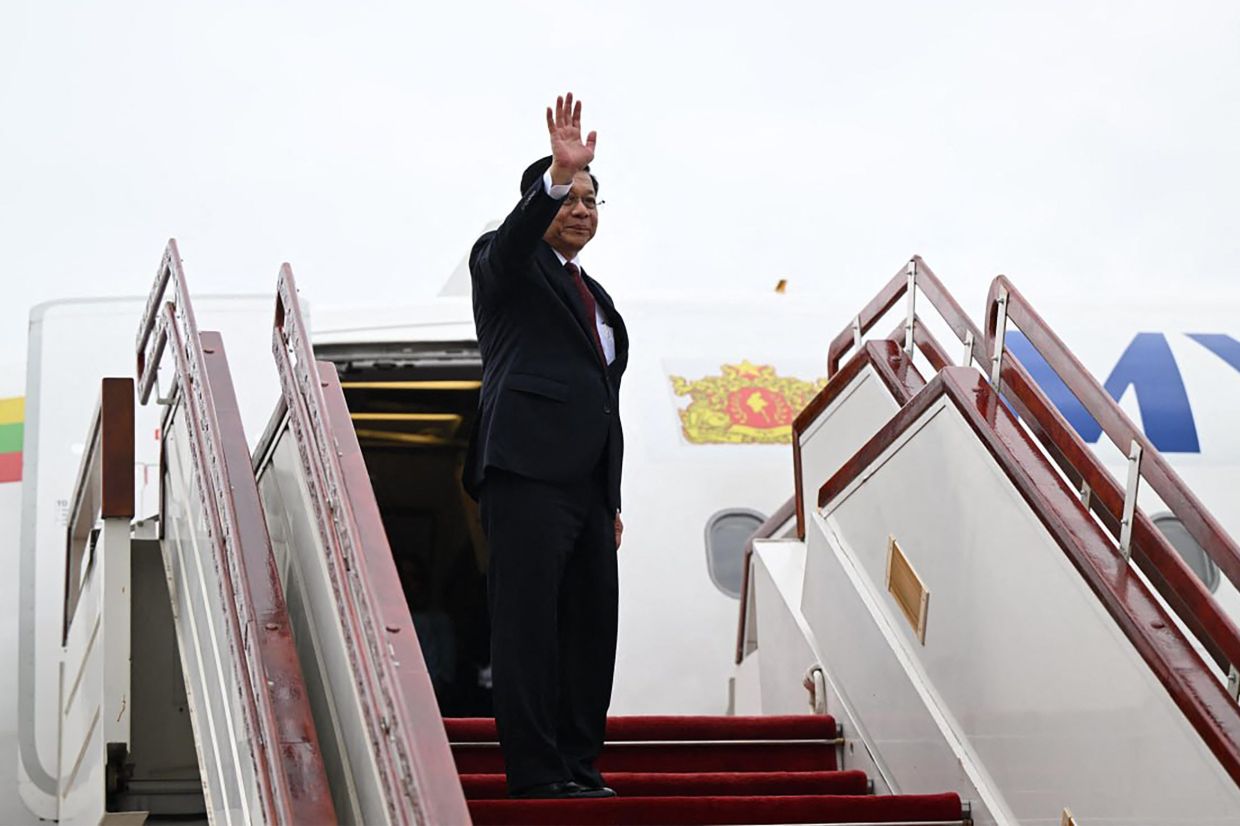
Myanmar's military-backed leader Min Aung Hlaing boarded a flight from Naypyidaw on Monday morning bound for Moscow, embarking on what officials describe as a mission to cement strategic partnerships with Russia. The visit represents his inaugural trip to the Russian capital since assuming the presidency in April, a position he secured through elections that drew widespread international condemnation as lacking legitimacy and democratic substance.
The diplomatic engagement comes at a critical juncture for Myanmar's international standing, particularly as the nation grapples with the fallout from the February 2021 military intervention that dismantled a decade of civilian democratic governance. Russia distinguished itself among major powers by offering tacit support to Myanmar during that turbulent period, refusing to publicly condemn the coup and maintaining diplomatic channels when most Western nations imposed sanctions and isolation measures. This positioning has made Moscow a rare and valuable ally for a government increasingly estranged from traditional partners in Europe and North America.
The intensity of Myanmar's domestic conflict underscores why international relationships have become paramount for Min Aung Hlaing's government. The civil war triggered by the coup has spiralled into a humanitarian catastrophe, with casualty estimates exceeding 100,000 deaths. Armed resistance movements, including ethnic insurgencies and newly formed people's defence forces, have challenged military authority across multiple regions, particularly in border areas and urban centres. This deteriorating security environment has prompted Myanmar's leadership to prioritise international partnerships that can provide both military support and economic assistance.
Russia's military cooperation with Myanmar has become increasingly visible in recent months. The Myanmar armed forces operate Russian-manufactured aircraft in combat operations against various opposition factions, though human rights organisations and international monitors have raised serious concerns about the targeting of civilian populations in these aerial campaigns. Some conflict documentation bodies have characterised these attacks as potential violations of international humanitarian law, accusations that Myanmar's military has consistently rejected.
The strategic significance of the Moscow visit extends beyond symbolic gestures. Myanmar and Russia formalised a five-year military cooperation agreement in February, though the specific parameters of this arrangement remain deliberately opaque. The precise nature of weapons transfers, training provisions, and intelligence sharing under this framework has not been publicly disclosed, reflecting the sensitive political dimensions of deepening Sino-Russian-Myanmar military ties during an era of intensifying great power competition.
During his Moscow stay, Min Aung Hlaing is scheduled to engage with multiple layers of Russia's political hierarchy. Beyond his principal meeting with President Vladimir Putin, the military leader will confer with Russia's Prime Minister, the Speaker of the State Duma—the lower chamber of the Russian parliament—and participate in a Myanmar-Russia economic forum designed to explore commercial partnerships. These multi-level engagements signal both sides' commitment to comprehensive engagement beyond narrow military arrangements.
The economic dimension of the visit deserves particular attention for Southeast Asian observers. Myanmar's economy has contracted severely since the coup, with currency depreciation, capital flight, and international sanctions creating acute fiscal pressures on the military administration. Russia, itself subject to sweeping Western economic sanctions following its 2022 invasion of Ukraine, represents a natural partner for countries seeking to circumvent Western financial restrictions and develop alternative trading relationships. The economic forum provides a platform for exploring bilateral trade opportunities and potentially accessing Russian investment in Myanmar's resource sectors.
Min Aung Hlaing's international diplomatic trajectory since April reveals a deliberate strategy to rehabilitate Myanmar's pariah status through selective engagement with sympathetic powers. Beyond Russia, he has undertaken state visits to China, India, and Thailand, each calculated to demonstrate governmental legitimacy and secure economic and strategic support from influential regional actors. These carefully choreographed diplomatic missions serve a domestic political function as well, projecting an image of normalcy and international acceptance to Myanmar's population despite the ongoing civil conflict and humanitarian crisis.
The positioning of Myanmar between Russian and Chinese spheres of influence represents a significant shift in regional geopolitical dynamics. Historically, Myanmar maintained more balanced relationships across multiple powers. The military administration's pivot toward deepening ties with Moscow and Beijing reflects both the costs of Western isolation and an emerging multipolar world order where non-Western powers increasingly compete for strategic positioning in Southeast Asia. For regional stability, this realignment carries implications for ASEAN cohesion, given Myanmar's membership and the association's consensus-based decision-making structure.
However, Myanmar's international rehabilitation efforts face formidable obstacles. The International Criminal Court and various human rights bodies continue investigating allegations of mass atrocities and crimes against humanity committed since the 2021 coup. The scale of internal displacement—millions of Rohingya remain in camps outside Myanmar—and ongoing reports of military brutality complicate international engagement regardless of geopolitical calculations. Russia and China's willingness to maintain diplomatic and military relations despite these documented concerns reflects their strategic interests rather than any normative approval of Myanmar's governance trajectory.
The broader Southeast Asian context matters significantly for understanding this visit. ASEAN has adopted a cautious position on Myanmar, neither endorsing the military administration nor imposing coordinated sanctions. This diplomatic ambiguity has created space for Myanmar's leaders to pursue external partnerships while nominally remaining within the regional organisation. Russia's engagement with Myanmar, however, extends beyond standard bilateral diplomacy—it represents a broader assertion of Moscow's capacity to maintain influence in Asian affairs despite Western containment strategies.
Looking forward, the outcomes of Min Aung Hlaing's Moscow visit will likely shape Myanmar's trajectory for months ahead. Concrete agreements on military supplies, financial assistance, or trade arrangements would signal deepening integration into Russia-led international structures. Conversely, symbolic gestures without substantive commitments might reflect limitations in Moscow's capacity or willingness to substantially commit resources to Myanmar's stabilisation. For Malaysia and other Southeast Asian nations monitoring regional developments, the Myanmar-Russia partnership represents both an opportunity for diplomatic engagement and a potential complication for ASEAN unity and regional stability.

